Baltimore Sees Year over Year Drop in Homicides and Shootings
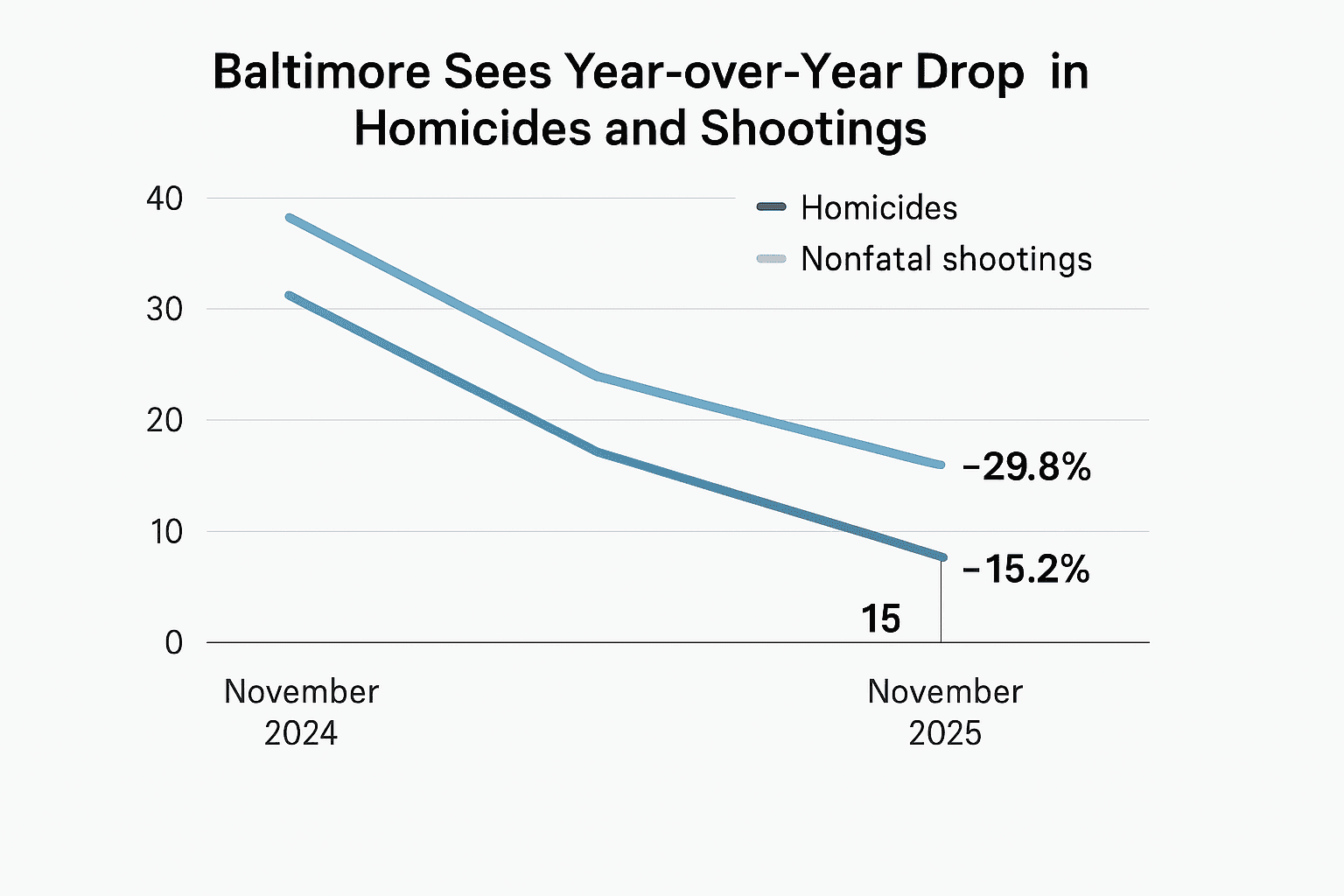
The mayor's office reported that through November 2025 Baltimore recorded fewer homicides and nonfatal shootings compared with the same period last year, with November showing 15 homicides and 18 shootings. City officials attributed the reductions to coordinated community violence intervention programs, Baltimore Police Department efforts, and partnerships with prosecutors and community based services, a trend that could influence public safety policy and local priorities.

The mayor's office reported that through November 2025 Baltimore continued to register declines in homicides and nonfatal shootings compared with the same period in 2024. City figures released as of the morning of the announcement put the year over year reduction in homicides at approximately 29.8 percent, and the decline in nonfatal shootings at roughly 25.2 percent. In November the city recorded 15 homicides and 18 shootings.
City officials credited the improvement to the city's community violence intervention ecosystem, efforts by the Baltimore Police Department, and strengthened partnerships with prosecutors and community based service providers. The administration framed the trend as the product of coordinated enforcement, prevention and supportive services, and emphasized ongoing work to sustain public safety gains.
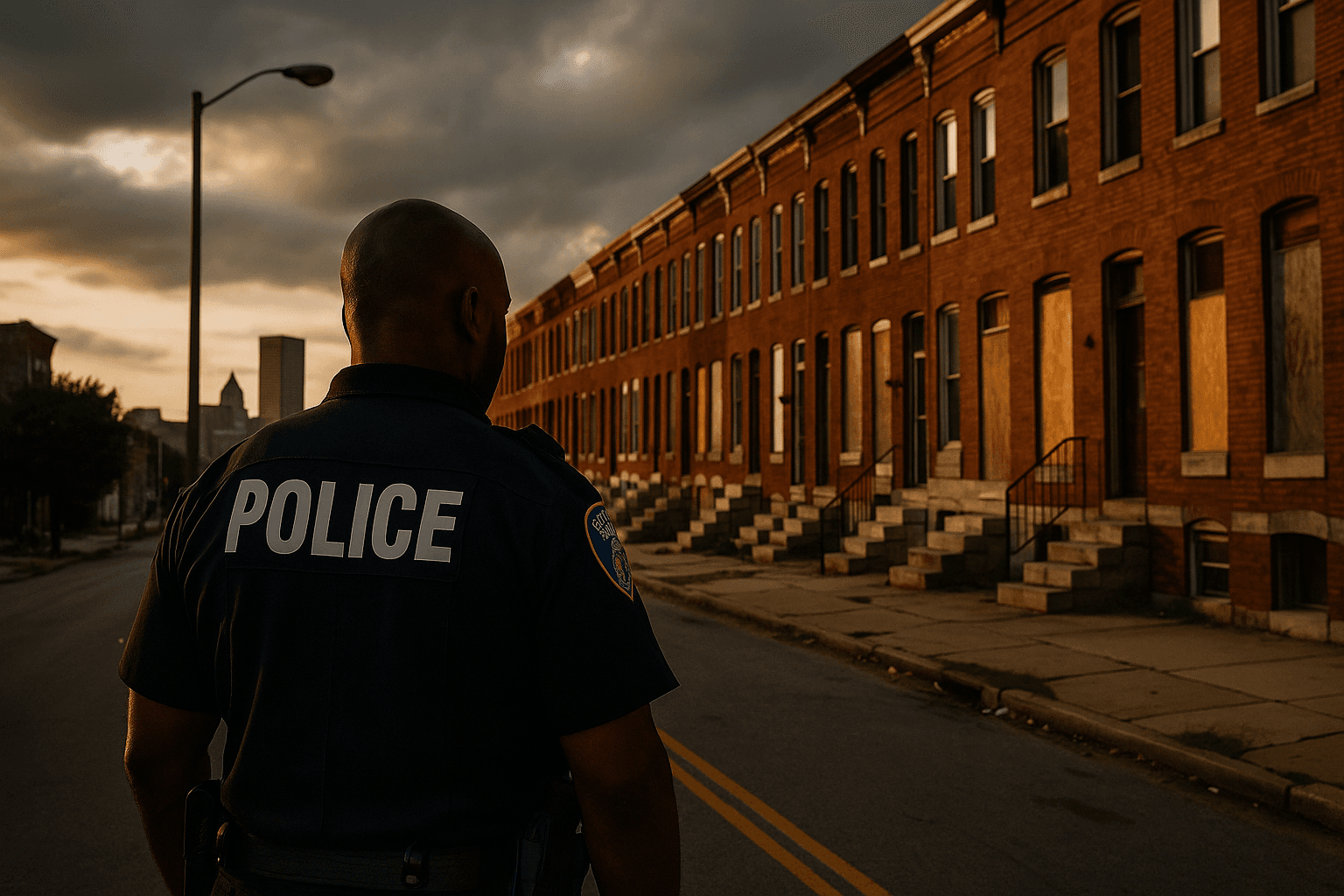
For residents, the numbers offer a cautious measure of relief while underscoring persistent uncertainty. Short term declines do not erase long standing public safety challenges in neighborhoods that have borne the brunt of violence. Policy makers now face decisions about whether to reallocate resources toward prevention oriented programs, maintain current policing investments, or pursue blended strategies that integrate enforcement with social services. Funding choices made in the months ahead will shape program capacity and the durability of the reported declines.
Institutionally, the announcement highlights the expanding role of the community violence intervention ecosystem in Baltimore's public safety mix, and signals increased coordination among municipal agencies, law enforcement, and prosecution offices. Those alignments raise questions about performance metrics, transparency and independent evaluation. Tracking outcomes by neighborhood, age cohort and recidivism will be essential to assess whether the reductions are systemic or reflect short term variation.
The political implications extend to voter perceptions and budget debates. Evidence of declining violence may bolster arguments for investments in prevention and wraparound services, while opponents may press for continued emphasis on enforcement. City leaders say the work continues, and residents and elected officials alike will be watching whether the gains hold through the winter months and into next year.
This article was produced by Prism’s automated news system from verified source data, official records, and press releases, then run through automated quality and moderation checks before publishing. The system is built and supervised by the people who set the standards it runs under. Read our full AI policy.
Did this article answer your question?