Baltimore Shooting Kills One Man, Injures Another on North Eutaw Street
A 54-year-old man was killed on North Eutaw St. April 1, one of Baltimore's first homicides of the month after the city's lowest-homicide year in decades.
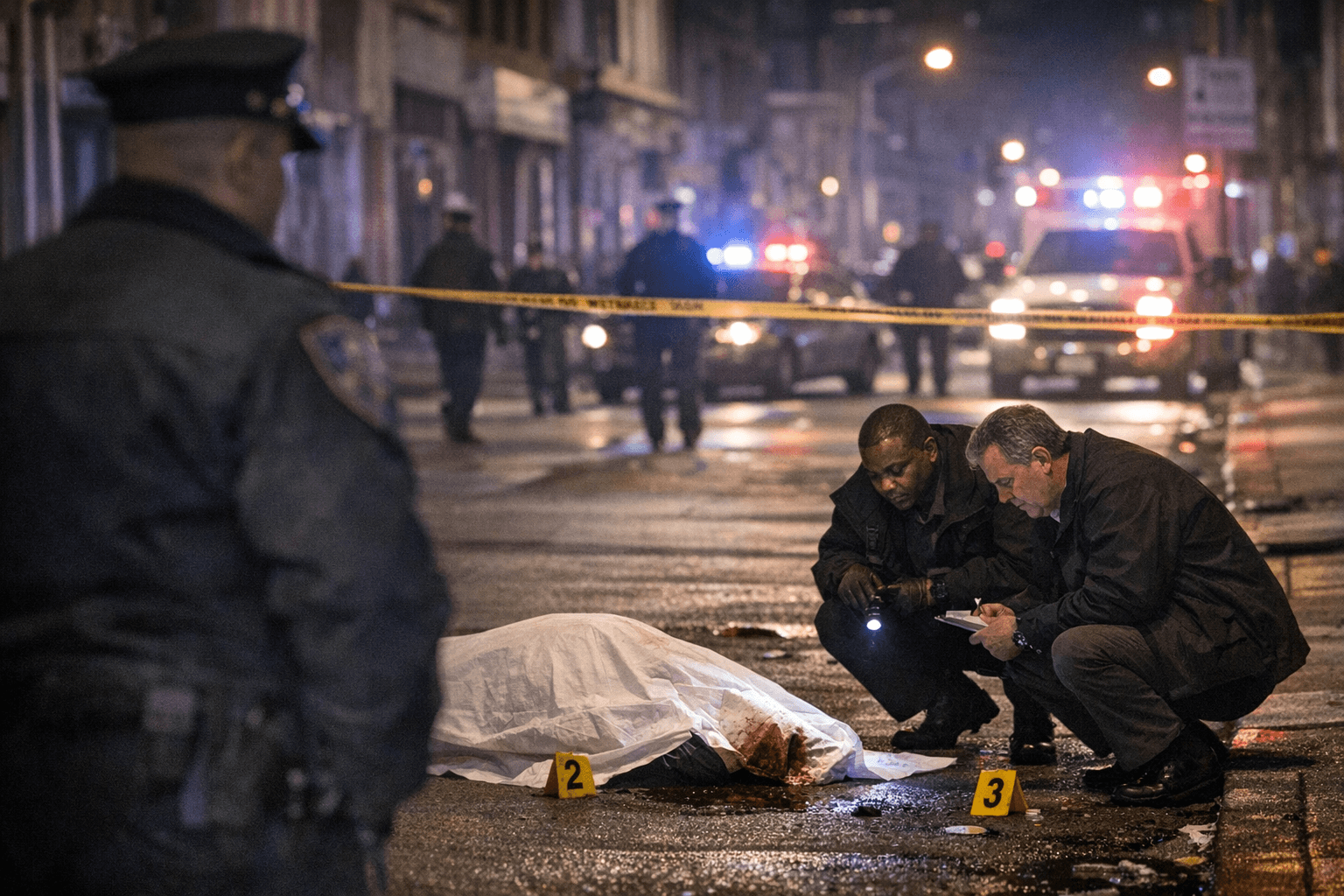
A 54-year-old man shot in the 800 block of North Eutaw Street on April 1 was pronounced dead, becoming one of Baltimore's earliest homicide victims of April. A 30-year-old man wounded in the same incident survived. Baltimore police have opened a murder investigation, and no suspect has been publicly identified.
The 800 block of North Eutaw, a stretch used daily by commuters and transit riders moving between West Baltimore's residential blocks and the downtown core, sits within a corridor that The Baltimore Sun once called "a hotbed of petty crime and thievery" in earlier decades. That characterization predates the current era of gun violence, but it reflects a persistent pattern: the Eutaw corridor has been a recurring focus of BPD deployment and community violence intervention for years. For anyone whose commute or nighttime route takes them along North Eutaw, the April 1 shooting underscores that hard-won progress on citywide statistics does not translate uniformly to every block.
Baltimore entered April carrying numbers that would have seemed implausible a few years ago. The city closed 2025 with 133 homicides, a 31.44% decline from 2024 and the lowest annual total in decades. Nonfatal shootings fell 24.51% over the same period. In the five years before 2024, Baltimore consistently crossed 200 homicides by October 1 each year. The Council on Criminal Justice placed Baltimore's first-half 2025 homicide rate at 11.8 per 100,000 residents, 63% below the 2022 peak of 32.1 per 100,000. Mayor Brandon M. Scott marked that milestone while acknowledging that "133 homicides is still 133 too many."
Whether those gains survive into 2026 is an open question. The Trump administration cut federal funding for Baltimore's community violence intervention programs, a threat documented by Maryland Matters and KFF Health News in December 2025. The Mayor's Office of Violence Prevention, which funds street outreach and the hospital-based trauma work conducted by James Gannon at Sinai Hospital of Baltimore, operates on roughly $22 million in FY2026, against BPD's $613 million budget. Mayor Scott's FY2026 budget committed $1.2 billion across all funds to public safety and kept the Group Violence Reduction Strategy fully funded, but the loss of federal dollars puts the prevention infrastructure under stress at precisely the point Baltimore is trying to prove its 2025 numbers were not an anomaly.
Resources near the 800 block of North Eutaw Street: BPD's Western District covers this corridor. The Mayor's Office of Violence Prevention coordinates Safe Streets outreach workers in West Baltimore neighborhoods. Sinai Hospital of Baltimore's trauma intervention program, managed by James Gannon, provides support for shooting survivors and their families.
This article was produced by Prism’s automated news system from verified source data, official records, and press releases, then run through automated quality and moderation checks before publishing. The system is built and supervised by the people who set the standards it runs under. Read our full AI policy.
Did this article answer your question?