Baltimore Snow Cleanup Continues as Transit, Recycling and Trash Services Disrupted
Snow and ice cleanup continued after a major winter storm, disrupting transit, recycling and trash services and leaving many Baltimore neighborhoods partially blocked.
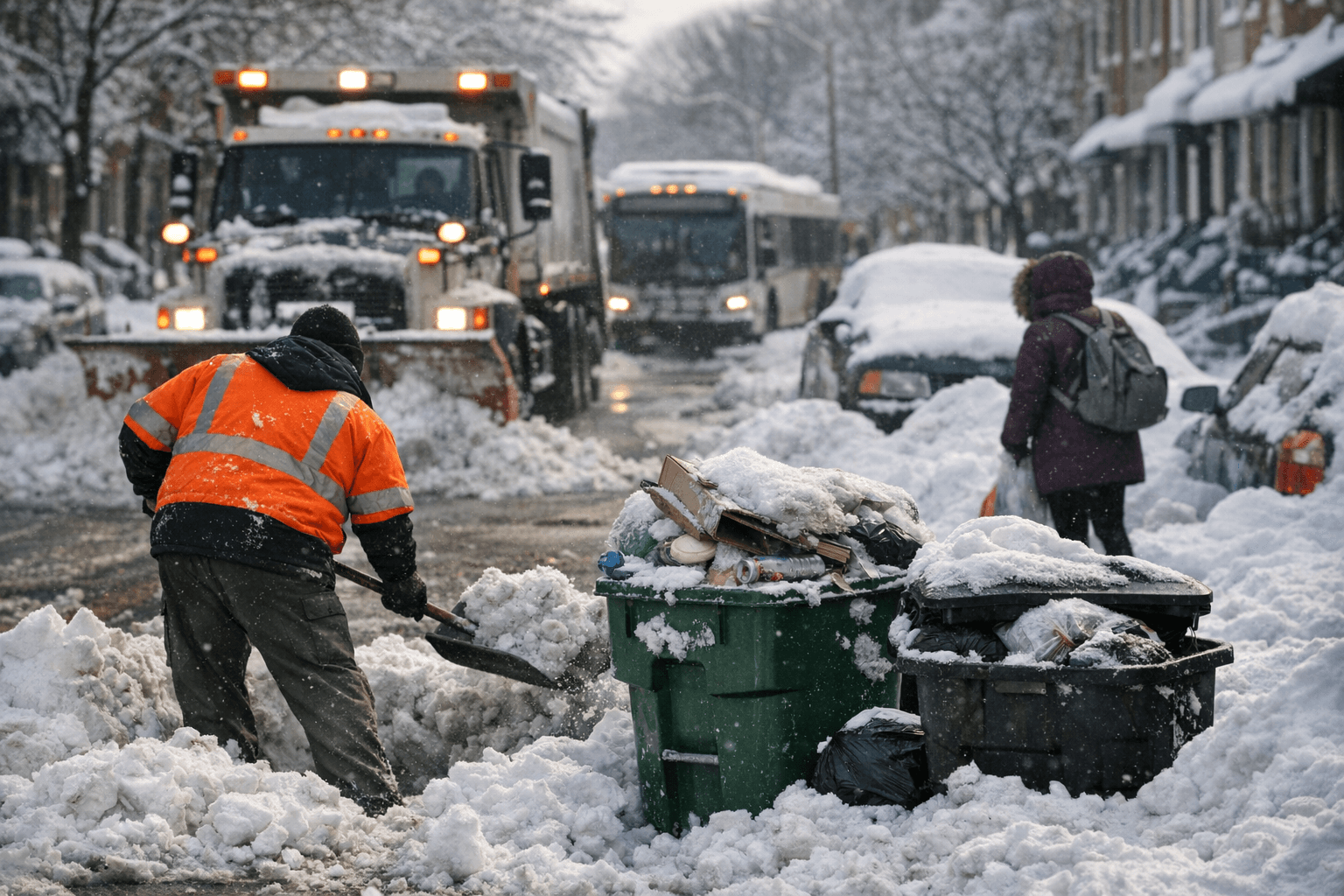
Crews continued clearing snow and ice across Baltimore after a large winter storm, but many side streets remained packed and residents struggled with cars blocked by plow piles. Main roads were reduced to limited cleared lanes, prioritizing emergency access and major transit corridors while crews worked to reach narrower rowhome alleys.
Transit service was suspended or reduced across several Maryland Transit Administration bus and subway lines, with shuttle service operating between some stations to bridge gaps in the system. The disruptions left commuters and essential workers adjusting schedules and routes, and the city extended free parking at select municipal garages to reduce curbside congestion and give drivers alternatives while street clearing continued.
Sanitation operations were significantly affected. Recycling collection was suspended for the week and trash pickup schedules were modified, with many collections rescheduled. The City Department of Public Works (DPW) and Mayor Brandon Scott explained that logistical challenges - particularly alley pick-ups and narrow access points behind rowhomes - forced crews to prioritize plow routes and main-street collection before resuming routine alley service. Department of Transportation (DOT) equipment and contracted crews remained deployed to support snow removal and to clear prioritized routes.
The pattern of cleared thoroughfares and uncleared side streets highlighted longstanding operational trade-offs in municipal snow response: keeping arterials passable for buses, ambulances and delivery routes versus the slower, labor-intensive work of clearing alleys and tight residential blocks. For residents in dense neighborhoods, that trade-off translated into limited mobility, delayed waste collection, and hours spent digging out vehicles or waiting for rescheduled pickups.
The disruptions also underscored governance and equity questions for city leaders: how resources are allocated across neighborhoods during extreme weather, how quickly supplemental contractors are deployed, and how well communication reaches seniors and households without alternative transportation. Local officials signaled ongoing deployment of DOT and contractor equipment to finish secondary streets and alleyways, but offered a staggered timeline tied to safety and resource availability.
For now, Baltimoreans should expect continued snow-clearing activity and additional service adjustments in the days after the storm. Monitor official MTA and city DPW updates for revised trash and recycling schedules, limit nonessential travel while crews operate, and consider using municipal garages where free parking has been extended to ease street clearing. The storm response will test municipal coordination and will likely shape conversations about winter preparedness and budget priorities as the city evaluates lessons from this event.
This article was produced by Prism’s automated news system from verified source data, official records, and press releases, then run through automated quality and moderation checks before publishing. The system is built and supervised by the people who set the standards it runs under. Read our full AI policy.
Did this article answer your question?