BGE to Tear Up South Baltimore Streets as Peninsula Future Unclear
BGE plans street excavation in Otterbein, Federal Hill and Riverside to install an underground transmission line, creating traffic disruption and ratepayer questions as Peninsula plans remain unsettled.
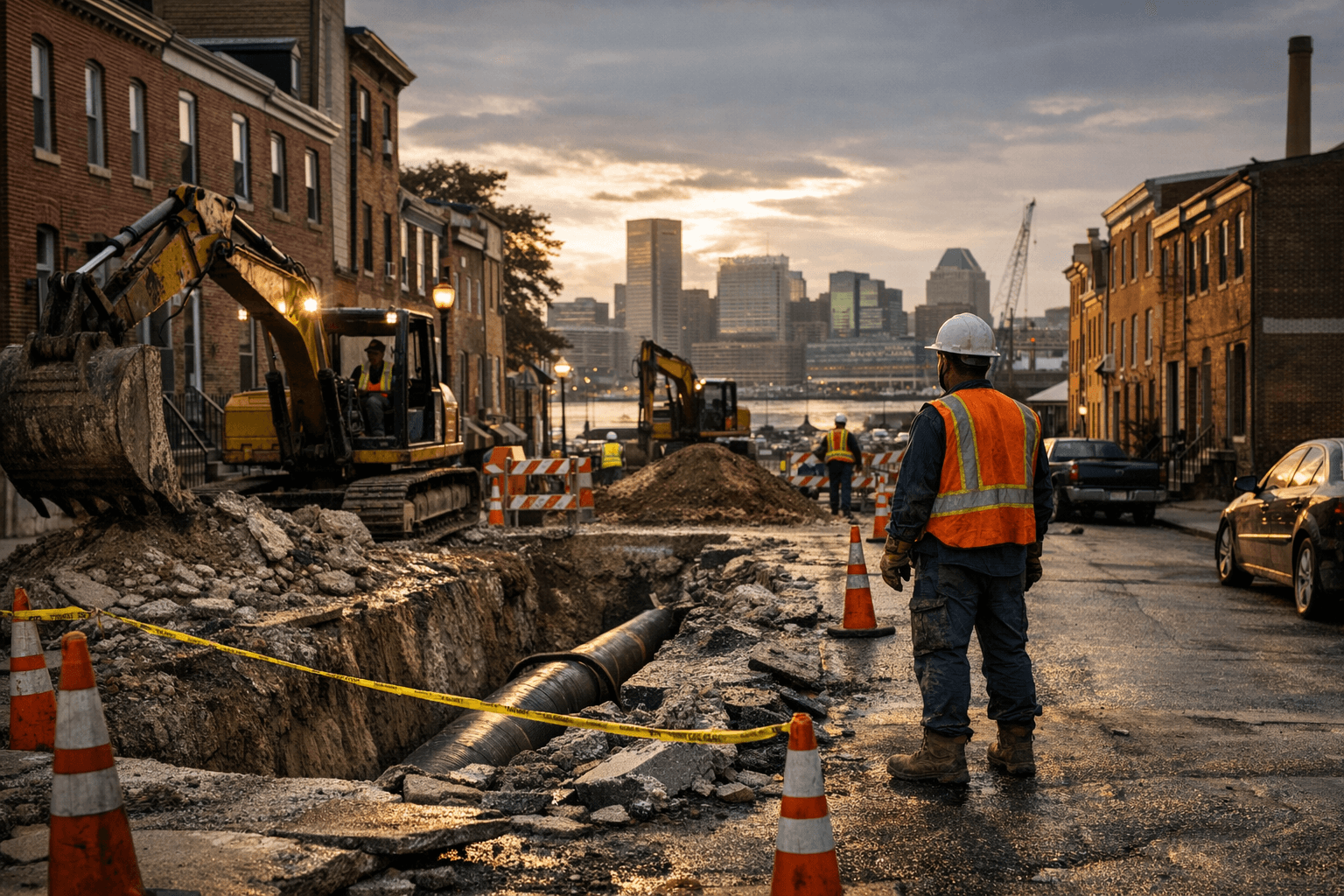
Residents in Otterbein, Federal Hill and Riverside opened their mail in December to find a notice from Baltimore Gas and Electric: The utility plans to tear up streets in the area starting early next year. The work, BGE says, is to install an underground transmission line to the Baltimore Peninsula, a project the utility calls “critical to support the growth for South Baltimore development.”
The notice landed amid growing uncertainty over the Peninsula’s future. Kevin Plank, founder of Under Armour, has stepped back from further development and turned remaining land to Bank OZK. Bank OZK “thinks it has a buyer” for the parcels Sagamore Ventures shed, but Banner reporting says it is “unclear who that is, when any deal might go through and what a new developer would do.” Sagamore once envisioned “a mini-city with 14 million square feet of new buildings, anchored by his sports apparel company,” but Over time, Under Armour scaled back its headquarters, and the project went through multiple rebrands.
The infrastructure push predates Plank’s public plan. Banner reporting notes BGE “has been planning major electrical infrastructure projects at Baltimore Peninsula since 2015, a year before Plank publicly unveiled his plans for what was then called Port Covington.” The utility “never wavered from its spending plans in South Baltimore,” the reporting adds. Industry coverage via Bisnow recounts that Banner reported BGE is preparing to spend $130M on a new substation and related infrastructure at Baltimore Peninsula to support the site's future development; that figure remains tied to Bisnow’s attribution of Banner’s earlier reporting.
That investment raises local stakes. Banner states that “The private utility justified the cost, passed along to ratepayers, to regulators by saying it was necessary for future electric demand at Baltimore Peninsula.” City planners and developers are weighing competing visions for the land: Bisnow reports Gilmartin saying Northern Virginia “is kind of tapped out with the energy constraints,” and that BGE “can power data centers” at the Peninsula. Gilmartin added, “It's a risk-off situation,” and “Most people are just not doing development right now.” MAG Partners has looked at townhomes, sports and entertainment uses, and said it would be “thrilled” for a soccer stadium on part of the site after a June study flagged the Peninsula as a candidate.
For residents the immediate issue is tangible: traffic disruption from street excavation in neighborhoods that already cope with commuter flows, deliveries and tourism around Federal Hill. BGE told industry outlets it “works closely with developers anytime it plans to add power capacity” but declined to answer specific questions on Baltimore Peninsula. A Facebook share of the Banner headline circulated the line: “Baltimore Peninsula's future is uncertain. BGE tearing up nearby roads isn't. With just one phase complete, the future of Baltimor”
What comes next for readers is a timetable and clarity on costs. Expect construction notices and lane closures as BGE moves forward; watch for public filings and utility commission dockets to see whether ratepayers will shoulder the work’s bill. The project ties a neighborhood disruption to larger economic questions: who ultimately buys and develops the Peninsula, whether the site becomes a data-center node or housing and entertainment district, and how those outcomes will affect Baltimore City’s streets and utility bills.
This article was produced by Prism’s automated news system from verified source data, official records, and press releases, then run through automated quality and moderation checks before publishing. The system is built and supervised by the people who set the standards it runs under. Read our full AI policy.
Did this article answer your question?