Brooklyn Homes computer lab reopens with upgraded technology, new access support
Brooklyn Homes reopened its computer lab with upgraded technology and power, giving South Baltimore residents a place for job searches, schoolwork, benefits and telehealth.

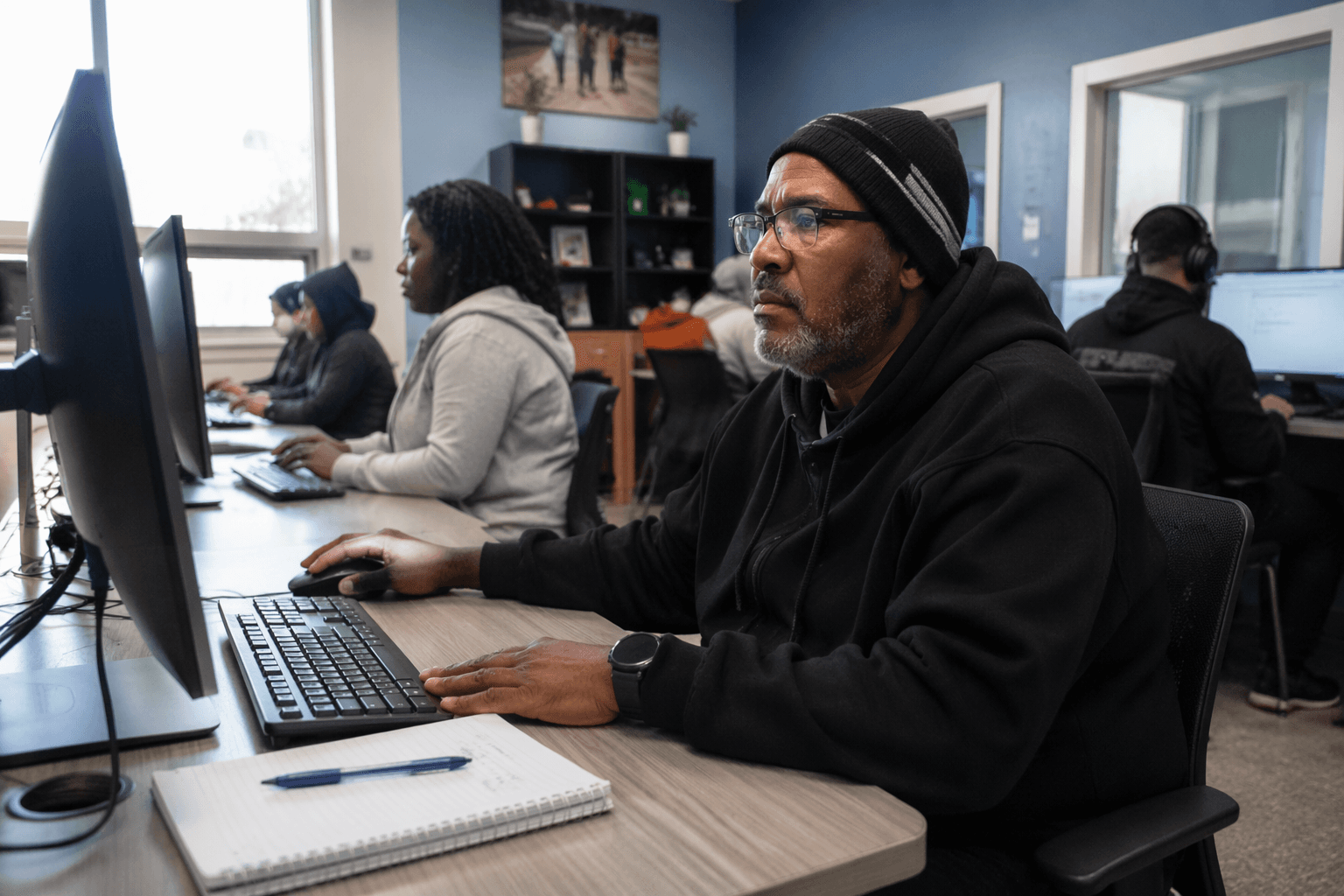
At Brooklyn Homes, the reopened computer lab put upgraded computers, new power infrastructure and fresh access support in the hands of South Baltimore residents who need a place to get online. The lab reopened Thursday, May 21, 2026, from noon to 3 p.m. at 4140 10th Street, giving families a local option for job applications, schoolwork, benefits forms and telehealth.
The Housing Authority of Baltimore City said the lab was powered back up with help from N-Power Maryland, whose IT workforce trainees helped get the computers online. The reopening marked the final upgraded computer lab in HABC’s rollout, a sign that the public housing agency has moved from planning into the harder question of whether these spaces are being used enough to matter.
That question reaches beyond one room in Brooklyn Homes. Baltimore’s Office of Broadband and Digital Equity says its goal is to close the digital divide by 2030, and the city has described its Digital Inclusion Strategy as the roadmap for expanding broadband access, device distribution, digital-skills training and support for thousands of residents. City officials have also framed broadband as basic infrastructure, on the same level as water or electricity.

The need is clear in the city’s own numbers. A January 2024 Baltimore report found that about 40.7% of Baltimore households, roughly 96,000 homes, lacked wireline internet before the pandemic. The same report showed large racial gaps in home broadband adoption, with 73.3% of white households connected at home, compared with 50.2% of African American households and 46.4% of Hispanic households. Baltimore ranked 29th out of 33 cities studied for home wireline broadband adoption.
Brooklyn Homes is also part of a broader public-housing internet push. On March 10, 2026, HABC, the Baltimore City Office of Information Technology and Port Networks announced a broadband initiative for more than 4,000 public housing units across eight properties, including Brooklyn, Gilmor, McCulloh, Douglass, Latrobe, Cherry Hill, Mount Winans and Westport. HABC said the project represents an almost $22 million investment and would offer gigabit service for $20 a month to willing households, with no contracts, data caps, throttling or hidden charges.
Councilwoman Phylicia Porter said the work is about future generations and about making sure younger residents do not have to live under the same conditions as earlier neighbors. Maryland also has been pushing in the same direction: its Department of Housing and Community Development launched a Computer Labs Program in November 2024 with grants for new labs, upgrades and internet service costs.
At Brooklyn Homes, the test now is not the ribbon-cutting itself but whether the lab becomes part of daily life, helping residents apply for work, file paperwork, keep up with school and stay connected to care in a city still trying to narrow its digital gap.
This article was produced by Prism’s automated news system from verified source data, official records, and press releases, then run through automated quality and moderation checks before publishing. The system is built and supervised by the people who set the standards it runs under. Read our full AI policy.
Did this article answer your question?


