Chemical Odor at Virginia Radar Facility Grounds Flights at BWI, D.C. Airports
An overheated circuit board at a Virginia radar facility triggered a multi-hour ground stop at BWI and two D.C.-area airports on Friday, stranding travelers for hours.

A burning circuit board at an air traffic control facility in rural Virginia brought flight operations to a halt at Baltimore-Washington International Thurgood Marshall Airport and two major Washington-area airports on Friday evening, forcing delays that stretched well into the night.
The Federal Aviation Administration issued a ground stop affecting BWI, Ronald Reagan Washington National Airport and Washington Dulles International Airport after a strong chemical smell at the Potomac Consolidated Terminal RADAR Approach Control facility in Warrenton, Virginia disrupted operations there. Richmond International Airport was also placed under a ground stop, according to Transportation Secretary Sean Duffy. The Potomac TRACON, as the facility is commonly known, sits roughly 50 miles outside Washington and manages approach and departure radar services for a vast swath of the region, including airspace over Joint Base Andrews, BWI, Reagan, Dulles, and Richmond.
The FAA's alert page initially described the problem as an "equipment outage" before clarifying the cause. "The FAA has temporarily stopped traffic at Ronald Reagan Washington National Airport, Washington Dulles International Airport and Baltimore-Washington International Airport because of a strong chemical smell at the Potomac TRACON that is impacting some air traffic controllers," the agency said in a statement. FAA spokesperson Donnell Evans confirmed in an email that "a strong chemical smell at the facility is impacting some air traffic controllers."
The technical cause was later identified by Duffy, who posted on X that firefighters had traced and resolved the issue. "The source of the strong odor was traced to a circuit board that overheated, and it was replaced," Duffy wrote. "Firefighters from Fauquier County and Prince William County confirm there is no danger to air traffic controllers, and they are returning to the Potomac TRACON."
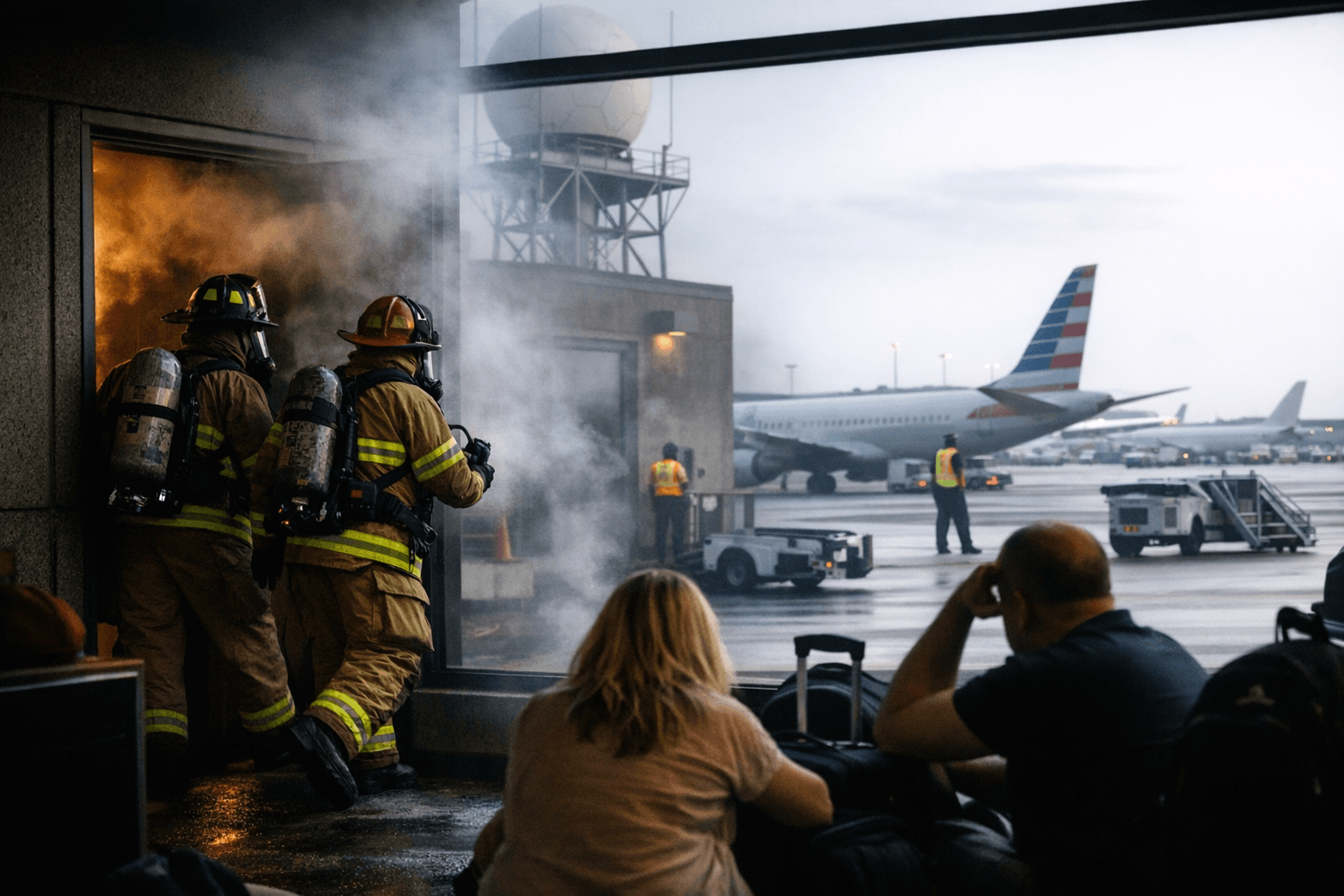
The ground stop began just before 5 p.m. Friday. The FAA's alert page had initially indicated airports were expected to remain under the stop until 7 p.m., but the resumption unfolded in stages. Flights began departing after 7 p.m., though the formal ground stop remained in place until approximately 8 p.m., when it transitioned to a ground delay. Duffy announced shortly before 9 p.m. that flights had fully resumed at the affected airports, meaning the disruption stretched for roughly three to four hours depending on the airport.
The ripple effects across the region were significant. FlightAware data showed average departure delays of 1 hour and 31 minutes at BWI, 1 hour and 25 minutes at Reagan, and 1 hour and 4 minutes at Dulles. WJLA reported Dulles was seeing 90-minute departure delays that were still increasing as of early evening. Between 25 percent and one-third of all departing flights from the four affected airports were delayed following the ground stop, according to NBC4 Washington. Philadelphia International Airport was also placed on a separate ground delay that evening due to what the FAA described as equipment outages.
The Potomac TRACON's geographic footprint explains why a single facility malfunction can create such cascading disruption across the mid-Atlantic corridor. The facility controls terminal airspace not just for BWI and the two Washington airports, but for Richmond, Charlottesville, and numerous smaller regional airports as well. The replacement of the faulty circuit board resolved the immediate hazard, but the evening's flight schedule across the region did not recover before widespread delays had already accumulated.
This article was produced by Prism’s automated news system from verified source data, official records, and press releases, then run through automated quality and moderation checks before publishing. The system is built and supervised by the people who set the standards it runs under. Read our full AI policy.
Did this article answer your question?