Council Chair Pauses Major Zoning Bill, Sparks Neighborhood Debate
At a December 1 Land Use and Transportation Committee hearing, Chair Ryan Dorsey announced he would not advance City Council Bill 25 0066 because he lacked the votes, effectively pausing the mayor's centerpiece Housing Options and Opportunities package. The decision responds to strong grassroots opposition and raises questions about homeownership, neighborhood change, and how Baltimore will pursue housing affordability.

Committee chair Ryan Dorsey adjourned a contentious hearing on December 1 without a committee vote, announcing that City Council Bill 25 0066 would not move forward at this time because he did not have the votes to pass it. The bill, central to the mayor's Housing Options and Opportunities package, would eliminate many single family zoning requirements and allow owners to replace single family houses and rowhouses with up to four units by right in numerous residential districts.
The Land Use and Transportation Committee hearing drew dozens of public speakers, with attendees overwhelmingly opposing the measure. Opposition coalesced among a mix of neighborhood activists and several council members, including Paris Gray, Phylicia Porter, Mark Parker, and Vice President Sharon Green Middleton, who raised concerns about process, stakeholder engagement, and possible unintended consequences of the proposal. Concerns cited at the hearing included threats to Black homeownership, weak code enforcement capacity, and the risk that speculative investors could exploit new development rights.
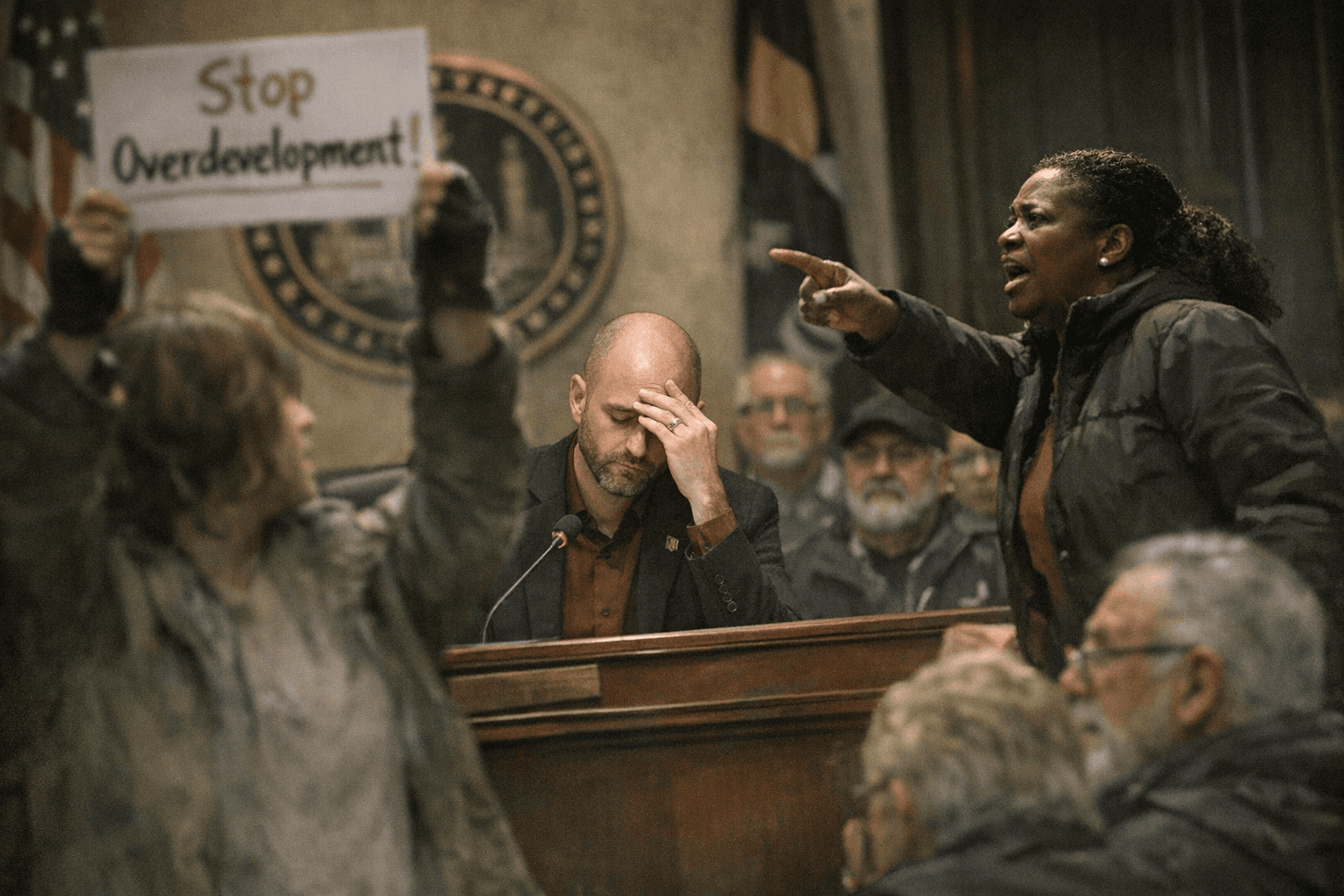
Council members and community groups signaled a range of possible modifications under discussion, including limiting the number of units allowed by right to two instead of four and imposing a three year study requirement to evaluate impacts before broader changes take effect. Those amendments reflect an institutional impulse to slow the policy change and to seek more data and neighborhood consultation before altering long standing zoning rules.
For Baltimore residents, the pause means more debate ahead over how the city balances increasing housing supply with preserving stable homeownership and neighborhood character. Proponents argue that allowing more units could expand housing options and address affordability, while opponents worry about displacement, pressure on local infrastructure, and erosion of generational wealth in communities of color. The committee's inability to coalesce highlights a broader political dynamic where grassroots activism is shaping council deliberations and forcing elected officials to weigh technical policy goals against local acceptance.
Next steps remain unclear. The lack of a new hearing date means council leadership must negotiate amendments, build consensus, and reconcile competing priorities before any full council vote. The episode underscores the importance of sustained public engagement and rigorous impact analysis as Baltimore considers major changes to its housing and zoning framework.
This article was produced by Prism’s automated news system from verified source data, official records, and press releases, then run through automated quality and moderation checks before publishing. The system is built and supervised by the people who set the standards it runs under. Read our full AI policy.
Did this article answer your question?