Court fight seeks more transparency in Maryland primary mail ballot count
A lawsuit filed on Primary Election Day pushed Maryland’s mail-ballot count back into court, where Baltimore voters could see new rules for watching, preserving and trusting the canvass.

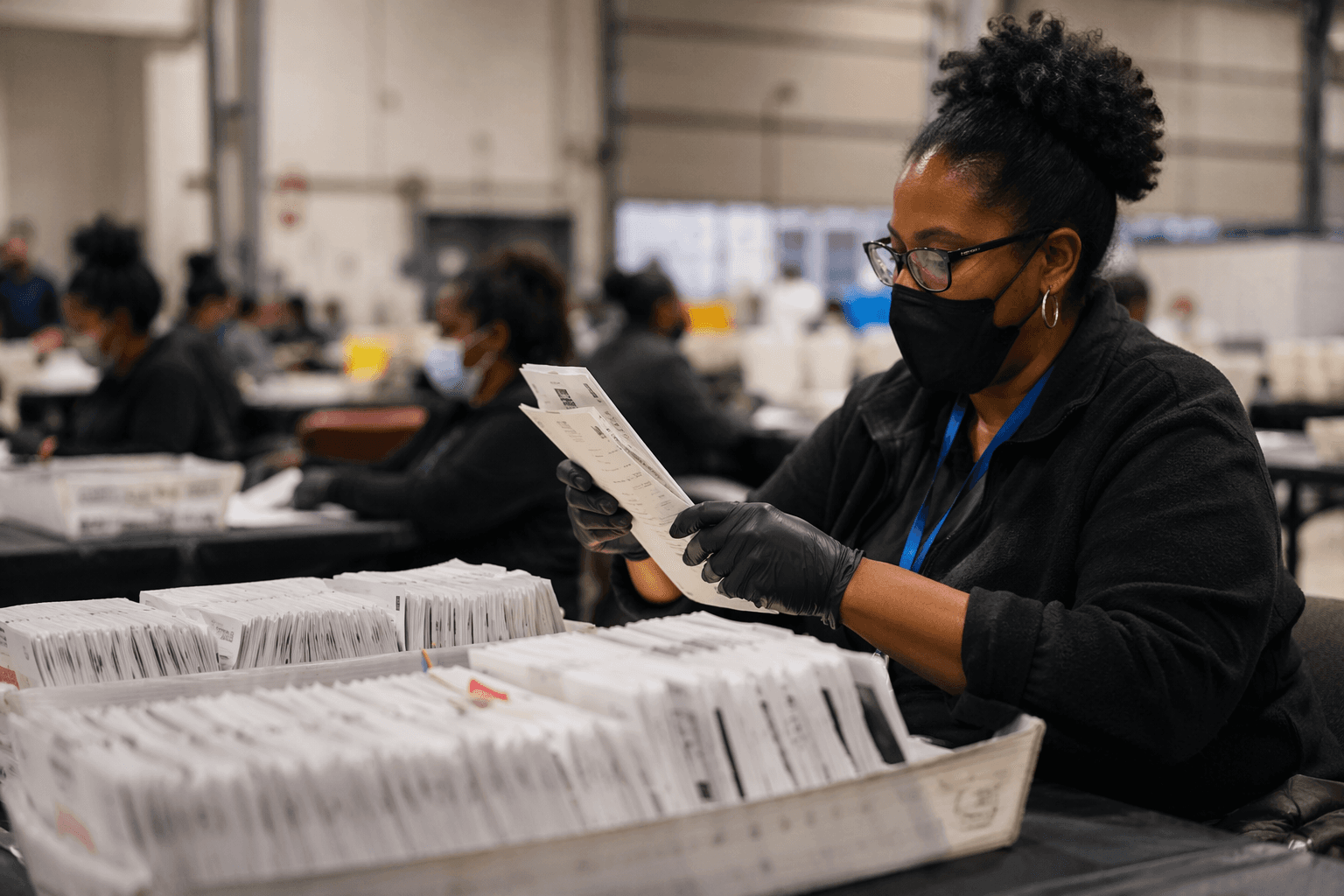
A court fight filed on Primary Election Day pushed new scrutiny onto how Baltimore City voters’ mail ballots were watched, counted and preserved after more than 437,000 replacement ballots were sent statewide. The case did not seek to stop the July canvass. Instead, it asked a judge to impose transparency rules after a printing vendor error scrambled the June 23, 2026 primary and left voters, campaigns and election officials sorting out which ballots counted.
The plaintiffs included nine candidates for office and Secure the Vote, and they argued that the Maryland State Board of Elections handled the mail-ballot problem illegally and unconstitutionally. They asked for live streaming, preservation of ballots and other materials, and public observation of the process. That is a direct Baltimore City issue because city races were part of the same statewide election system, and Baltimore City Board of Elections results were already moving through the state dashboard alongside other jurisdictions.
Maryland election officials had approved written canvassing guidance on June 10, 2026, to direct local boards on how to handle original and replacement mail-in ballots. The board said local canvassing could begin June 1, eight business days before early voting, and that members of the public could observe the canvass. Additional canvassing days were allowed, but not on Primary Election Day. Provisional ballot counting was set to begin July 1.
The replacement-ballot instructions told voters to destroy the first ballot packet and return the replacement ballot. State guidance also said local election offices could identify and secure original ballots that were returned after replacement ballots had been issued. Officials said replacement ballots sent to UOCAVA voters were also part of the response, while voters who used web-delivered print-at-home ballots were not affected.
The dispute intensified when the judge heard arguments in chambers even though both sides had reportedly agreed the matter should be heard in public. Election officials called the lawsuit frivolous and said the claims were false or misleading. They also said some of the requested remedies were already happening or would be illegal, including the notion of allowing people to vote after Election Day.
The issue landed while roughly 182,000 mail-in ballots were still outstanding after election day, meaning the count would continue well after the June 23 primary. For Baltimore voters, the practical stakes ran beyond procedure: if the court imposed stricter observation rules or added safeguards, it could change how closely residents watched the canvass, how quickly results were certified, and how much confidence they placed in ballots cast from neighborhoods across the city.
This article was produced by Prism’s automated news system from verified source data, official records, and press releases, then run through automated quality and moderation checks before publishing. The system is built and supervised by the people who set the standards it runs under. Read our full AI policy.
Did this article answer your question?