Downtown Residents Demand Baltimore Act on Encampments, Trash, Sanitation
A downtown Baltimore resident says she regularly cleans human feces from the alley behind her condo, as neighbors demand year-round sanitation fixes beyond pre-event cleanups.
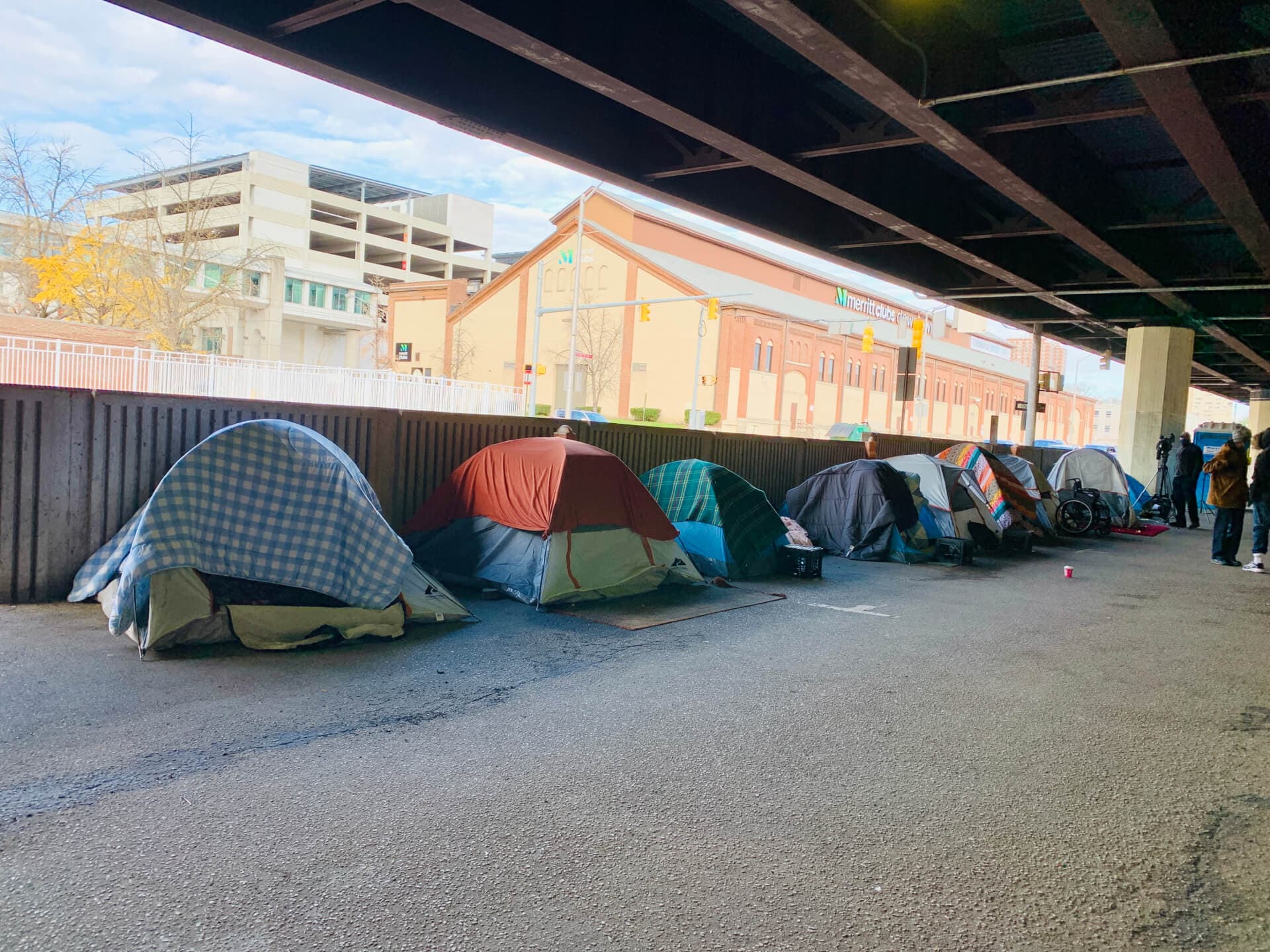
Melanie Chamberlain has made a grim routine of cleaning human feces from the alleyway behind her downtown Baltimore condominium. She also picks up trash throughout her surrounding neighborhood, tasks she says fall to residents because the city's response has been anything but consistent.
Chamberlain is among a growing number of downtown residents pushing the Scott Administration to take sustained action on homeless encampments, sanitation, and the absence of public bathrooms in the city's core. Leela Koilpillai, a board member of the City Center Residents Association, says the situation deteriorated further after a recent winter storm. "There was trash everywhere, feces, and people were urinating, and it was very uncomfortable," Koilpillai said. "I mean, we felt bad for them as well. They didn't have a place to go."
Beyond the immediate sanitation concerns, residents describe encampments blocking sidewalks and cite broader safety worries. The lack of public restrooms, they argue, is not a peripheral issue but a direct driver of the conditions they encounter daily.
The frustration is sharpened by what residents describe as a selective cleanup pattern. Downtown areas tend to get attention before high-profile events, a dynamic that became visible around the recent CIAA tournament. Residents say they want that same standard applied every week of the year, not just when the city expects a spotlight.
Baltimore does have a formal policy on the books. The Baltimore City Encampment Resolution Protocol, which took effect in January 2024 under the Scott Administration, outlines a trauma-informed, Housing First framework for addressing encampment sites. The protocol's stated goal is to engage each encampment resident 30 days before any planned site resolution, connecting them with immediate needs and longer-term housing or shelter options. Once shelter is arranged, outreach teams work with residents to sort belongings, and personal items can only be discarded with written consent. The Department of Public Works and the Department of Recreation and Parks are authorized under the protocol to perform "trash only" cleanups as a site winds down, leaving tents and personal belongings in place until consent is obtained.

The protocol's guiding principle is explicit: "The primary goal is to connect individuals and families experiencing unsheltered homelessness to permanent housing. If housing is unavailable, then shelter will be offered."
What the protocol does not address is the consistency gap residents are describing. The document acknowledges that "there is no one-size-fits-all solution when it comes to addressing encampments" and calls for coordination among city agencies, but it focuses on the process of resolving specific sites rather than establishing a routine for ongoing downtown sanitation. It makes no mention of public restrooms as part of the city's response.
Whether the protocol has been applied to the specific downtown locations Chamberlain and Koilpillai reference remains unclear. The Scott Administration has not issued a public response to the residents' complaints, and no DPW or Department of Recreation and Parks records documenting recent cleanups in the cited areas were available. A separate headline circulating in local coverage notes that a Maryland leader is projecting a 25 percent increase in homelessness statewide due to federal funding cuts, a trend that would put additional pressure on the city's existing protocols and the residents already managing the consequences at street level.
This article was produced by Prism’s automated news system from verified source data, official records, and press releases, then run through automated quality and moderation checks before publishing. The system is built and supervised by the people who set the standards it runs under. Read our full AI policy.
Did this article answer your question?