Families of Key Bridge victims settle with Dali owner, operator
Families of six workers killed in the Key Bridge collapse settled with the Dali’s owner and operator, but Baltimore’s larger fight over liability, costs and accountability continues.

The families of the six highway workers killed in the Francis Scott Key Bridge collapse, along with survivor Julio Cervantes, settled with the owner and operator of the Dali, a major step that brings civil closure for some of the people most directly hit by the March 26, 2024 disaster while leaving broader legal questions unresolved.
Court papers filed just before the federal trial was set to begin kept the settlement terms confidential, so the public still does not know how much money is involved or how the payments are structured. Attorneys for the families said the agreements give their clients a chance to close a devastating chapter after more than a year of litigation over one of the deadliest infrastructure failures in modern Maryland history.
The bridge came down after the Dali lost power and struck a support pier, sending the span into the Patapsco River and killing a road crew working on the bridge that night. The workers killed in the collapse included Alejandro Hernandez Fuentes, Dorlian Ronial Castillo Cabrera, Maynor Yassir Suazo Sandoval, José Mynor López, Carlos Daniel Hernandez Estrella and Miguel Luna. Cervantes was the lone survivor named in later coverage.
The settlement lands in the middle of a wider legal reckoning that has not ended. The Dali’s owner and manager, Grace Ocean Private Limited and Synergy Marine Pte Ltd., had been pressing a maritime-liability defense tied to an old federal law often associated with the Titanic era. Maryland separately reached a $2.25 billion settlement with the same companies in May 2026, while the U.S. government previously announced a settlement of more than $100 million in October 2024. State officials said the Maryland deal did not resolve claims against Hyundai Heavy Industries, the shipbuilder.
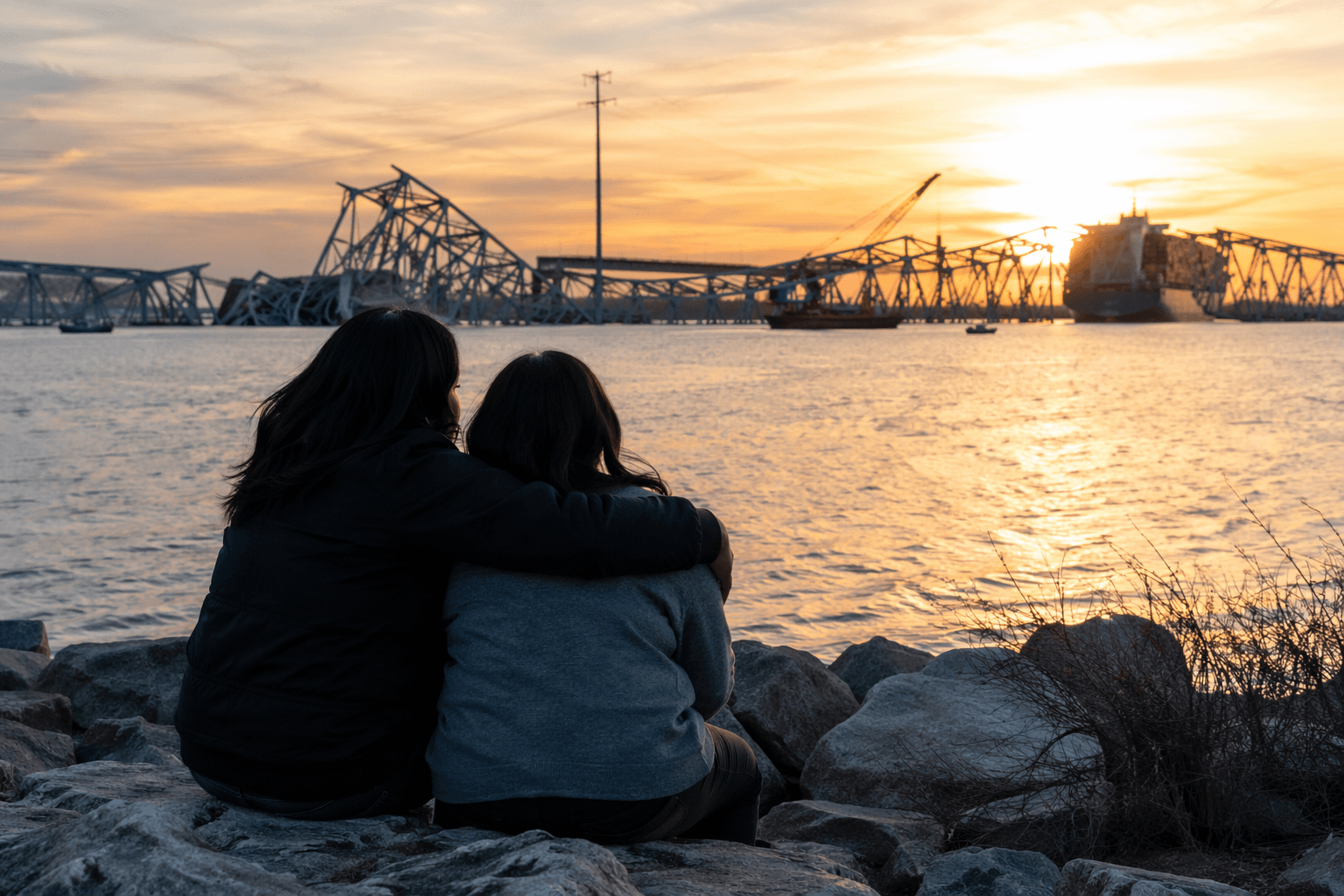
Additional settlements tied to BGE and damaged infrastructure showed that the financial fallout is still moving through multiple channels. Federal prosecutors also announced criminal charges against three defendants in May 2026, a development some family attorneys have said could strengthen the civil case.
For Baltimore, the consequences stretch far beyond the courtroom. The collapse crippled a major East Coast transportation and shipping corridor, disrupted commerce at the Port of Baltimore and forced Maryland to rethink how it will rebuild. Transportation officials now put the replacement bridge’s cost at roughly $4.3 billion to $5.2 billion, with an expected open-to-traffic date in late 2030. Maryland has also reset its procurement process after ending its relationship with Kiewit, underscoring how the disaster continues to shape the city’s economy, labor risks and memory of the bridge itself.
This article was produced by Prism’s automated news system from verified source data, official records, and press releases, then run through automated quality and moderation checks before publishing. The system is built and supervised by the people who set the standards it runs under. Read our full AI policy.
Did this article answer your question?


