Hampden Residents Demand Reimbursement After Basement Sewage Backups; City Faces Policy Scrutiny
Hampden homeowners on Elm Avenue say eight basements flooded after snow melt on Jan. 27; they seek more than $120,000 in reimbursement and want the city's program expanded.

Residents on the 3700 block of Elm Avenue in Hampden woke to raw sewage rising through toilets, tubs and drains after a heavy snowfall on the morning of January 27, and eight homeowners are now seeking reimbursement for more than $120,000 in documented damage. Attorney Thiru Vignarajah, representing the group, stood with neighbors below the Rotunda complex and demanded the city repair homes and expand the reimbursement program to cover recurring backups.
The City of Baltimore is operating under a federal consent decree from 2002 that requires maintaining a $2 million reimbursement fund for sanitary sewer overflows, and the city’s Expedited Reimbursement Program offers up to $5,000 for wet-weather damages if the event is recorded within a 24-hour period. The Department of Public Works released a statement saying, “The Department of Public Works understands the concerns raised by residents and takes reports of basement backups seriously. The City maintains reimbursement programs for certain wet-weather sanitary sewer overflows; however, eligibility is governed by specific criteria. Claims that fall outside existing program parameters, including basement backups produced by dry-weather events, may be submitted to the City Law Department for review through the standard claims process, and each claim will be evaluated on its individual merits.”
Neighbors described substantial, visible damage. Pamela Potter-Hennessey said, “We had to pump hundreds of gallons of raw sewage out of our basement” and that the episode “lasted a day and a half.” Photographs submitted by homeowners show tubs and toilets filled with sludgy black sewage, one property with a 12-inch-deep lake of waste, and reports of up to 8 inches of raw sewage entering basements at the corner of Union and Elm. Long-time residents report repeated intrusions; one resident identified only as John said he had sewage back up into his basement three times since October.
Homeowners have compiled specific cost tallies. The eight households documented roughly $120,000 in combined damages or, as described in some statements, more than $120,000. One resident estimated up to $40,000 in losses, and JC Senatore reported spending close to $18,000 on cleanup and repairs since November, noting that “the sewage water had gone into the drywall and under the tile, and it really needed to be torn up completely.” Residents reported filing insurance claims, submitting 311 calls and assembling photographic evidence and invoices for formal requests.
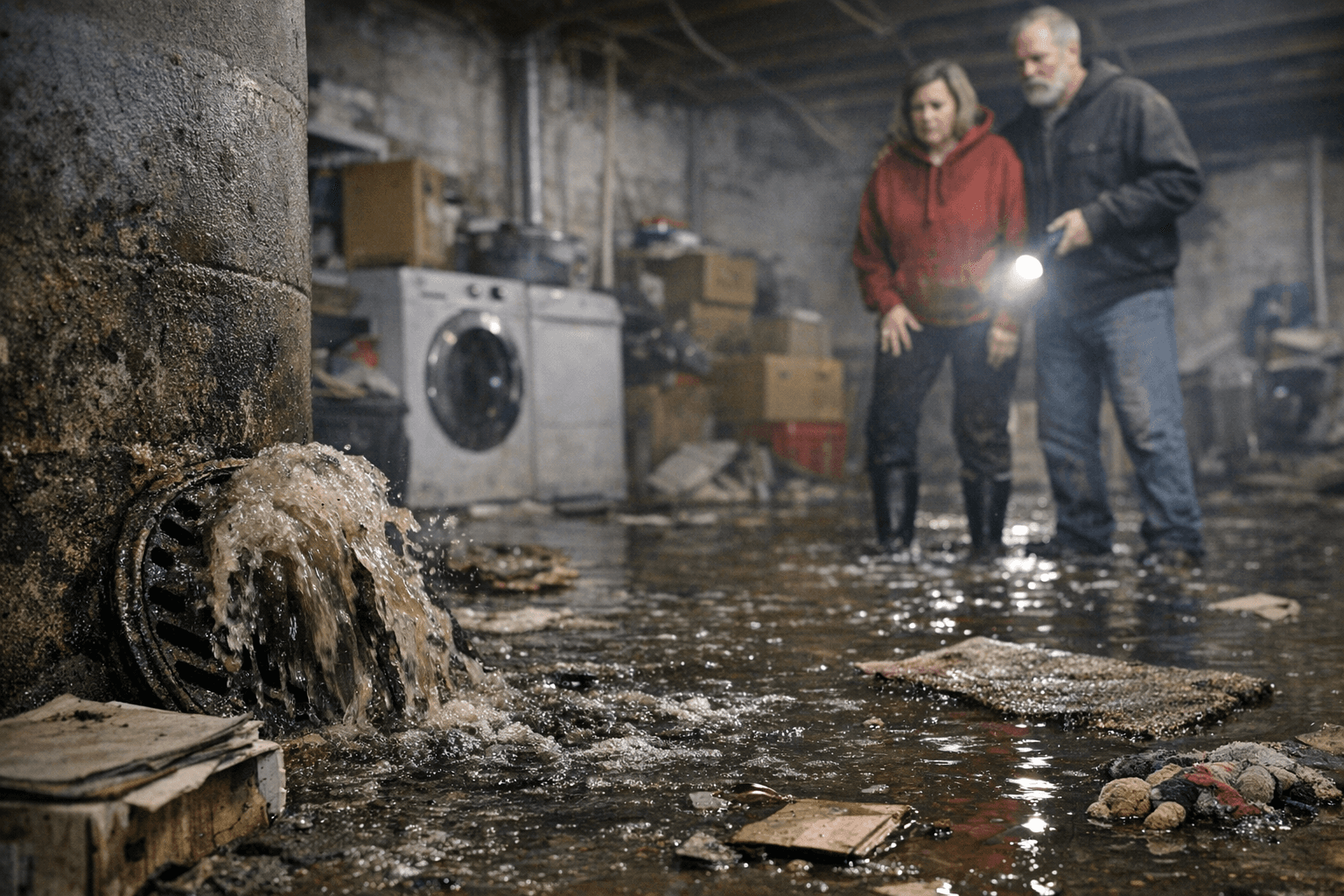
Neighbors and Vignarajah fault aging infrastructure and point to dry-weather backups as part of the problem; Vignarajah said, “You should expand this to everyone, especially because two-thirds of these sewage backups happen when there is no rain,” and added, “Enough is enough. These families and these homes need to be repaired and reimbursed for the damage done because of the city’s broken infrastructure.” Residents also raised whether the Rotunda redevelopment and the 379-unit Icon apartments added roughly a decade ago have increased demand on local sewer lines. Homeowners reported seeing brown paper towels and other non-residential material in the flows, and in at least one episode the city cleared a clogged city line by that evening, though neighbors say officials have not provided a clear explanation for recurring failures.
Vignarajah has filed a letter to the Department of Public Works with documentation of the recent backups and the eight reimbursement requests. He has also said that since 2021 only about eight applicants have been approved under city programs. The immediate questions ahead are whether the Department of Public Works and the City Law Department will approve these claims, whether the city will reinterpret or expand the expedited program’s wet-weather and 24-hour requirements, and whether officials will produce the fund accounting and records residents are seeking as evidence of broader infrastructure failures.
This article was produced by Prism’s automated news system from verified source data, official records, and press releases, then run through automated quality and moderation checks before publishing. The system is built and supervised by the people who set the standards it runs under. Read our full AI policy.
Did this article answer your question?