Judge hears fight over freezing Archdiocese property sales in bankruptcy
A judge weighed whether Baltimore church property sales should be frozen, a fight that could decide how much money 900-plus abuse survivors can recover.
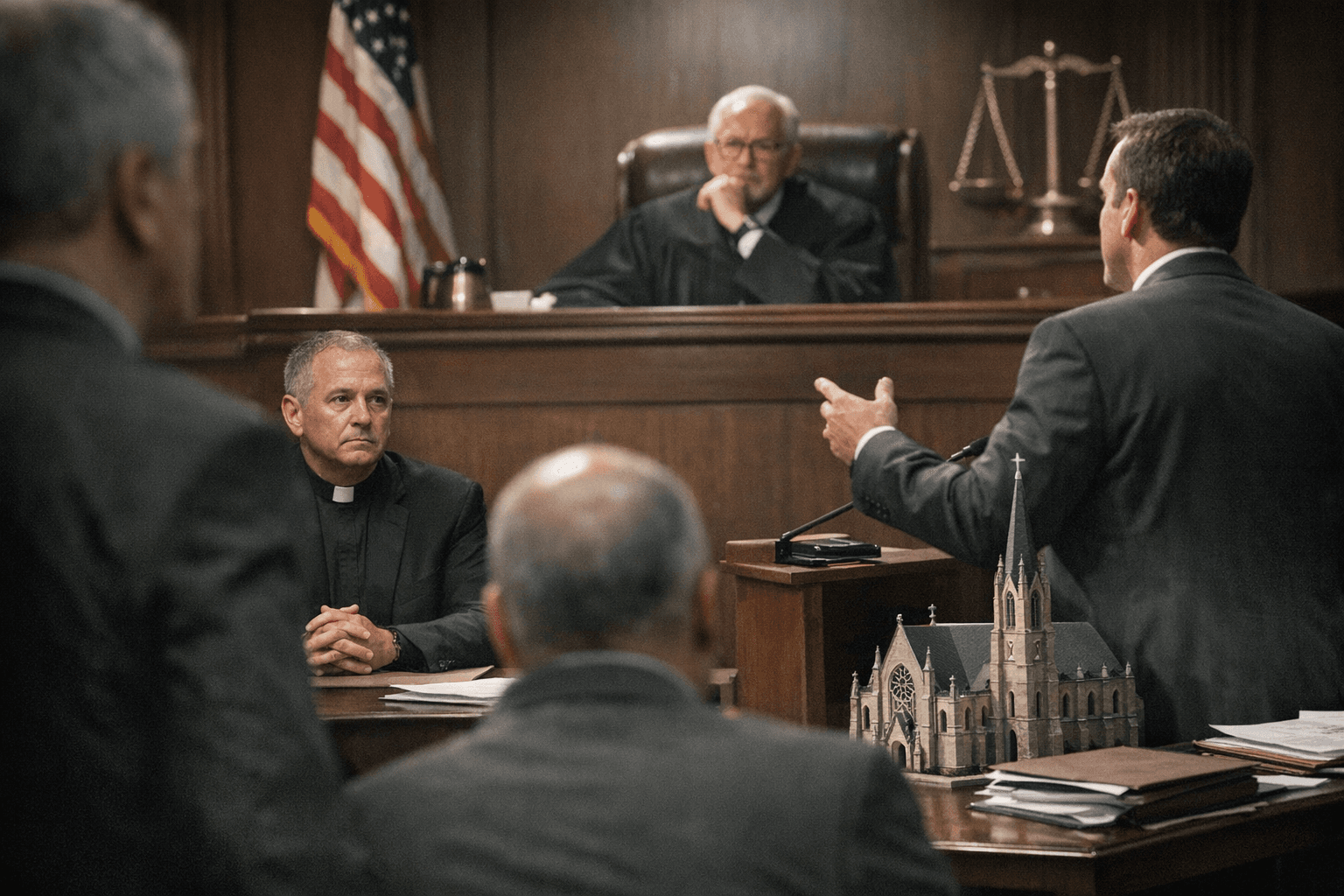
A federal judge heard a fight over whether the Archdiocese of Baltimore can keep selling parish and school property while its bankruptcy case continues, a clash that could shape how much money remains for more than 900 clergy abuse survivors waiting for compensation. Survivors say the sales move assets out of reach; church leaders say the properties belong to separate parish and school entities, not the bankruptcy estate.
The hearing on April 16 came as the case turned to a central money question: if Baltimore church real estate keeps changing hands now, will there still be meaningful assets left when claims are finally paid? Auxiliary Bishop Adam Parker testified that more than $15 million from parish and school property sales would go into the archdiocese’s bank account. Survivors’ lawyers pointed to that flow of money, and to a 5% kickback from parish property sales, as evidence the archdiocese is still financially tied to deals it says are outside the bankruptcy.
The dispute is tied to Seek the City to Come, the archdiocese’s consolidation plan launched in 2022 in response to declining attendance and revenue. The plan would shrink 61 parishes into 30, but on April 2 Judge Michelle M. Harner temporarily halted most ongoing Seek the City transactions in a related proceeding. At the April 16 hearing, the court focused on whether the archdiocese and its non-debtor affiliates are truly separate for bankruptcy purposes, or whether continued sales could violate Chapter 11 rules.
The Archdiocese of Baltimore filed for Chapter 11 on September 29, 2023, in the U.S. Bankruptcy Court for the District of Maryland, Baltimore Division, after Maryland’s Child Victims Act was about to take effect. The state attorney general’s redacted report, released months earlier after a four-year investigation, found decades of abuse and cover-up, said more than 600 children were abused, and identified 156 current or former clergy, seminarians, deacons, religious-order members, teachers and other employees tied to credible allegations.
In October 2025, the archdiocese filed a plan proposing a combined $33 million contribution from the archdiocese and affiliated Catholic entities, including parishes and schools, to a Survivors Compensation Trust. Church leaders also said insurance assets could produce hundreds of millions of dollars in recoveries. Survivors rejected the $33 million figure as too small, while their committee said an agreement in principle with The Hartford for $100 million marked a major step toward a broader resolution, pending court approval.
Archbishop William E. Lori, who had been subpoenaed, did not appear after successfully challenging the subpoena, leaving survivors without the direct questioning they had hoped for. For Baltimore, the outcome now hinges on a blunt question of accountability: whether parish roofs, school buildings and insurance rights will help pay victims, or slip further away before the case is resolved.
This article was produced by Prism’s automated news system from verified source data, official records, and press releases, then run through automated quality and moderation checks before publishing. The system is built and supervised by the people who set the standards it runs under. Read our full AI policy.
Did this article answer your question?