Maryland AG Brown Joins Multistate Brief Challenging Federal Agent Deployments in Minnesota
Maryland Attorney General Anthony G. Brown joined a multistate brief challenging federal agent deployments in Minnesota, arguing they exceeded authority and threatened civil liberties.
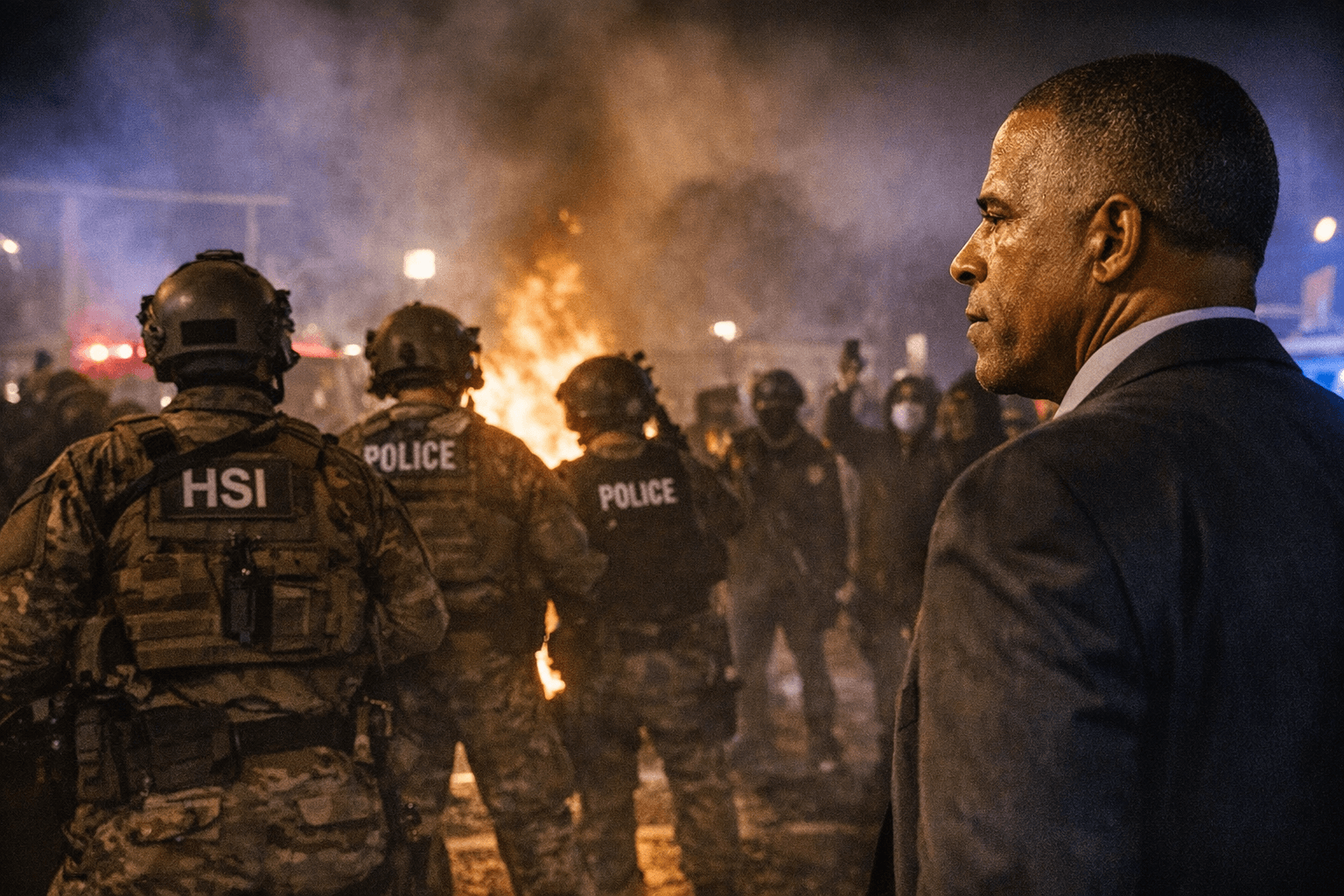
Maryland Attorney General Anthony G. Brown on January 23, 2026 joined a multistate amicus brief backing Minnesota’s court challenge to recent deployments of ICE, Border Patrol, and other federal agents into the Twin Cities area. The brief contends the federal operations exceeded lawful authority, produced constitutionally suspect stops and arrests, and in some cases led to serious harm, including fatalities. Maryland’s participation frames the filing as part of the attorney general’s broader civil-rights defense portfolio and asserts a state interest in ensuring federal actions respect state law and residents’ rights.
The legal filing asks courts to scrutinize and limit deployments that lack a statutory or constitutional basis or that risk trampling civil liberties. By joining other state attorneys general, Anthony G. Brown places Maryland among states arguing for judicial oversight of federal law-enforcement movements into local communities. The challenge centers on whether federal agents operating in a city may conduct stops, arrests, and other enforcement actions without coordination with state and local authorities or clear legal authority.
For Baltimore residents, the case is more than a distant legal dispute. The outcome could set precedent for how and when federal agencies may insert personnel into urban neighborhoods that host protests, immigration enforcement activity, or other public-order challenges. Communities in Baltimore with large immigrant populations, neighborhood organizers, and people who attend rallies at transit hubs or the Inner Harbor have reasons to follow the litigation. If courts restrict deployments found to be unlawful, residents could see stronger protections against warrantless stops and clearer lines of accountability when federal agents operate locally. Conversely, a ruling that broadens federal latitude could change how Baltimoreans experience enforcement actions by agencies beyond the Baltimore Police Department.
Maryland’s action also speaks to intergovernmental trust and operational coordination. Local jurisdictions frequently coordinate with federal partners on serious crime and public safety. This amicus brief signals that Maryland’s top law enforcement lawyer will defend the boundaries of that cooperation when constitutional rights or state authority are implicated. The filing situates civil-rights enforcement alongside traditional state concerns about public safety and fiscal responsibility.
What happens next is a court review of Minnesota’s challenge, with potential rulings that could clarify legal limits on federal deployments nationwide. Baltimoreans should note that Attorney General Anthony G. Brown has made the office an active participant in shaping those limits. Residents and community organizations concerned about civil liberties and immigration enforcement may find the court’s decisions have direct consequences for how federal agents interact with Maryland communities in the months and years ahead.
This article was produced by Prism’s automated news system from verified source data, official records, and press releases, then run through automated quality and moderation checks before publishing. The system is built and supervised by the people who set the standards it runs under. Read our full AI policy.
Did this article answer your question?