Maryland Gov. Moore's Approval Drops Below 50% for First Time
Gov. Wes Moore's approval fell to 48% in a new UMBC poll, the first time below 50% since he took office, with tax hikes and eroding trust driving the decline.
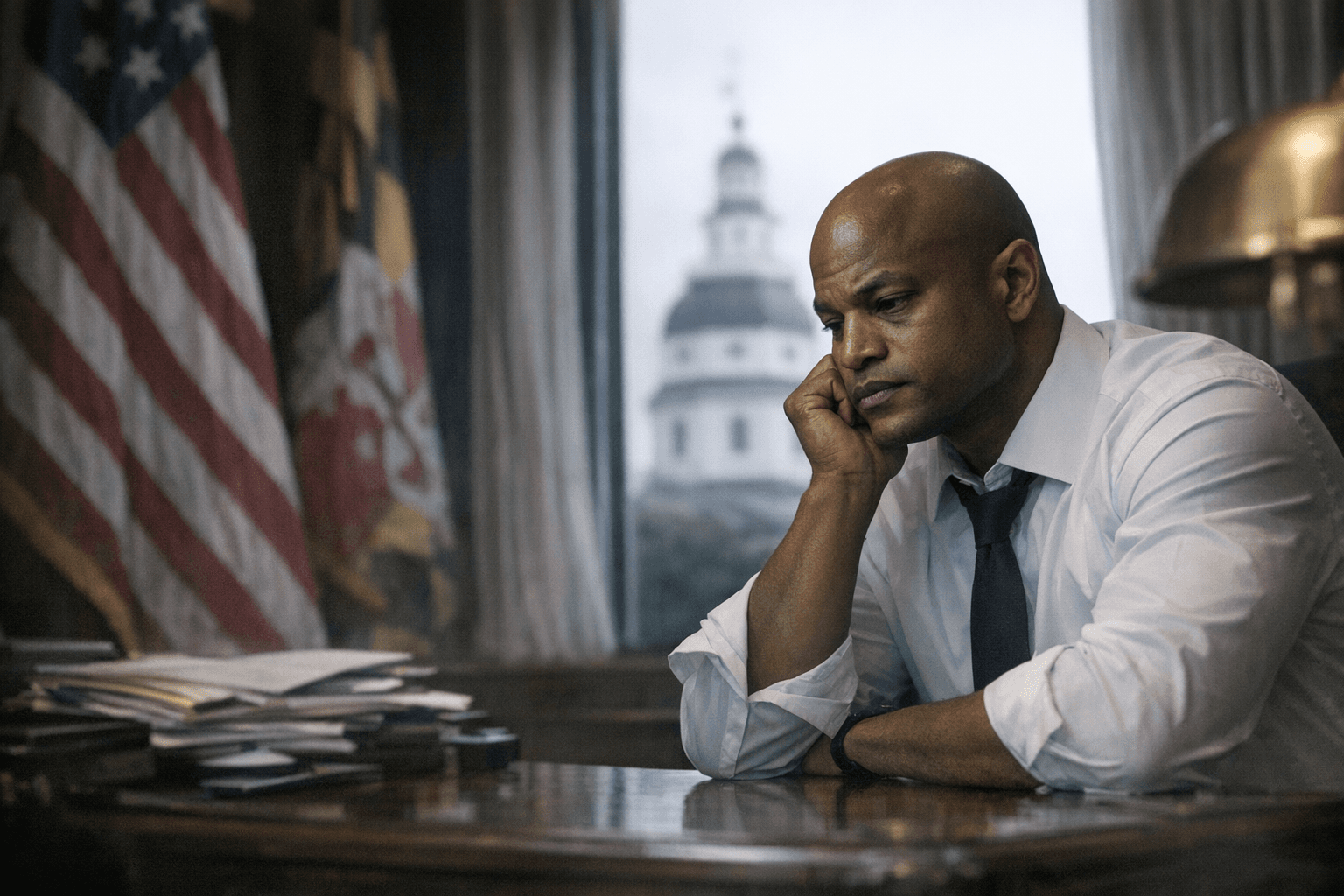
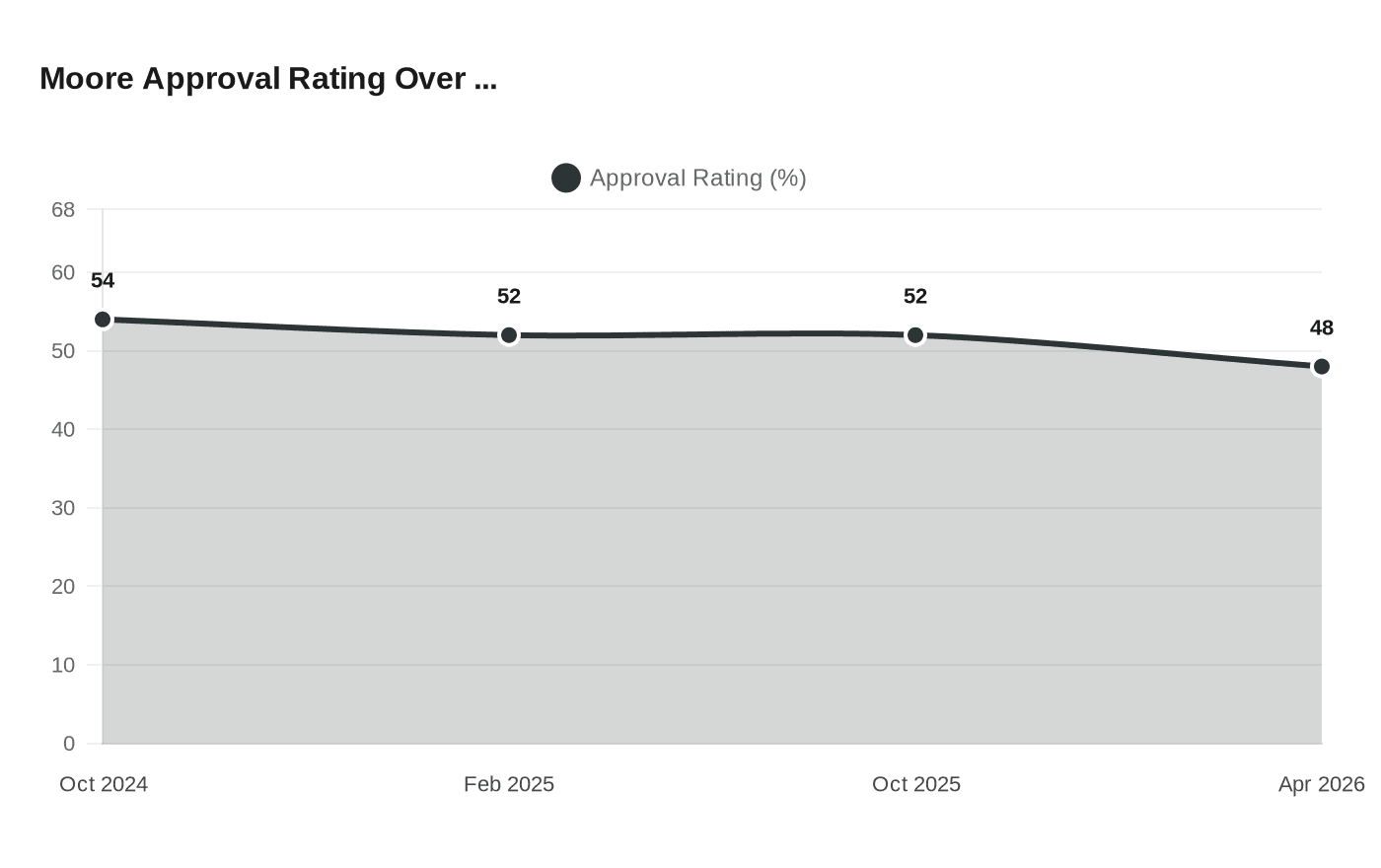
Wes Moore was booed by a portion of the crowd at the Baltimore Orioles' home opener last week, and a new poll suggests that reception was not an isolated moment. A survey released April 1 by the UMBC Institute of Politics at the University of Maryland, Baltimore County put Moore's approval rating at 48%, the first time his numbers have slipped below 50% since he took office in January 2023.
The poll, conducted March 17-22 among 804 Maryland adults, found 42% of respondents disapprove of his job performance, with 9% saying they don't know. The margin of error is plus or minus 3.5 percentage points. The result marks a double-digit fall from the mid-50s and low 60s recorded early in Moore's tenure. UMBC had measured his approval at 54% in October 2024, 52% in February 2025, and 52% again in October 2025.
"Overwhelmingly, Marylanders are saying the cost of living across all these indicators is higher than it was last year," said Mileah Kromer, director of the UMBC Institute of Politics, who oversaw the survey. "They don't think things are going well. They're mad."
The top driver of disapproval was raised taxes and fees, cited by 27% of those who view Moore unfavorably. Another 24% pointed to poor leadership, dishonesty, or personal dislike, while 14% blamed fiscal mismanagement and the state budget deficit, and 12% named cost-of-living increases, including rising utility bills.
Those concerns trace directly to Maryland's 2025 legislative session, during which Moore and the General Assembly closed a $3.3 billion budget deficit through a combination of spending cuts and tax increases. The Maryland Freedom Caucus labeled the package "the largest tax hike in Maryland history" and accused Moore of "saddling working families with new fees."
The pessimism extends well beyond Moore's personal ratings. Fifty-nine percent of respondents said Maryland is on the wrong track, compared to just 30% who believe the state is heading in the right direction, a sharp deterioration from October 2025, when 48% held the wrong-track view. Seventy-six percent rated Maryland's economic conditions as poor or fair, up from 66% in October 2024. When asked to compare Maryland's economy to the rest of the country, 45% said conditions are about the same, 29% said worse, and 22% said better.
Moore's erosion is steepest among independent voters. Among unaffiliated Marylanders, only 39% approve while 50% disapprove. Democratic voters still back him 69% to 20%, while Republicans oppose him 73% to 25%. Kromer noted that "attitudes toward the direction of the state and economic conditions have noticeably worsened since the fall" and that residents express "low levels of trust in all levels of government and both major political parties," conditions she called "exactly the kinds that erode gubernatorial approval ratings."
In Baltimore, the findings resonated on a personal level. Karen, a lifelong West Baltimore resident who asked not to be identified by last name, expressed skepticism about Moore's credibility. Pastor PM Smith weighed in on FOX45 after the poll's release, publicly questioning Moore's track record.
Moore downplayed the Orioles jeers, attributing them to the influence of Sinclair Broadcast Group and its conservative media ownership, and insisted, "There's a reason why I still am one of the most popular governors in the country." A spokesperson for his office pointed elsewhere for blame, saying, "Of course, Marylanders aren't happy right now, every single day the president is directly attacking them," and citing energy rebates Moore has pursued to offset household costs.
Moore formally announced his 2026 reelection campaign in September 2025, seeking a second term as Maryland's first Black governor. Persistent speculation about a 2028 presidential bid continues to follow him nationally, though he has repeatedly denied any such ambitions. The UMBC numbers arrive as a concrete warning that economic grievance and credibility doubts, left unaddressed, compound quickly, even in a state as reliably Democratic as Maryland.
This article was produced by Prism’s automated news system from verified source data, official records, and press releases, then run through automated quality and moderation checks before publishing. The system is built and supervised by the people who set the standards it runs under. Read our full AI policy.
Did this article answer your question?