Maryland Senate Budget Trims Proposed Cuts to Developmental Disabilities Administration
Maryland's Senate Budget and Taxation Committee adopted $127M in DDA cuts, rejecting Gov. Moore's proposed $500K cap on individual care budgets.
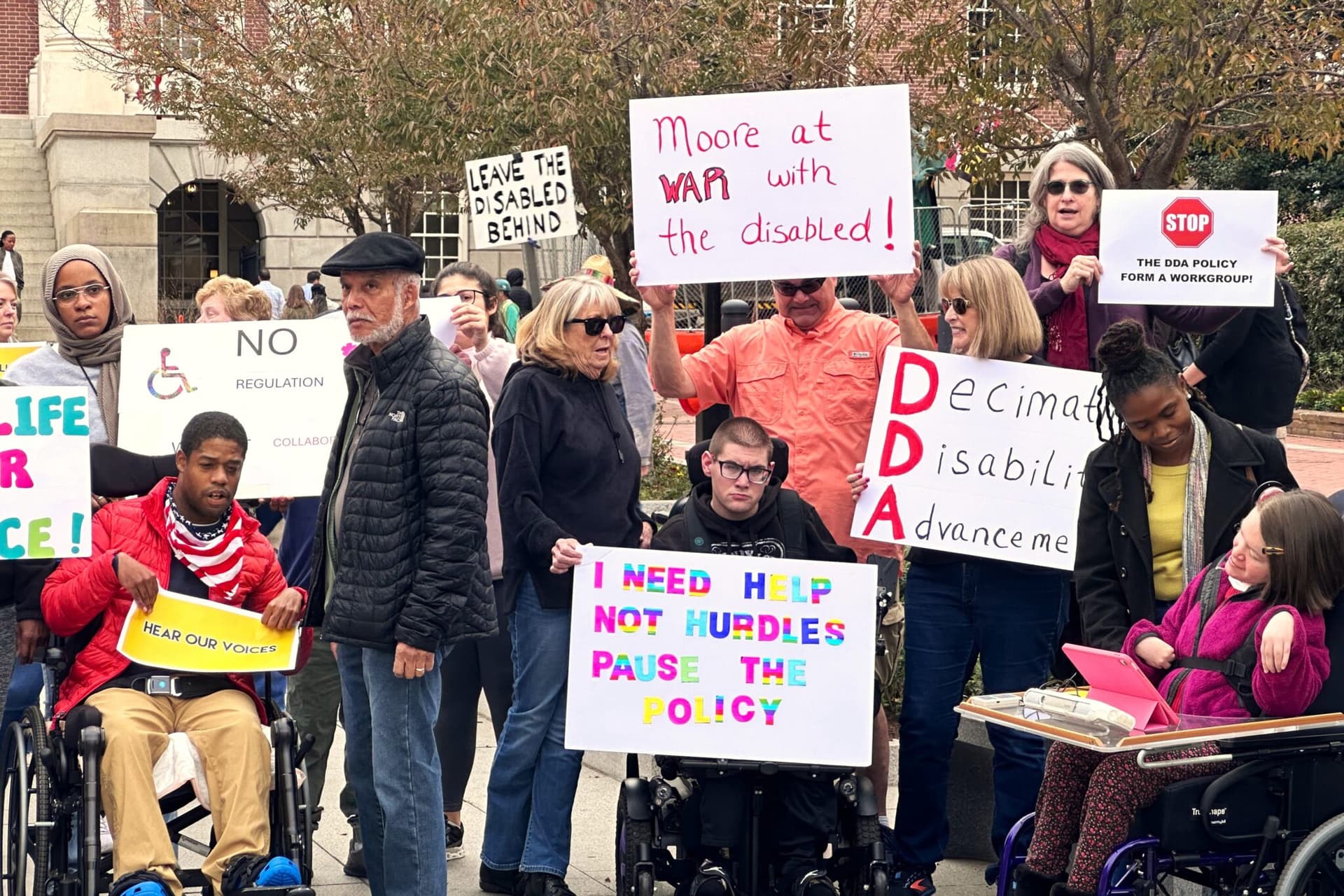
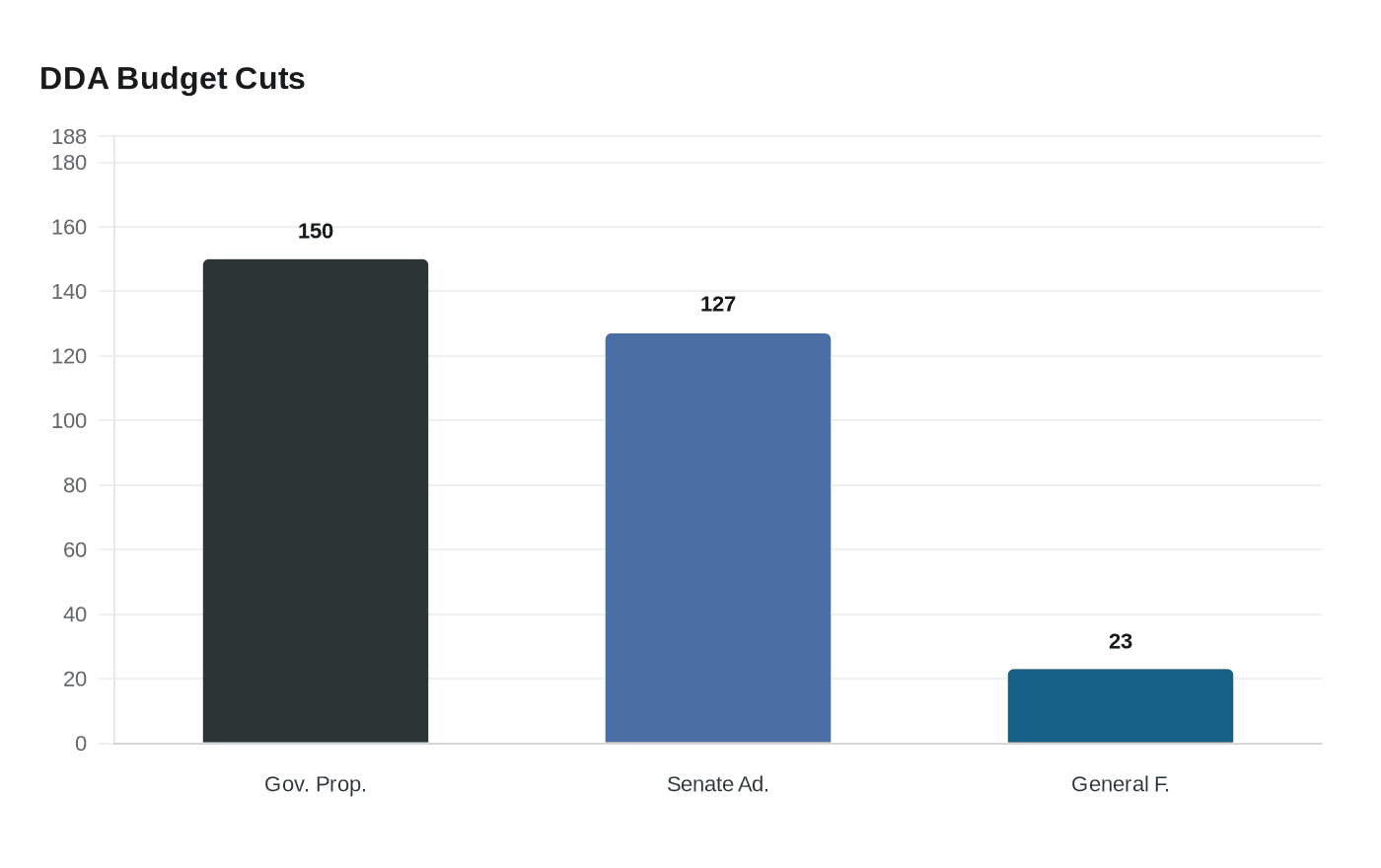
The Maryland Senate's Budget and Taxation Committee softened some of the sharpest proposed cuts to the state's Developmental Disabilities Administration last week, adopting $127 million in reductions rather than the full $150 million Governor Wes Moore had sought and declining to implement a $500,000 cap on individual care budgets that advocates had fiercely opposed.
To offset the difference, the committee transferred roughly $23 million from the state's General Fund. The DDA, nested within the Maryland Department of Health, had been among the hardest-hit agencies under Moore's fiscal year 2027 spending plan, facing a proposed reduction of roughly 10% of its total budget as the governor sought to close a projected shortfall that WYPR reported at $1.5 billion and WBAL-TV reported at $1.4 billion.
Moore had proposed three specific policy changes to drive down DDA costs: capping individual budgets for people requiring developmental disability care at $500,000, better enforcing one-on-one caregiver policies, and reducing wages for self-directed service providers. The Senate declined to implement the $500,000 cap on person-centered plan budgets, which provides discretionary funding to people with disabilities to cover the cost of support and care services.
Senator Guzzone, a member of the Budget and Taxation Committee, described the Senate's position as a forced compromise. "This is what I consider the best of the worst, if you will, choices," Guzzone said. "We came up with ways to maintain and make some cost containment but do our very best to minimize any impact on the people who rely on these services."
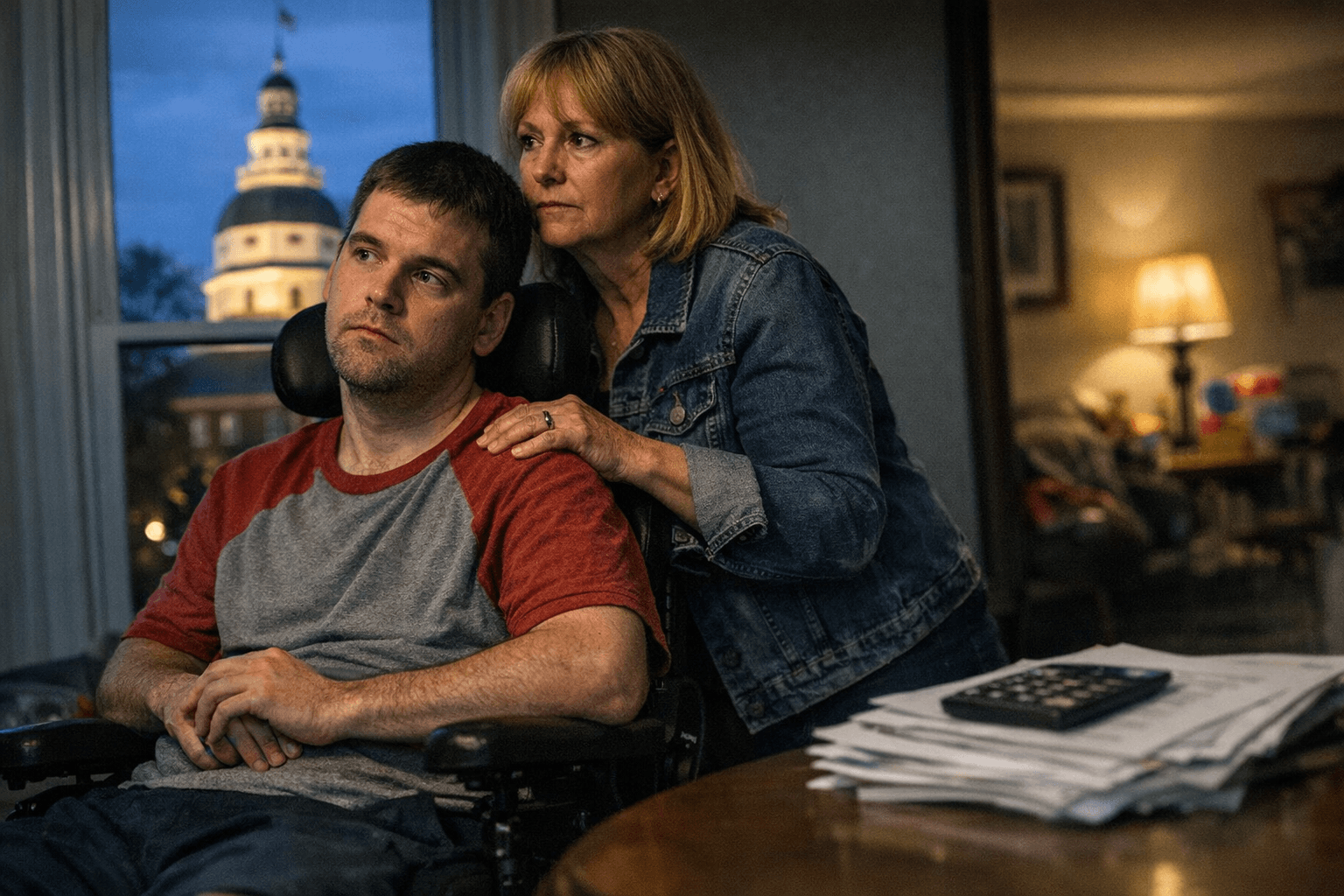
The legislative maneuvering followed weeks of intense advocacy in Annapolis. Hundreds of people with developmental disabilities, family members, and supporters converged on the State House to lobby lawmakers against the full scope of the governor's proposed reductions. The scale of what is at stake is significant: almost 17,000 Marylanders receive DDA services through community providers, while another 3,600 participate in a self-directed model in which families hire their own caregivers directly.
Advocate Rachel London told lawmakers the consequences of deep cuts would reach into daily life across the state. "We are here because so many services people rely on are at risk. These services are critical. They make real differences in the lives of people with developmental disabilities, helping them live, work and play in our communities," London said. Advocate Curtis Davis put the stakes in immediate terms: "They help people get out of bed, get to work, participate in their communities and lead meaningful lives."
For some families, the proposed cuts threatened far more than a line item. Jennifer Drucker, the mother of a 26-year-old with significant disabilities, told WBAL-TV 11 News she had already lost all of her income while serving as her daughter's primary caregiver and was preparing to move because she could no longer afford her mortgage. "My daughter has very special needs," Drucker said. "We dress her, feed her, bathe her. She needs 24/7 care." An advocate who gave only her first name, Danielle, was direct about what the cuts would mean personally: "These budget cuts aim to destroy everything I worked so hard to build and everything that I have accomplished so far."
The proposed reductions would effectively return DDA to its 2024 funding levels, according to WBAL-TV reporting, a rollback that advocate Matthew rejected outright. "The governor needs to come up with a better way to do this. We can't afford to go back," Matthew said.
The Senate's spending plan contains no proposed tax or fee increases. After the Budget and Taxation Committee completed its work, the full Senate was scheduled to debate the budget before sending the proposal to the House, where another round of negotiations over DDA funding levels awaits.
This article was produced by Prism’s automated news system from verified source data, official records, and press releases, then run through automated quality and moderation checks before publishing. The system is built and supervised by the people who set the standards it runs under. Read our full AI policy.
Did this article answer your question?