Maryland Supreme Court Ruling Threatens Baltimore City's Opioid Lawsuit Win
A $266M Baltimore opioid verdict is now at risk after Maryland's Supreme Court ruled that legally distributing opioids cannot be treated as a public nuisance.
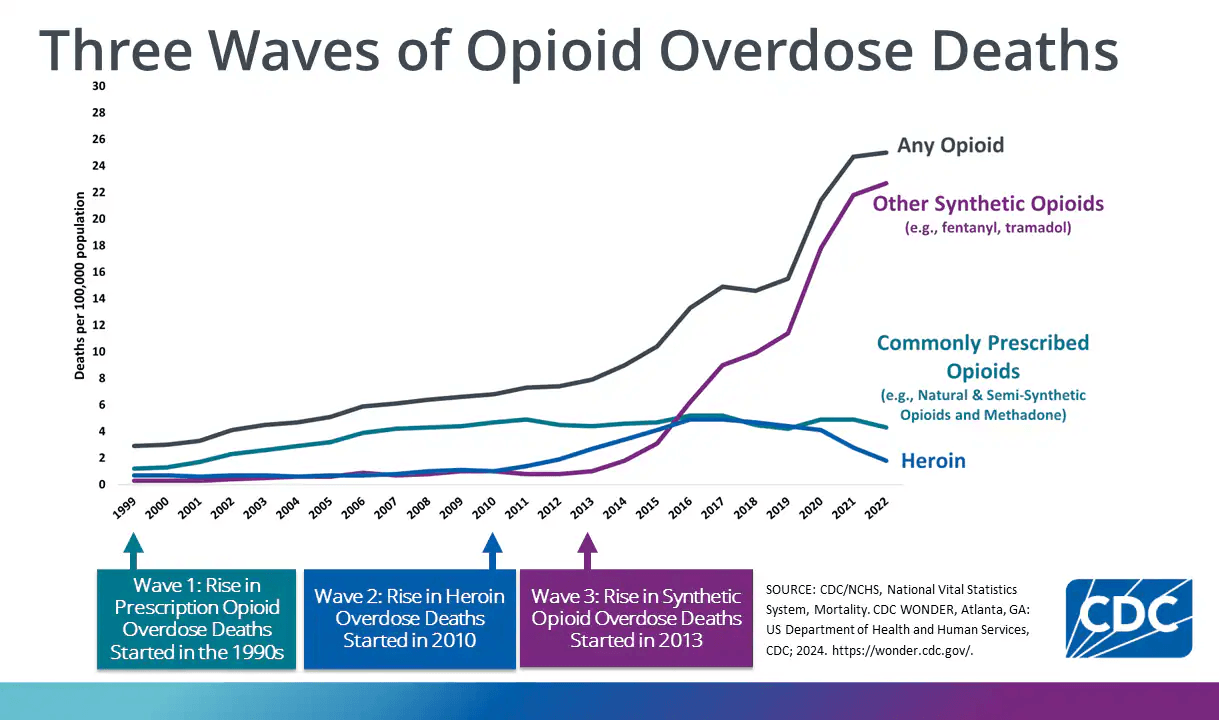
More than 6,000 Baltimoreans died from opioid overdoses over a recent six-year stretch, and the city spent years in court trying to make the companies that flooded its streets with painkillers help pay for the damage. Now, a ruling from Maryland's highest court has put one of the city's biggest remaining legal victories in jeopardy.
The city won $266 million at a jury trial against drug distributors McKesson and AmerisourceBergen, now known as Cencora. A Baltimore judge slashed that verdict in half, offering the city a total of $152 million. Baltimore accepted the reduced figure but appealed the judge's decision to the Maryland Supreme Court. That appeal now collides directly with the court's new ruling.
The state Supreme Court's decision centers on the idea of a public nuisance, a 600-year-old legal concept typically applied to property, like the pollution of a lake. The idea is that the government can bring legal action against conduct that "interferes with a public right." Baltimore's entire litigation strategy rested on that theory, arguing that drug manufacturers, distributors, and pharmacies should bear the cost of remediating the crisis they helped create.
Writing for the court, Justice Brynja Booth shut that door. "We decline to recognize a public right to be free from the adverse effects associated with a lawful product being diverted, misused, or abused," she wrote. To extend the doctrine that way, she continued, "would permit nuisance liability to be imposed on an endless list of manufacturers, distributors, and retailers of manufactured products that are intended to be used lawfully, when such products are misused and cause injury."
About half a billion opioids inundated Baltimore City and Baltimore County between 2006 and 2019, at the same time that drug companies were aggressively marketing painkillers to doctors and underplaying the risks of addiction, court records have shown. Baltimore has experienced the highest rate of overdose deaths of any major city in America, according to a series of articles from The Baltimore Banner and The New York Times.
The ruling does not touch the hundreds of millions Baltimore collected before trial. Many companies chose to settle rather than face a jury, and Baltimore won nearly as much in settlements as the entire state of Maryland will receive as part of a massive $26 billion settlement that ended the vast majority of claims across the country against several pharmaceutical giants. Those funds are not at risk. What remains uncertain is the fate of the $152 million judgment still working through appeals.
Tracy King, Mayor Scott's communications director, said: "The city's judgment against distributors McKesson and AmerisourceBergen following a successful jury trial remains on appeal, and the city will continue to defend the judgment."
The ruling also effectively ends Anne Arundel County's parallel opioid lawsuit. A federal judge had paused that case before trial and asked Maryland's Supreme Court to weigh in on the public nuisance question; the court's answer forecloses the county's ability to hold pharmacy benefit managers and drug distributors liable under that theory.
Bruce Poole, a Hagerstown attorney who has helped handle opioid lawsuits for several Western Maryland communities, said the ruling is concerning for Baltimore's case. "Other courts across the land have allowed these claims to go forward so the corporate wrongdoers pay at least part of the bill for the harm they have caused," he said. "Not in Maryland."
Poole said the city's legal strategy was sound, despite the new ruling. "I think the city did the absolute right thing," he said. "The jurors saw firsthand the damages and awarded appropriately."
McKesson and AmerisourceBergen did not immediately respond to requests for comment. With the public nuisance avenue now closed in Maryland, the city's ability to defend what a jury awarded its residents will hinge on whatever legal ground remains in the appeals ahead.
This article was produced by Prism’s automated news system from verified source data, official records, and press releases, then run through automated quality and moderation checks before publishing. The system is built and supervised by the people who set the standards it runs under. Read our full AI policy.
Did this article answer your question?