Maryland Union Files Complaints Over Surveillance Telework and Pay Policies
On December 24, 2025 AFSCME Council 3 filed unfair labor practice complaints against the State of Maryland alleging unlawful surveillance, changes to telework eligibility, and mishandling of shift differentials. The filings highlight staffing pressures and compensation concerns that could affect state services Baltimore residents rely on.
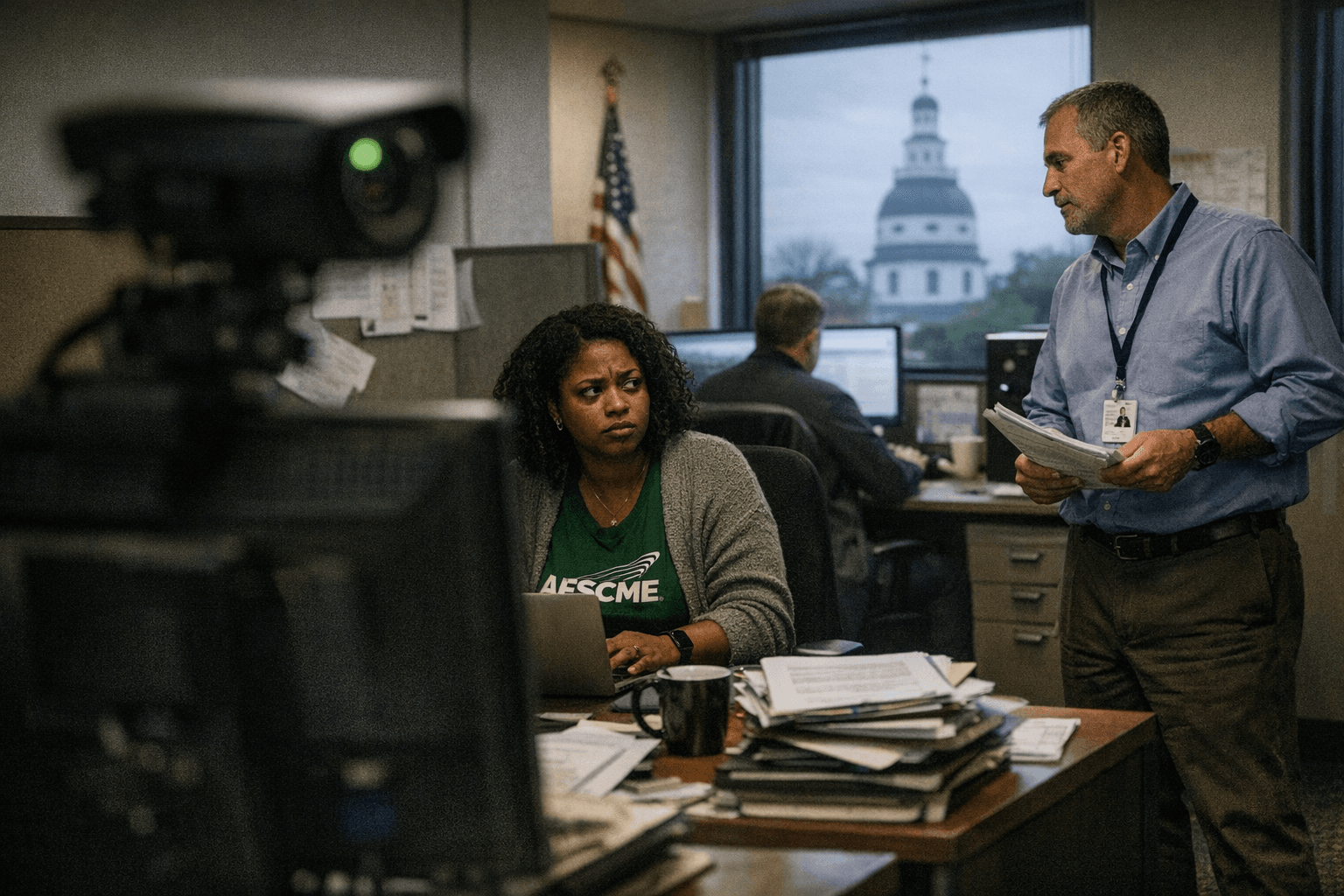
On December 24, 2025 AFSCME Council 3, the state largest public employee union, filed a series of unfair labor practice complaints against the State of Maryland. The complaints allege unlawful workplace surveillance, unilateral changes to telework eligibility, and improper handling of shift differential policies that affect overtime and premium pay for non standard hours.
"AFSCME Council 3 filed a series of unfair labor practice complaints alleging violations on surveillance, telework and shift differentials."
Union leaders framed the filings as part of a broader push for better pay and safer working conditions as state agencies grapple with staffing shortages and operational strain. The move arrives amid an intensified conversation about public sector labor relations in Maryland, and signals a willingness by the union to press legal channels as well as bargaining table tactics to secure workplace protections and compensation improvements.
For Baltimore residents the dispute matters because many state workers live and work in the city and provide essential services from health care support to social services and court operations. Changes to telework policies could alter who reports in person on any given day, with practical implications for commuting, childcare logistics, and the steady delivery of programs that rely on staffed offices. If shift differentials are narrowed or applied inconsistently the result could be reduced take home pay for nights and weekend staff, exacerbating retention problems that have already contributed to service delays.
The complaints also raise privacy and morale questions for employees who say increased surveillance undermines trust in public workplaces. With state agencies operating under staffing constraints, disruptions to workforce stability can ripple into longer wait times for residents seeking benefits, slower processing of administrative tasks, and increased pressures on remaining staff.
What follows will be determined by the administrative and bargaining process. The complaints may prompt hearings, negotiations, or settlements that reshape telework rules and pay practices across state agencies. For Baltimore workers and the people they serve, the outcome will influence workplace conditions, the availability of in person services, and the fiscal choices state officials make about compensation and staffing in the year ahead.
This article was produced by Prism’s automated news system from verified source data, official records, and press releases, then run through automated quality and moderation checks before publishing. The system is built and supervised by the people who set the standards it runs under. Read our full AI policy.
Did this article answer your question?