Mayor Scott Declares State of Emergency, Activates Phase 2 Snow Plan
Mayor Brandon Scott declared a state of emergency and activated phase 2 of the snow plan; parking restrictions and more than 700 snow-removal vehicles were mobilized, with eight free city garages.
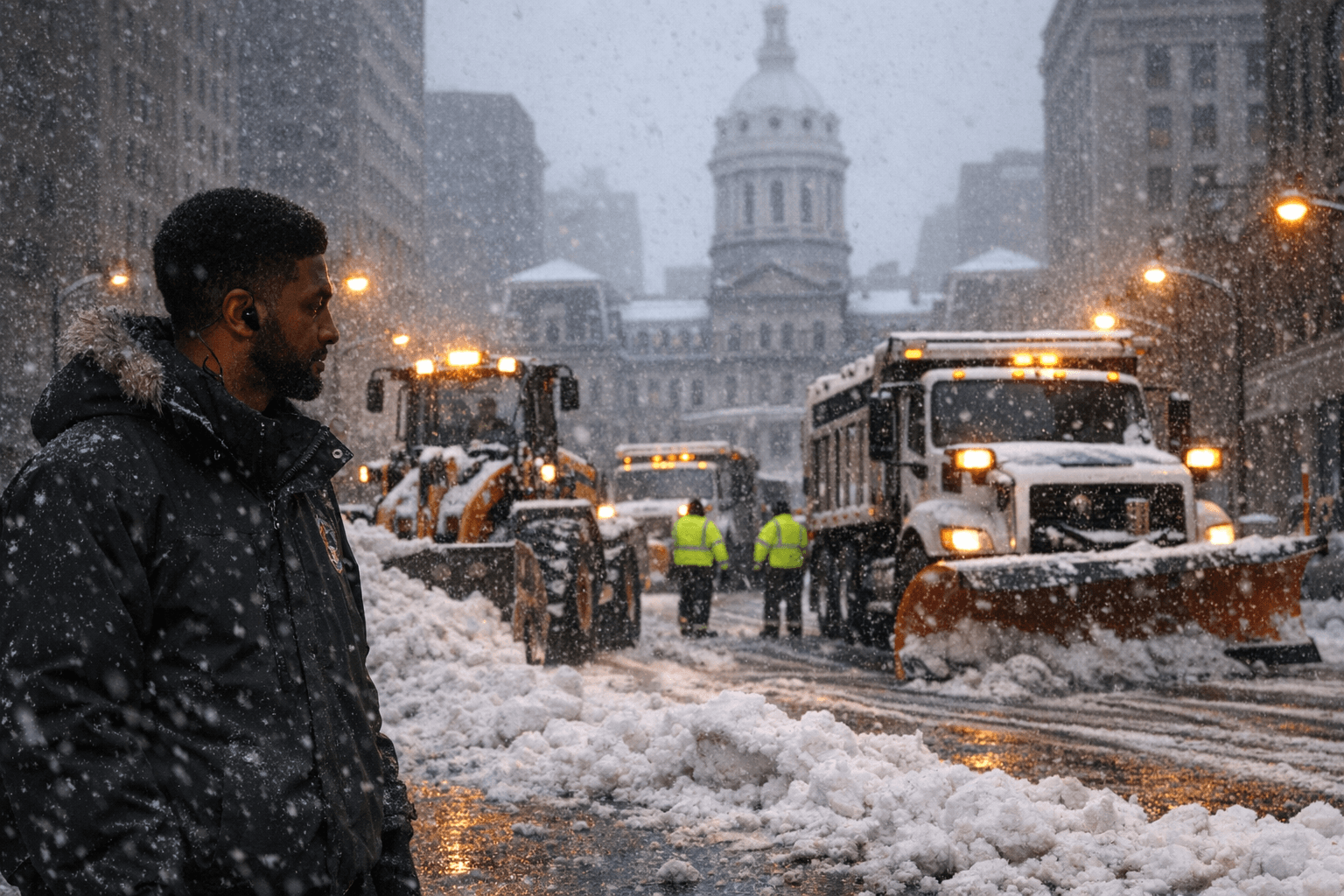
Mayor Brandon Scott declared a state of emergency and activated Phase 2 of Baltimore’s Snow Emergency Plan as city agencies moved into full operations ahead of a powerful winter storm. City crews and contractors pretreated major gateways with brine and readied more than 700 vehicles for plowing and snow removal, while parking restrictions and vehicle relocation on designated snow emergency routes were announced.
The declaration, issued Jan 24, put the Office of Emergency Management and the Department of Transportation at the center of operational coordination. Officials described changes to transit schedules, parking enforcement, and snow-clearance priorities that will concentrate resources on major arteries and transit corridors to keep essential travel moving. The Maryland Army National Guard and partner agencies were coordinated into the response to support heavy operations if needed.
Parking measures require drivers to move vehicles from designated snow emergency routes; the city offered free parking in eight city-owned garages to facilitate compliance. Transit riders should expect modified service as crews focus on clearing bus routes and major thoroughfares first. Residents were urged to sign up for city alerts to receive real-time updates on route closures, parking instructions, and service changes.
The administration also emphasized household safety and community preparedness. City guidance highlighted precautions around space heaters and generators, the need to keep hydrants and sidewalks clear when safe to do so, and likely impacts to trash and recycling collection schedules. Officials urged Baltimore residents to stay home if possible, prepare emergency kits, and check on vulnerable neighbors who may need assistance during the storm.
Operational steps taken before and during the storm included brine pretreatment of key entry points to the city to inhibit ice formation, staging of plows and salt, and prioritization plans that focus first on emergency routes, hospitals, fire and police access, and primary transit lines. Contractors joined city crews to expand capacity across neighborhoods and commercial corridors.
For drivers, the immediate implication is to avoid nonessential travel and to heed posted snow emergency route notices so plows can pass. For households, expect disruptions to routine services and plan for potential short-term power outages by following safety advice on heating devices and generator use. City agencies will issue updates as conditions evolve and as crews shift from emergency clearing to neighborhood-level plowing.
The declaration and Phase 2 activation mark a concentrated, citywide effort to shorten disruption and protect public safety; residents should monitor official city alerts, comply with parking requirements, and prepare for lingering impacts on transit and sanitation as crews complete clearance.
This article was produced by Prism’s automated news system from verified source data, official records, and press releases, then run through automated quality and moderation checks before publishing. The system is built and supervised by the people who set the standards it runs under. Read our full AI policy.
Did this article answer your question?