Mayor Scott Unveils 10 Year Plan to Stabilize Baltimore Finances
Mayor Brandon Scott unveiled a comprehensive 10 year financial plan on December 3 that lays out 85 initiatives to modernize city operations, reduce waste, invest in infrastructure and adjust tax policy. The plan promises targeted savings and reinvestment while avoiding layoffs, measures that could reshape property taxes, public services and local development for Baltimore residents.
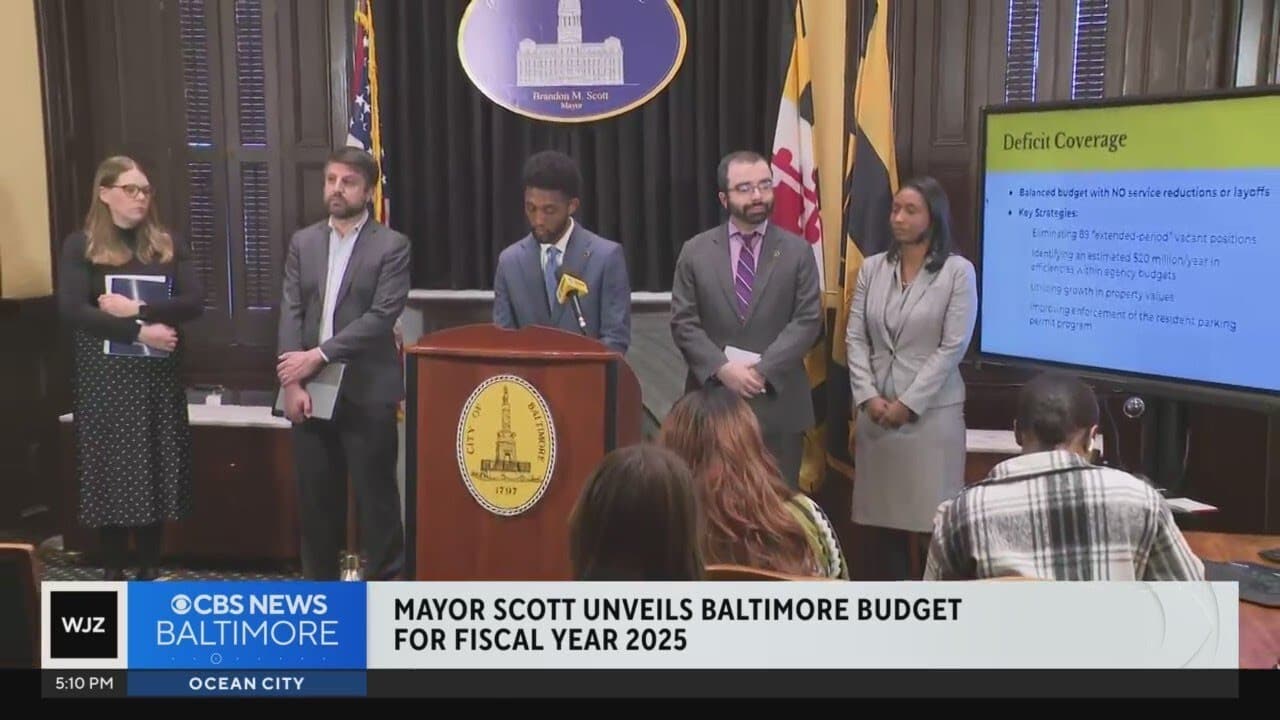
Mayor Brandon Scott presented a 10 year fiscal blueprint Wednesday that city leaders say is designed to close long term gaps and preserve services without across the board job cuts. The plan identifies 85 initiatives intended to generate $2.5 billion in savings and free up $1.5 billion for reinvestment over the decade, a combination officials framed as necessary to head off a projected $1 billion deficit by 2035.
Key fiscal moves include a proposed gradual reduction in the property tax rate totaling 11 cents annually over time, paired with efforts to broaden the tax base. Those base broadening items include a progressive income tax increase on households earning more than $500,000, consideration of higher tax rates on vacant properties and the sale of surplus city owned real estate as revenue sources. Officials emphasized the mix of reductions and revenue changes as a way to protect most homeowners while shifting more of the burden toward higher earners and underutilized properties.
The plan also sets out operational reforms to contain costs and improve service delivery. Measures include rebalancing compensation packages, reforming health plans, establishing a leave buyback program and shifting some duties from sworn officers to civilian employees to increase efficiency. City leaders highlighted technology as a central tool, with plans to use AI to streamline services, to evaluate drones for police use and to invest in license plate readers for parking enforcement.

For Baltimore residents the proposals stand to affect property tax bills, enforcement practices and how city services are delivered. Sales of surplus properties could spur redevelopment or reduce community assets depending on how parcels are used. The shift of certain responsibilities from sworn personnel to civilians aims to free officer time for public safety priorities, while the introduction of new technologies will raise questions about privacy, equity and oversight.
City officials presented the plan as proactive financial stewardship intended to modernize operations and protect core services for Baltimore neighborhoods in the years ahead.
This article was produced by Prism’s automated news system from verified source data, official records, and press releases, then run through automated quality and moderation checks before publishing. The system is built and supervised by the people who set the standards it runs under. Read our full AI policy.
Did this article answer your question?