Nearly a Thousand Protest Johns Hopkins Private Police, Demand Hearing
Nearly a thousand activists and about 30 community groups gathered in Baltimore on December 15 to protest the new Johns Hopkins Police Department and press the City Council for a hearing on the law enforcement arrangement between the university and Baltimore City. The demonstration highlights local concerns about accountability, community input, and the effects of a private armed campus force on students, workers, and neighboring residents.
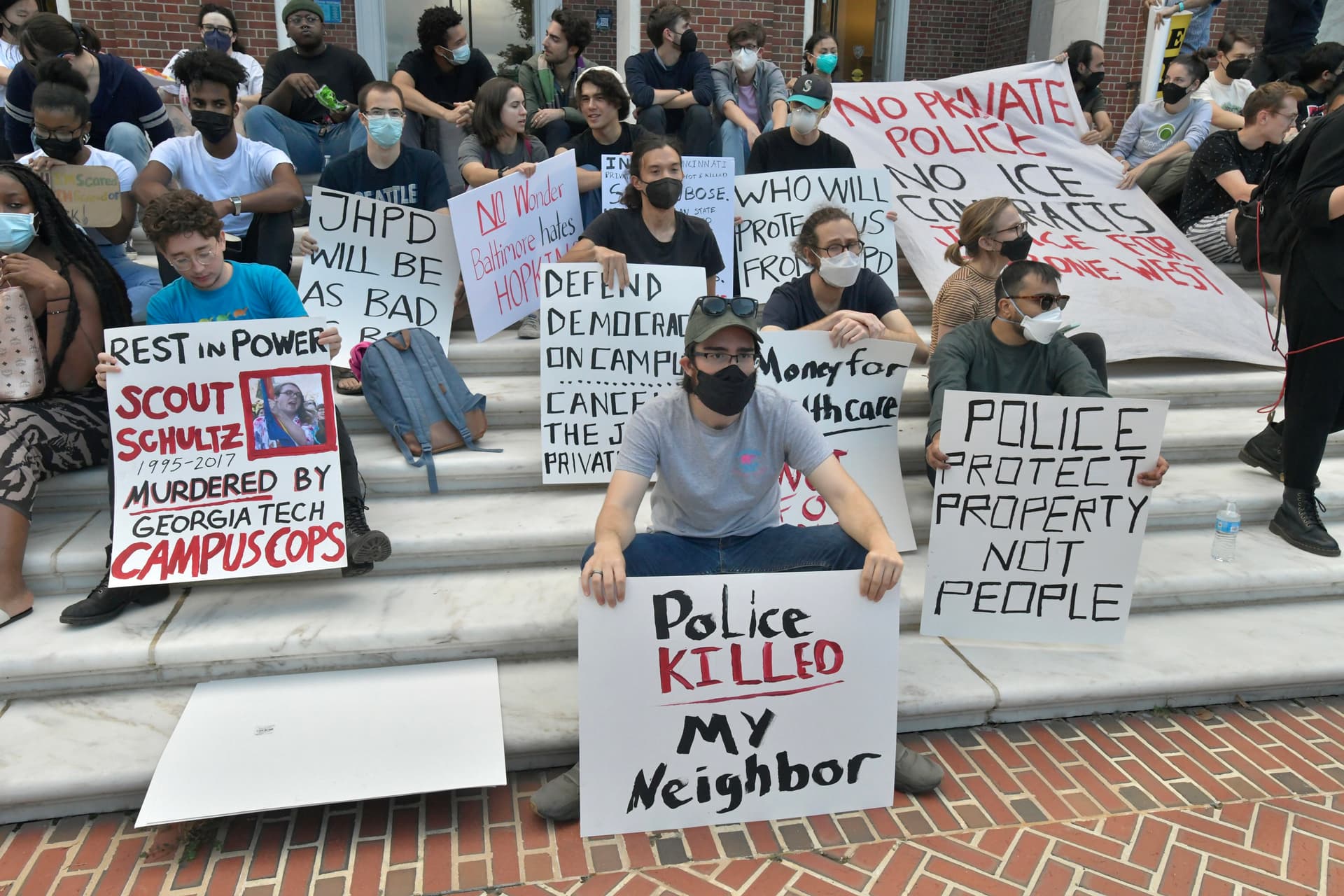
Nearly a thousand activists and about 30 community groups converged in Baltimore on December 15 to challenge the creation of a private armed campus police force at Johns Hopkins University and to demand a City Council hearing on the memorandum of understanding that governs coordination with the Baltimore Police Department. Organizers including the Baltimore Abolition Movement, the Baltimore Teachers Union, and several unions tied to Hopkins workers said the force was established without adequate community input and raised questions about oversight and harms to students and neighbors.
Rally speakers called on the council to void the memorandum of understanding, commonly known as the MOU, which defines how officers from the Johns Hopkins Police Department coordinate with city law enforcement. Protesters pressed for transparency in the MOU and for clear public mechanisms to hold the private campus force accountable. The turnout reflected a cross section of labor groups, community organizations, and residents from neighborhoods near Hopkins campuses who said they feel the decision has direct consequences for public safety and civil rights in Baltimore.
Johns Hopkins University defended the decision to form the new force, saying it was aimed at improving safety and that the university followed state law and solicited community input. The university has said the department will operate under legal requirements while coordinating with city authorities. Nonetheless, the rollout has been accompanied by controversies and legal challenges, complicating relations between the institution and surrounding communities.
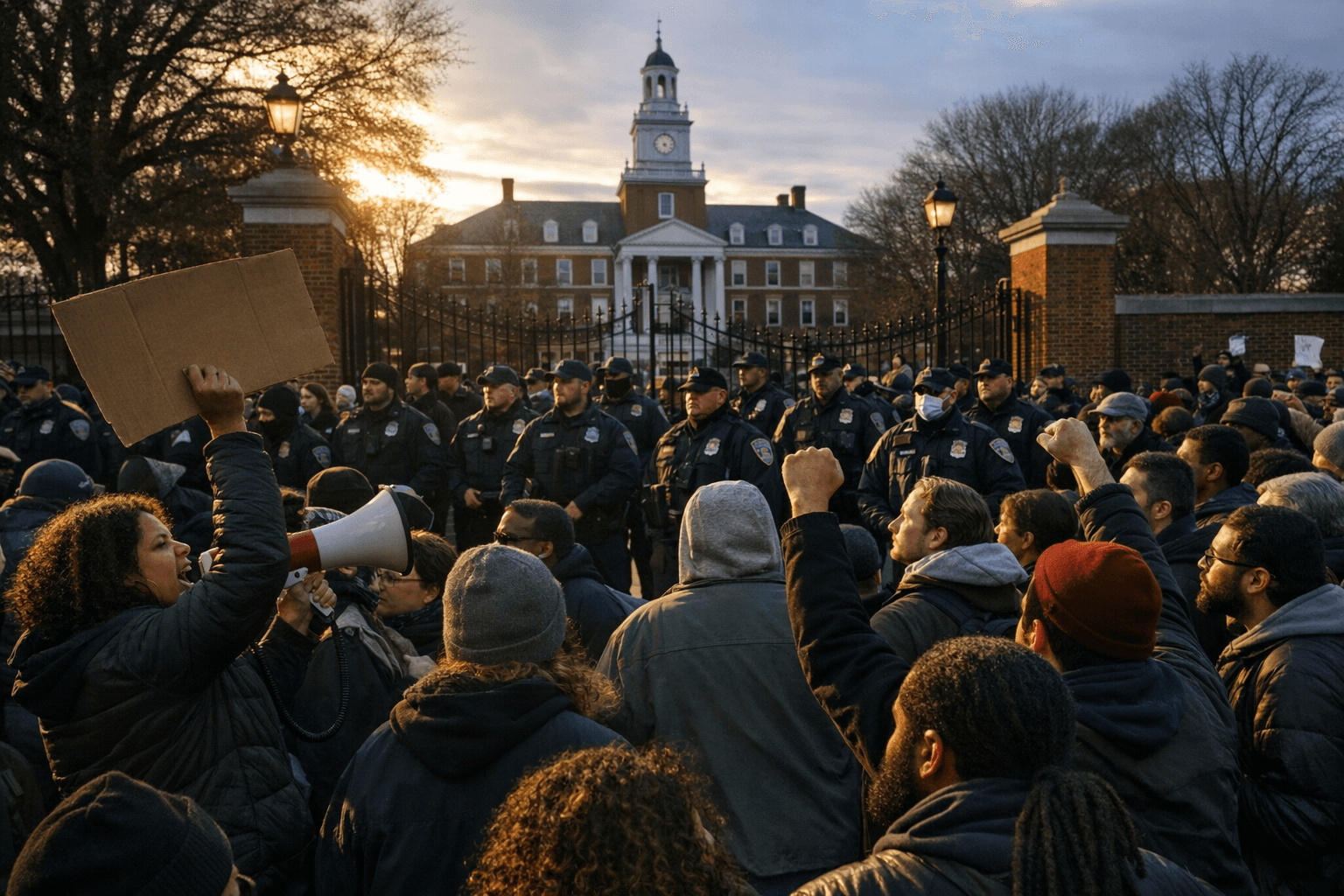
For Baltimore residents the dispute raises practical and civic questions. Neighbors and students want to know who will answer complaints, how use of force and patrol boundaries will be regulated, and whether the presence of an armed private force will alter policing patterns in adjacent neighborhoods. City Council members now face pressure to scrutinize the MOU, hold public hearings, and consider legislative or oversight responses that respect community voice while addressing safety concerns.
The protest on December 15 makes clear that debates over private campus policing are no longer contained to university grounds. The outcome of any council action or legal rulings will shape public safety governance for Hopkins employees, students, and nearby Baltimore neighborhoods in the months ahead.
This article was produced by Prism’s automated news system from verified source data, official records, and press releases, then run through automated quality and moderation checks before publishing. The system is built and supervised by the people who set the standards it runs under. Read our full AI policy.
Did this article answer your question?