New Maryland ADU Law Requires Baltimore City to Authorize Units by 2026
Baltimore must amend its zoning to allow at least one ADU on detached single‑family lots by Oct. 1, 2026, after Gov. Wes Moore signed SB 891/HB 1466 into law and it took effect Oct. 1, 2025.
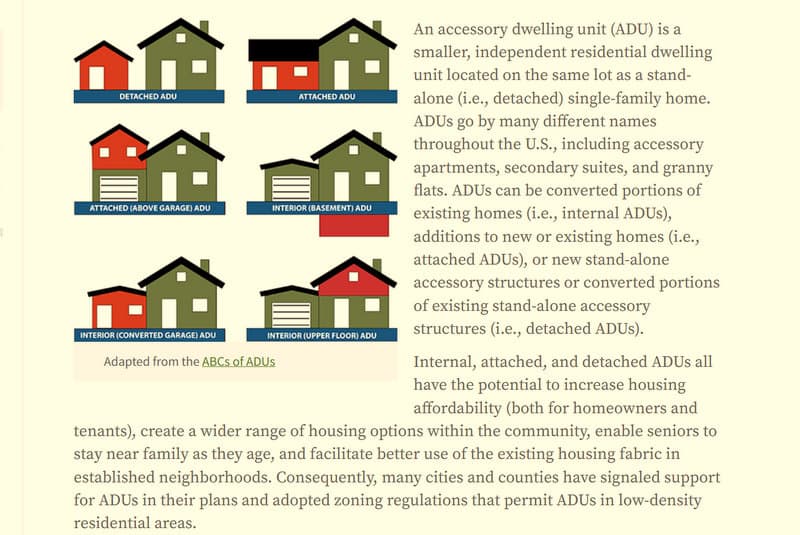
Baltimore City faces a mandatory zoning overhaul to permit accessory dwelling units on lots with detached single‑family homes by Oct. 1, 2026, under the Accessory Dwelling Units Act of 2025, enacted as Senate Bill 891 and House Bill 1466. Gov. Wes Moore signed the legislation in mid‑April 2025 and the statute took effect Oct. 1, 2025, creating a one‑year deadline for local ordinances to comply.
The state law requires jurisdictions to authorize at least one ADU on qualifying lots and directs local governments to adopt rules that “facilitate ADU development while ensuring public health, safety, and welfare standards are met,” according to a local land‑use summary. ADUs may be created by converting interior space, converting accessory structures, attaching a unit to the house, or building a new detached “backyard home,” and must remain subordinate to the primary dwelling at no more than 75 percent of the primary home’s size.
The legislation removes a common local barrier by prohibiting covenants, deeds, and other rules from preventing a property owner from placing an ADU on their land. That change was highlighted in coverage noting the statute “prohibits covenants, deeds and other local rules from limiting a property owner from putting one on their land,” and could permit ADUs in neighborhoods where broader up‑zoning is legally uncertain.
Local politics in Baltimore are already entangled with the ADU mandate. Baltimore Brew ran a commentary urging City Hall to engage the state requirement and quoted a longtime resident: “In May, when Mayor Scott jumped on the bandwagon of the end single‑family‑zoning lobby, he curiously failed to address the fact that the state had already instructed us to make a particular change to accommodate more dwellings.” The same column concluded, “The common thread for me: City Hall is out of touch with the needs and wishes of real Baltimore,” attributing the line to Joan Floyd, a 30‑year Remington resident.
City Council activity tracked alongside the ADU law could shape implementation. Thebanner reported Councilman Paris Gray proposed expanding the buildable area on residential lots to ease small accessory dwellings for relatives; Councilman Zac Blanchard backed lifting an off‑street parking requirement for new residential projects; and Councilman Ryan Dorsey sponsored repeal of a multiple‑stairwell rule for four‑ to six‑story buildings with compensating requirements such as mandatory sprinklers and pressurized stairwells.

Nearby jurisdictions offer a blueprint for local rules. Baltimore County’s accessory apartment guide outlines two approval routes: a Use Permit for apartments within the principal dwelling or a Special Hearing/Use Permit for apartments in detached accessory buildings, together with requirements to record a Declaration of Understanding in county land records. The county also restricts separate utility meters for accessory apartments unless approved by the Office of Administrative Hearings and references prior local bills effective in 2011 and 2023 that shaped county practice.
Industry groups are already positioning homeowners. Makarabuilders hailed SB 891 as “a big win for homeowners and for Maryland’s housing supply” and urged property owners to check eligibility, while a land‑use blog reiterated the Oct. 1, 2026 local adoption deadline and the 75 percent size cap.
With less than eight months until the statutory deadline, Baltimore City Council must draft and pass an ADU ordinance that reconciles state mandates with local parking, safety, and permitting processes. The choice of procedural route and whether the council adopts a county‑style model of recorded conditions or a different approach will determine how quickly backyard homes, conversions, and attached units appear in neighborhoods from Remington to rowhouse districts.
This article was produced by Prism’s automated news system from verified source data, official records, and press releases, then run through automated quality and moderation checks before publishing. The system is built and supervised by the people who set the standards it runs under. Read our full AI policy.
Did this article answer your question?