Protesters Demand ICE Leave Maryland, Cite Glen Burnie Shooting Evidence
On December 29 protesters organized by the People s Power Assembly and allied groups gathered outside the ICE field office in downtown Baltimore to demand the agency leave Maryland following a Christmas Eve shooting in Glen Burnie. The demonstration highlights tensions over local cooperation with federal immigration enforcement, and raises questions for city leaders about oversight, public safety, and allocation of law enforcement resources.
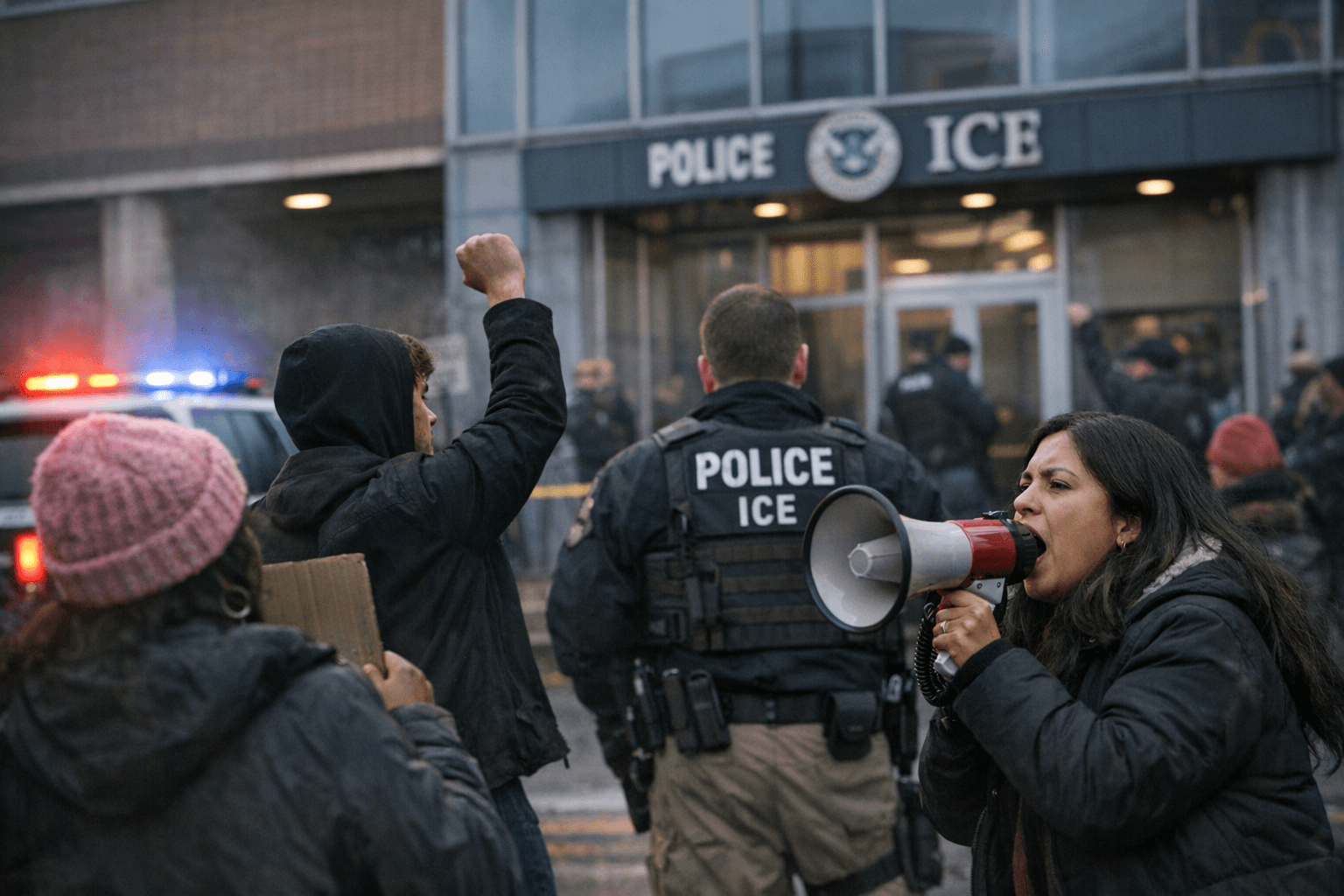
Hundreds of demonstrators assembled on December 29 outside the U.S. Immigration and Customs Enforcement field office in downtown Baltimore, calling for the agency to leave Maryland after a Christmas Eve shooting in Glen Burnie. Organizers from the People s Power Assembly and allied groups pressed for legislation to bar local police from cooperating with ICE, argued for abolition of the agency, and urged that funds be reallocated to community services.
Protesters pointed to eyewitness accounts and door camera video as evidence they said demonstrates the need for accountability. Their demands followed public announcements that different investigative tracks are underway. Anne Arundel County Police are handling local criminal aspects of the Glen Burnie incident, federal investigators are pursuing separate inquiries, and the ICE Office of Professional Responsibility has launched an internal review into the agency s conduct.
The demonstrations place renewed focus on Baltimore s relationship with federal immigration enforcement. While ICE operates as a federal agency, the degree to which local law enforcement shares intelligence, complies with detainer requests, or participates in joint operations is within the control of municipal and county officials. Activists urged Baltimore leaders and the City Council to consider ordinances that would limit cooperation and to review budget priorities that fund policing partnerships with federal agencies.
The incident and the protests could affect public trust in law enforcement across immigrant communities in Baltimore. Advocates said that transparent, independent investigations and clear policy decisions at the city level are essential to restoring confidence among residents who fear that interactions with police could lead to immigration enforcement actions. City officials will be under pressure to clarify existing protocols, publish any partnership agreements, and explain how community safety will be maintained if cooperation with ICE is curtailed.
Institutionally, overlapping investigations raise practical and legal questions about evidence sharing, timelines for accountability, and public disclosure. An internal review by the ICE Office of Professional Responsibility will focus on agency conduct, while county and federal inquiries will determine criminal and operational facts. These separate processes can prolong resolution and complicate efforts by families and community groups seeking timely answers.
For Baltimore residents, the immediate implications are twofold. First, city and county leaders must weigh policy changes on cooperation with federal immigration authorities, balancing public safety, legal constraints, and community trust. Second, voters and civic groups should track how investigations proceed, how local officials respond, and whether proposed legislative actions are introduced to the City Council or other governing bodies. The coming weeks and months will test institutional transparency and the willingness of elected officials to address the governance questions raised by the shooting and the protests.
This article was produced by Prism’s automated news system from verified source data, official records, and press releases, then run through automated quality and moderation checks before publishing. The system is built and supervised by the people who set the standards it runs under. Read our full AI policy.
Did this article answer your question?