Report finds understaffing, aging gear in deadly Baltimore fire response
A draft review says breathing gear failed within minutes in the Linden Heights Avenue fire that killed Dillon Rinaldo and Rodney W. Pitts III. The report listed 60 fixes and 100 action items.
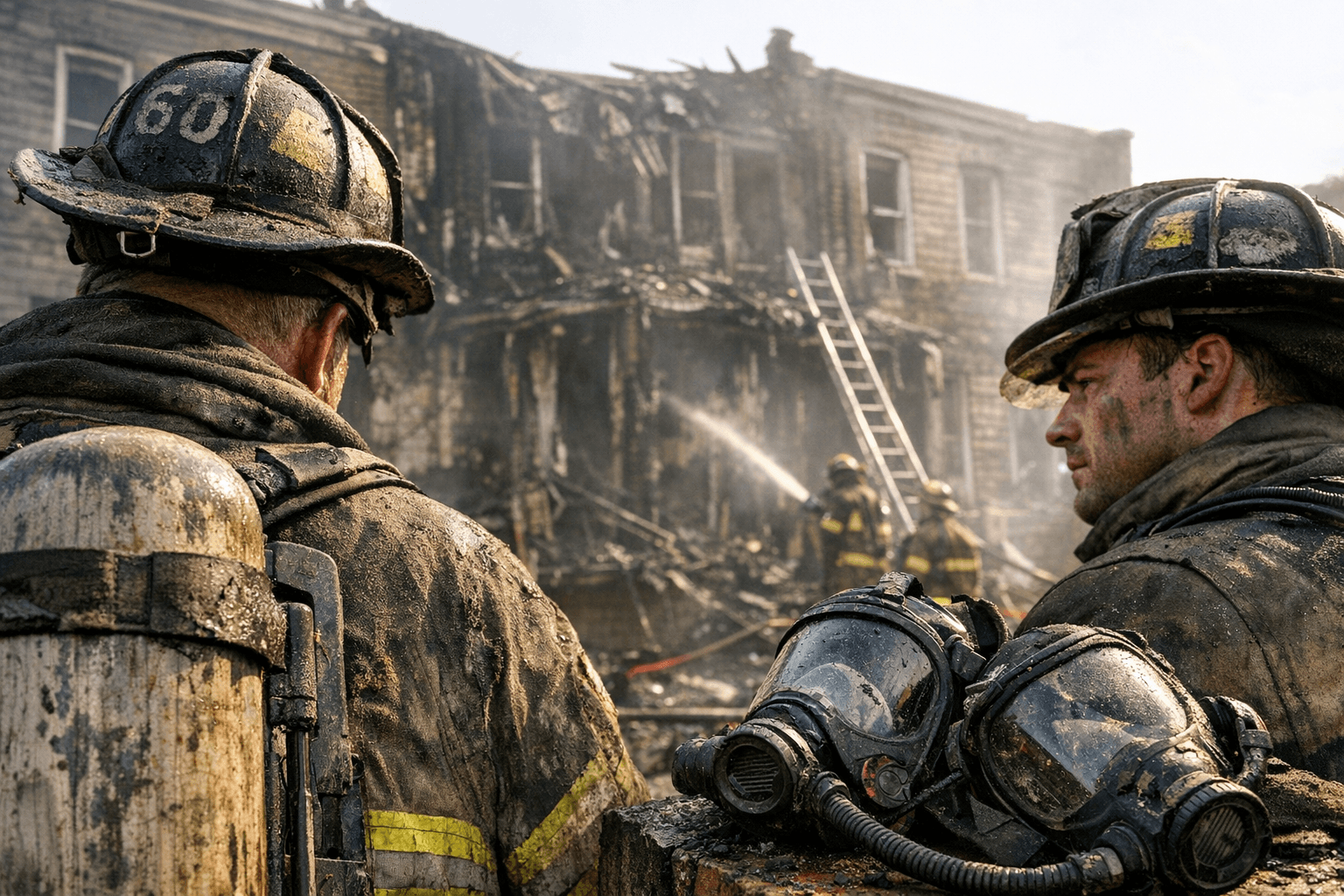
A draft review of the deadly Linden Heights Avenue fire pointed to understaffing, aging equipment and outdated training, sharpening the unanswered questions around how two Baltimore firefighters died in Northwest Baltimore.
The fire on the 5200 block of Linden Heights Avenue in Woodmere killed Capt. Dillon Rinaldo, 26, and Firefighter/EMT Rodney W. Pitts III, 31. Pitts died the day of the fire on Oct. 19, 2023, and Rinaldo died days later from smoke inhalation and thermal injuries. The Baltimore Fire Department later classified the blaze as accidental in October 2024, but the public still has not received a full explanation of how the response unfolded or why the scene turned so deadly.
The incident review, dated Feb. 26, 2026, identified 60 recommendations and 100 action items for the department. Its findings, as reported publicly, were blunt: equipment failures, staffing shortages, communication problems, outdated training and a lack of modern tactics all helped shape the response. The review said the firefighters’ breathing equipment and protective gear failed within minutes of entry, while the fire environment quickly became extreme enough to overwhelm the crews inside.
That combination matters well beyond one rowhouse fire. Baltimore’s fire department is a core public-safety institution, and the question now is not only how Rinaldo and Pitts died, but whether the same weaknesses remain in the city’s emergency response system. If breathing apparatus, turnout gear and training standards failed in a fatal fire, then every delayed replacement, every missed drill and every unaddressed staffing gap becomes a safety issue for the next alarm in Northwest Baltimore or anywhere else in the city.
Mayor Brandon Scott and Baltimore’s two fire unions responded to the report, underscoring how the case has become a live dispute over accountability as much as a tragedy. The deaths of Rinaldo and Pitts also came during a grim stretch in which five Baltimore firefighters died fighting fires in less than two years, a statistic that has kept pressure on city leaders to explain what changed after each loss and what did not.
For families, colleagues and residents, the remaining question is plain: if the city knows enough to list 60 recommendations and 100 action items, it should also be able to say what went wrong, what has been fixed, and what still leaves firefighters exposed when the next alarm comes in.
This article was produced by Prism’s automated news system from verified source data, official records, and press releases, then run through automated quality and moderation checks before publishing. The system is built and supervised by the people who set the standards it runs under. Read our full AI policy.
Did this article answer your question?