Scott unveils second-term plan, adds infrastructure as sixth pillar
Scott added infrastructure as a sixth pillar, promising measurable progress on roads, pipes and digital systems as Baltimoreans wait for faster service.

Mayor Brandon M. Scott’s second-term action plan is now putting Baltimore’s next phase of city government on the record, and the newest promise is not another slogan but a sixth pillar: Modernizing Public Infrastructure.
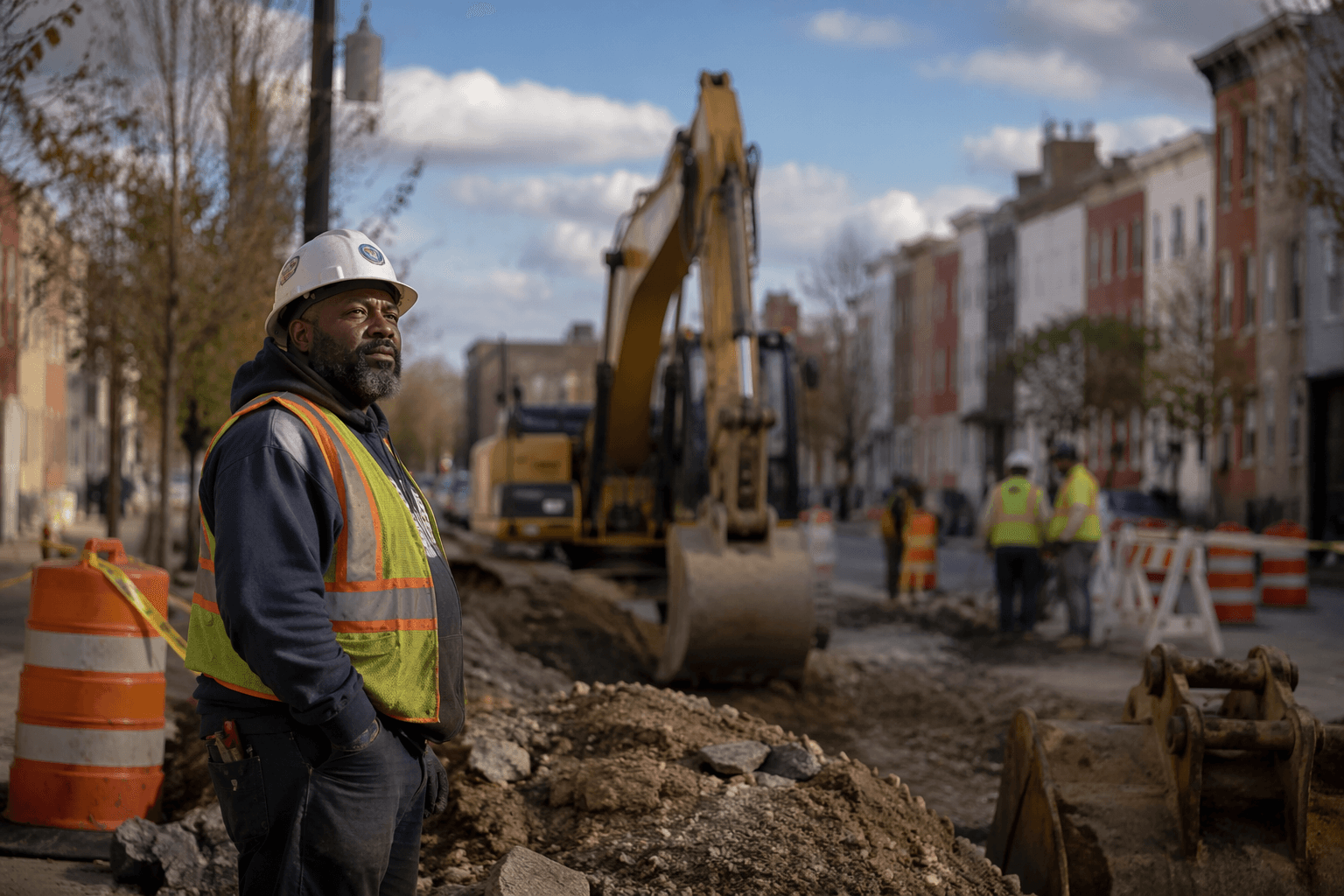
Released May 20, the plan recasts the administration’s priorities around measurable outcomes and specific goals, with a focus on equitable access to facilities, underground structures, transportation and digital systems. For city residents, that makes the document a test of whether Baltimore can turn a cleaner management story into visible improvements in the places people encounter government most often: streets, public buildings, transit-linked infrastructure and the systems that determine how quickly a problem gets fixed.
City Hall said the plan was developed by the Mayor’s Office of Performance and Innovation and the Bureau of Budget Management and Research after reviewing agency performance data, service-delivery trends and community conditions. That gives the plan a harder edge than a standard policy rollout. It is also tied to Baltimore’s 10-Year Financial Plan, released in December 2025 to guide spending, services, infrastructure and tax relief through fiscal years 2026 to 2035.
Scott is framing the new blueprint as evidence that his administration is moving from broad aims to accountability. In the city’s release, he said Baltimore had cut homicides and nonfatal shootings nearly 60% since the first-term plan was launched, eliminated more than one in four vacant properties citywide, and opened eight new or renovated recreation centers and 13 schools, with more to come. Those numbers are meant to show that the administration can deliver, not just announce.
The timing matters. Scott delivered his 2026 State of the City address on March 31 at Baltimore Center Stage under the theme “Building Together, Block by Block,” and used the stage to unveil a new map of city investments since Dec. 8, 2020, the day he took office. He also announced a $2 million support package for legacy homeowners age 65 and older who are under 80% of area median income, along with a security-deposit assistance program offering one-time grants of up to $2,000 for renters.

The infrastructure pillar also builds on an earlier management push. In April 2025, Scott signed an executive order to modernize capital contracting and project delivery, directing the Mayor’s Office of Infrastructure Development to implement 23 recommendations. Taken together, the executive order, the financial plan and the second-term action plan suggest a more formal effort to make city government faster and easier to measure.
Scott, first elected in 2020 and re-elected in 2024 as the first Baltimore mayor in 20 years to win a second term, is now asking residents to judge his administration not just by its message, but by whether the next wave of repairs, upgrades and services arrives sooner and works better.
This article was produced by Prism’s automated news system from verified source data, official records, and press releases, then run through automated quality and moderation checks before publishing. The system is built and supervised by the people who set the standards it runs under. Read our full AI policy.
Did this article answer your question?