Seawall's Jones Falls Vision Draws Criticism Over Gentrification, Displacement Concerns
Seawall's three-day Jones Falls listening session turned raw as critics demanded affordable housing guarantees and local hiring commitments the developer has yet to make.
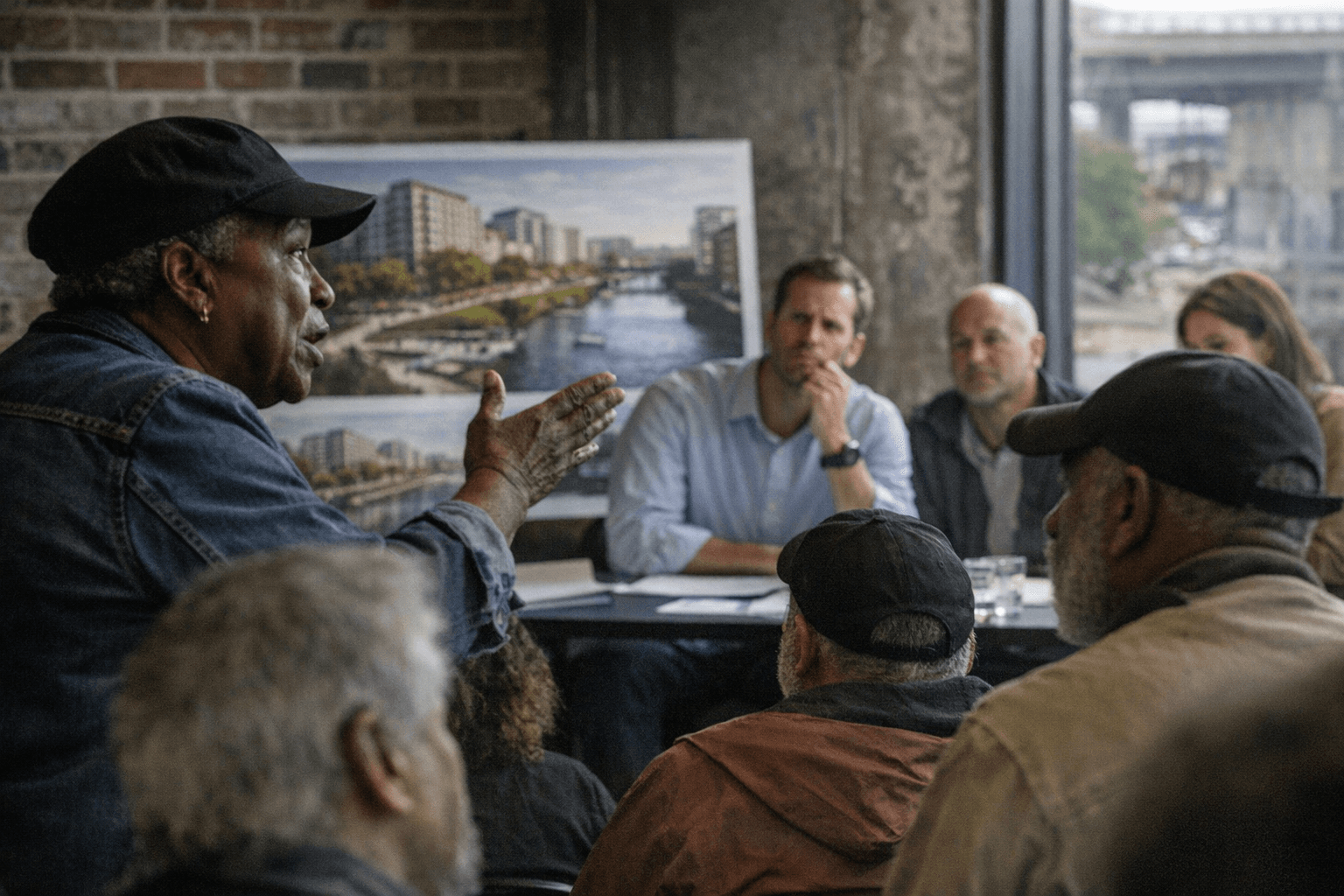
What began as a community conversation ended as a referendum on who Baltimore's next generation of development is really for. Seawall Development's three-day listening session, held March 24 to 26, drew a wide and at times confrontational crowd to discuss the company's plans for Falls Road properties it says it has under contract, including the former Potts & Callahan site.
The developer had framed the sessions as the start of a community-led planning process after announcing the Potts & Callahan contracts, raising expectations among neighborhood groups including the Greater Remington Improvement Association. What emerged instead were pointed challenges: critics demanded binding commitments on affordable-housing percentages, meaningful local hiring, and protections against environmental harms and illegal dumping along the Jones Falls corridor.
The friction sharpened around race and equitable development. Some speakers disputed the premise that converting the historically industrial valley into parks, restaurants, and apartments would benefit the city broadly, arguing the vision was calibrated to attract new residents while pricing out those already there. Environmental advocates from Friends of the Jones Falls and Blue Water Baltimore attended, tracking whether any remediation or stream daylighting would factor into the plan.
Supporters of Seawall's approach countered that acquiring the site prevents city trash facilities, including those tied to the long-running Sisson Street transfer-station debate, from taking hold in the valley, and opens the door to green space instead.
No binding community-benefit agreements or specific affordable-housing targets were announced during the sessions. The unanswered questions now fall to formal development proposals, any zoning or city planning actions along the corridor, and whether the community-led process Seawall promised produces enforceable commitments or remains aspirational.
This article was produced by Prism’s automated news system from verified source data, official records, and press releases, then run through automated quality and moderation checks before publishing. The system is built and supervised by the people who set the standards it runs under. Read our full AI policy.
Did this article answer your question?