Severe drought spreads across Baltimore City, rain relief remains scarce
Severe drought now covers Baltimore City and its suburbs, with rain still scarce and the region’s 1.8 million-water-user system under growing strain.
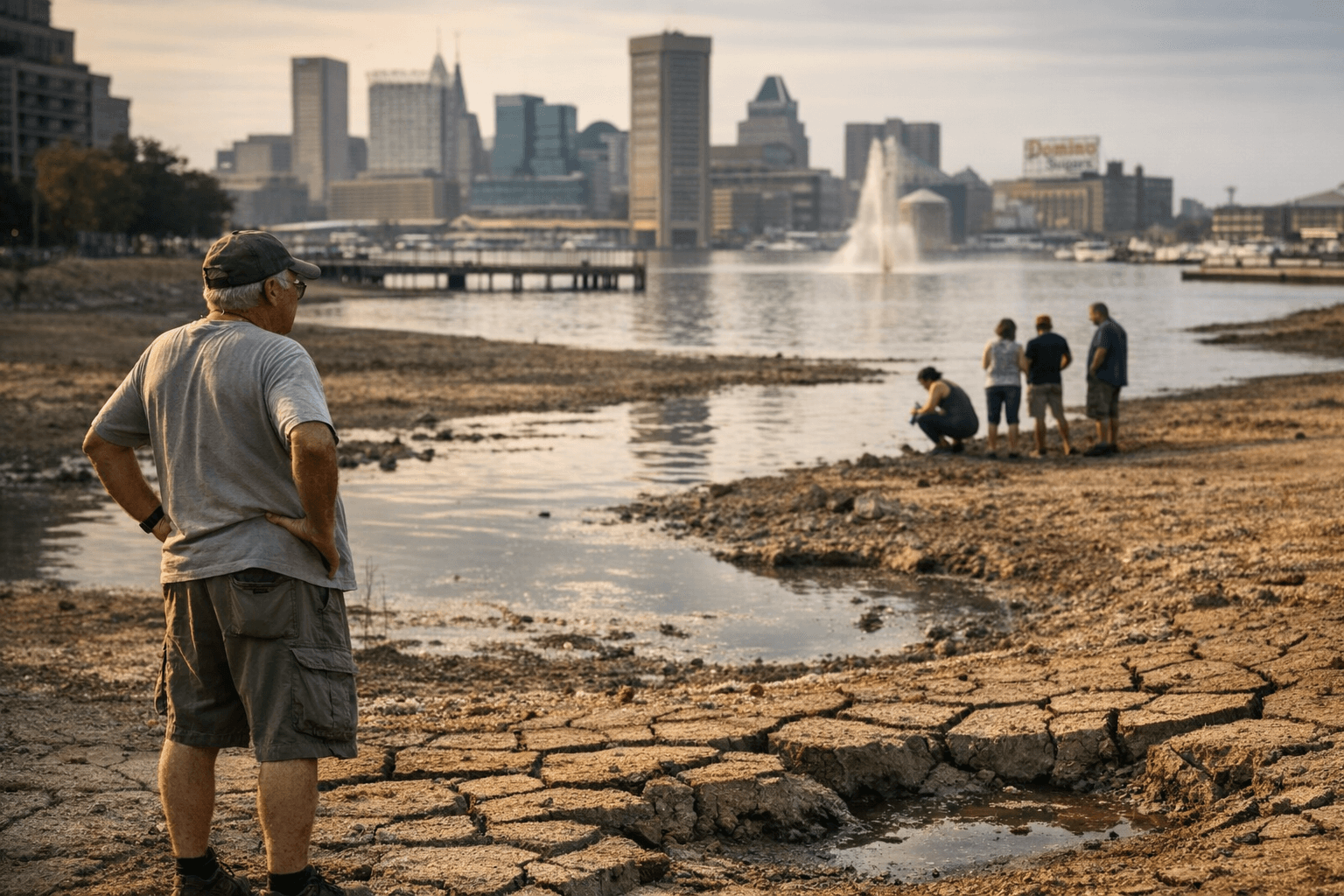
Baltimore City and its suburbs have moved into severe drought, raising the stakes for households, businesses and the region’s reservoirs just as little rain is expected to offer relief. The city’s water system serves about 1.8 million people across Baltimore City, Baltimore County and surrounding jurisdictions, making the dry spell a regional problem, not just a neighborhood one.
Maryland measures drought with four indicators: precipitation, stream flow, groundwater levels and reservoir storage. Regions are classified as normal, watch, warning or emergency, and the state said Baltimore City is its own drought region because it relies on a large metropolitan water system. That system draws from Liberty Reservoir, Loch Raven Reservoir and, during drought conditions, the Susquehanna River.
State data show how quickly conditions can shift. In a Nov. 18, 2024 update, Baltimore City public water system reservoirs were at 95 percent capacity. By April 3, 2025, the Maryland Department of the Environment still described Baltimore City as normal even while most of the rest of Maryland was under drought warning. Since October 2024, Maryland has received about a third less precipitation than normal, and state officials have said groundwater remained below normal in some areas even after brief rain. Summer is typically the highest water-use period, adding pressure if dry weather lingers into the warmer months.
The practical consequences can reach into daily routines and local commerce. If the drought worsens, the response system can move toward water-use restrictions that limit activities such as car washing, ornamental fountains and restaurant tap-water service. That would touch lawns, recreation fields, construction sites, restaurants and other water-intensive businesses across Baltimore, where even short disruptions can ripple through operations and customer expectations.
Baltimore has already seen how close the system can come to conservation measures. In May 2025, voluntary water restrictions were imposed across Baltimore City and surrounding jurisdictions after historically low levels at Liberty Reservoir, then lifted on June 30, 2025. Nearby counties have faced even sharper consequences: on April 17, 2026, the U.S. Department of Agriculture designated nine Maryland counties as primary natural disaster areas because of severe drought, making farmers eligible for emergency loans through the USDA Farm Service Agency. For Baltimore, the immediate question is how long the city can hold off restrictions before dry weather begins to change what residents see, pay and use every day.
This article was produced by Prism’s automated news system from verified source data, official records, and press releases, then run through automated quality and moderation checks before publishing. The system is built and supervised by the people who set the standards it runs under. Read our full AI policy.
Did this article answer your question?