S&P lowers Maryland debt outlook to negative amid budget pressure
Maryland kept its AAA rating, but S&P warned the debt outlook turned negative as budget gaps widen. Baltimore school construction and other public projects could feel it first.

Maryland’s borrowing costs may stay low for now, but S&P Global Ratings has put the state on notice: if budget pressure keeps building and officials do not restore structural balance, the next move could be a downgrade. For Baltimore, that matters because higher borrowing costs can ripple into school construction, transportation work, and other state-backed projects that residents eventually pay for through taxes, fees or delayed capital plans.
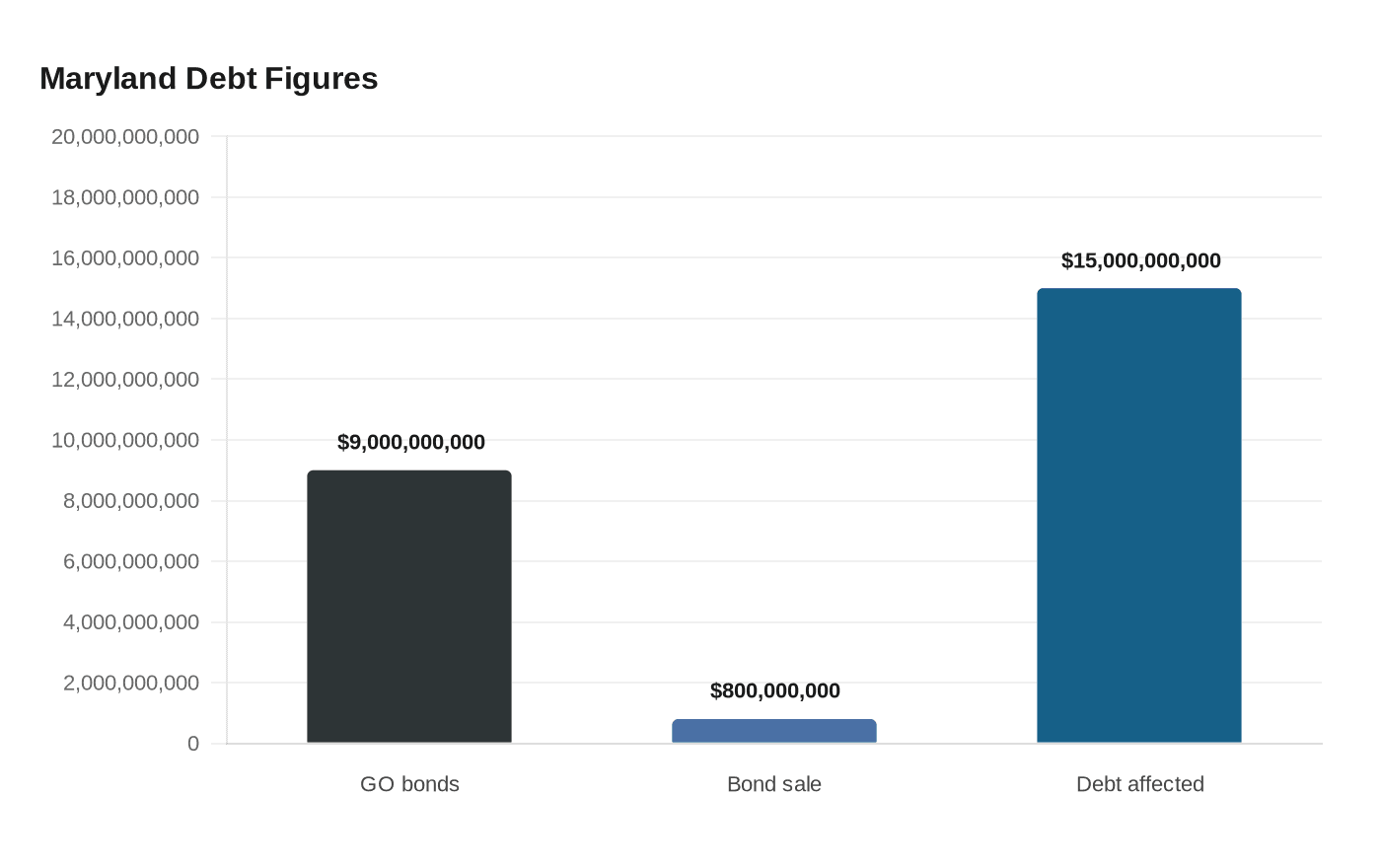
On May 21, S&P revised Maryland’s outlook on outstanding debt to negative from stable, while affirming the state’s AAA long-term rating on general obligation debt and assigning AAA to its $800 million 2026 general obligation bond sale. The agency said Maryland has about $9 billion of GO bonds outstanding, but warned that recent weak operating results and projections of continued budget pressure raised concern. S&P said the state needed timely adjustments to get back to structural balance.

The warning lands in a state that has already been through a major ratings hit. Moody’s Ratings cut Maryland’s issuer and general obligation ratings to Aa1 from Aaa on May 14, 2025, affecting about $15 billion in outstanding debt. Moody’s said Maryland’s finances had underperformed other Aaa-rated states and pointed to the state’s exposure to shifting federal policy, employment swings and elevated fixed costs. That downgrade was the first in Maryland since 1973.
Baltimore’s school construction pipeline was already in the blast radius of that earlier decision. Moody’s also downgraded Baltimore City Public Schools Construction and Revitalization Program revenue bonds to A1 from Aa3, a reminder that a state credit problem can quickly become a city capital problem. If Maryland’s borrowing gets more expensive, programs tied to school buildings, rehabilitation work and other public construction could face tighter financing conditions, slower schedules or pressure to scale back.
The timing adds another layer. Maryland ended its relationship with Moody’s in late May 2026, about a year after the downgrade, with Treasurer Dereck Davis defending the move and stressing that Fitch Ratings and S&P still rated the state’s bonds AAA. Fitch had reaffirmed Maryland’s AAA rating in May 2025, though it also warned about rising spending demands, especially on public school education. S&P has rated Maryland AAA since 1961, which makes the shift to a negative outlook less than a downgrade, but more than a warning label. It signals that the state’s next budget decisions could determine whether Baltimore families see the cost in classrooms, roads and state services or in the tax bill.
This article was produced by Prism’s automated news system from verified source data, official records, and press releases, then run through automated quality and moderation checks before publishing. The system is built and supervised by the people who set the standards it runs under. Read our full AI policy.
Did this article answer your question?