Bamberg County Aging Office helps seniors stay independent and connected
Bamberg County’s Aging Office is a meals-and-rides hub with set hours, low-cost Handy Ride trips, and five-day meal service for home-bound seniors.
What the Office on Aging actually does
The Bamberg County Office on Aging is one of the county’s most practical service hubs, not a ceremonial agency. The county describes it as a public, non-profit office focused on improving older adults’ quality of life and keeping them active in the community, and it says the office has served Bamberg County since 1975.
That longevity matters in a rural county where distance can turn simple errands into barriers. The office runs with almost 30 vehicles for transportation and more than 100 volunteers, giving it the kind of reach that many families depend on for rides, meals, and regular contact with the outside world.
Why this office matters in Bamberg County
Bamberg County is small in population but large in geography. Census Reporter estimates 13,042 residents, a land area of 393.4 square miles, and a median age of 42.3, while also showing that 25% of county seniors age 65 and over live below the poverty line.
That is the backdrop for nearly every service the Office on Aging provides. In a county the size of Bamberg, transportation to a doctor, a meal at midday, or a few hours of social time can determine whether an older resident stays independent or becomes isolated. The county’s 2020 comprehensive plan says it is meant to guide public decision-making affecting quality of life through 2030, which makes aging services part of the county’s long-term planning, not an afterthought.
Meals, social time, and the senior center
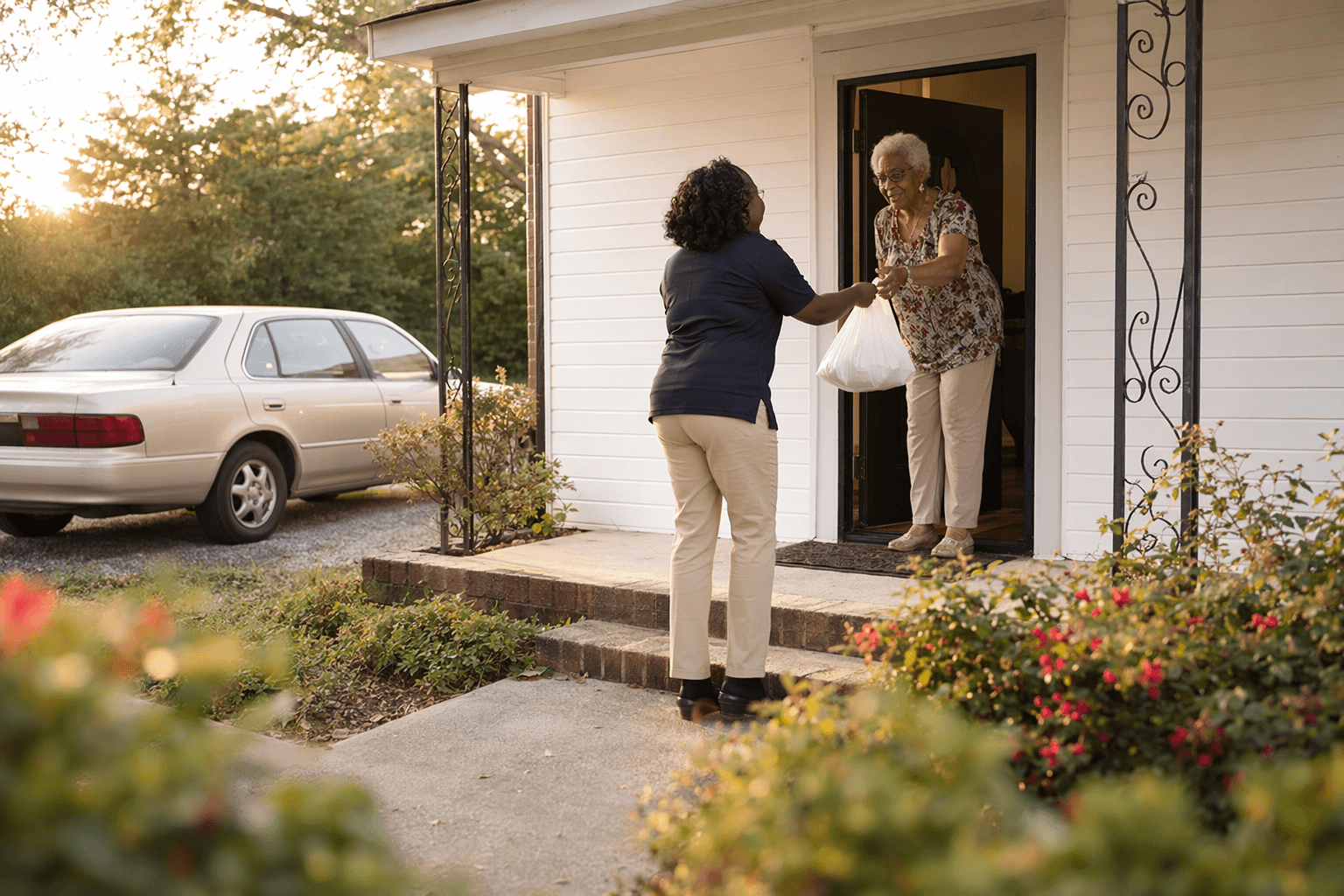
The office’s meal work is central to its mission. It says home-delivered meals can be brought to home-bound clients five days a week, and it also serves meals at Rhoad’s Senior Center, which the office operates as its home base for community activity.
Rhoad’s Senior Center is more than a dining room. The office says the center offers exercise, crafts, devotionals, music, and nutrition and health education programs, turning a meal site into a place where residents can stay connected to other people and to regular routines. That social piece is not incidental: the Administration for Community Living says senior nutrition programs do far more than deliver food, including nutrition screening, education, counseling, transportation links, and socialization.
- Mondays, Wednesdays, and Fridays from 1 p.m. to 2 p.m.
- Line dancing on Tuesdays and Thursdays from 10 a.m. to 11 a.m.
- Enhance Fitness on Wednesdays and Fridays from 12:30 p.m. to 1:30 p.m.
The center also lists regular exercise opportunities:
Those programs give Bamberg County seniors structured reasons to leave home, move their bodies, and stay in touch with neighbors. For residents living alone or on fixed incomes, that kind of routine can be as important as the meal itself.
Transportation is the difference between access and isolation
Transportation is one of the office’s most important services because it fills a gap that rural families feel every day. The office says it supports Medicaid transportation and Handy Ride transportation, and its fleet gives the county a way to move people to appointments and other destinations that might otherwise be out of reach.
Medicaid transportation requires a three-day notice, and the office directs riders to LogistiCare at 1-866-445-6860. That makes planning essential. Families who wait until the last minute should not assume a ride can be arranged immediately, especially for medical appointments that require coordination ahead of time.
Handy Ride serves a wider range of trips. United Way of the Lowcountry’s community directory says the program provides access to non-Medicaid medical appointments, shopping, and work, charges $2.00 for every 10 miles ridden, and sells tickets at the Office on Aging. The same directory names Brad Mole as the Handy Ride contact. For residents who no longer drive, cannot count on a family vehicle, or need a predictable ride to a recurring appointment, that program can be the difference between keeping up with life and falling behind it.
The public-health stakes are real. The Centers for Disease Control and Prevention says transportation barriers, food insecurity, housing insecurity, social isolation, and lack of health insurance are health-related social needs that can affect outcomes. The CDC also reported in 2024 that 5.7% of U.S. adults lacked reliable transportation for daily living in 2022, including 4.5% of adults age 65 and older. In a county with rural distance and a sizable older population, those numbers land close to home.
How families can get help
The most direct way to start is to call the office at 803-245-3021 or visit 498 Log Branch Road in Bamberg, South Carolina 29003 during business hours. The office is open Monday through Thursday from 8:30 a.m. to 4:30 p.m. and Friday from 8:30 a.m. to 3:30 p.m., which gives families a narrow window to ask about meals, rides, or senior-center programs.
The current staff roster includes Director Kay Clary, Transportation Supervisor Herb Collins, Finance Director John Redd, Fleet Manager, Risk Manager and Procurement Director Austin Collins, Site Manager and Senior Services Coordinator Cady Stack, dispatchers Hali Folk and Patricia Harley, and schedulers Lisa Padgett and Jane Williams. That staffing mix shows how much of the office’s work depends on scheduling, fleet management, and daily coordination rather than a single program line.
- Call ahead for Medicaid transportation and build in the three-day notice.
- Ask about Handy Ride if the trip is for a non-Medicaid medical appointment, shopping, or work.
- Check on home-delivered meals if the older adult is home-bound.
- Ask about Rhoad’s Senior Center meals and programs if staying socially connected is also part of the need.
For families trying to get help now, the priorities are straightforward:
The facility investment behind the service
The county has also put money into making the office easier to reach. In May 2023, Bamberg County said the Office on Aging received about $311,000 for paving improvements that added a new parking lot, additional handicap spaces, and a driveway connecting the office to DSS.
That work may sound basic, but in a county-services story it is a real measure of access. Handicap parking, smoother traffic flow, and a direct connection to DSS make it easier for older residents and caregivers to get in and out without unnecessary strain. For a department that deals in mobility, food, and daily support, the condition of the grounds is part of the service itself.
Bamberg County’s Office on Aging is not just a place to ask for help. It is one of the county’s main pieces of everyday infrastructure, linking meals, rides, social activity, and case support for residents who need practical help to remain independent. In a rural county where age, poverty, and distance overlap, that is not a side service. It is a core county function.
This article was produced by Prism’s automated news system from verified source data, official records, and press releases, then run through automated quality and moderation checks before publishing. The system is built and supervised by the people who set the standards it runs under. Read our full AI policy.
Did this article answer your question?

