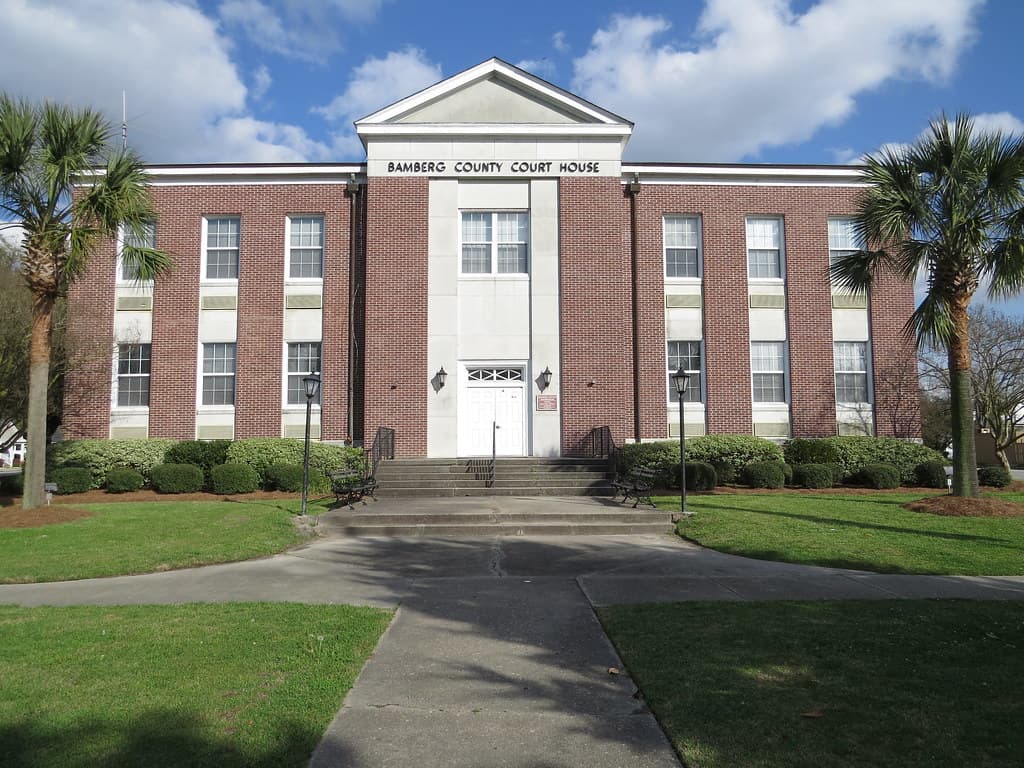
Bamberg County History Explains Roots, Courthouse Move, Agricultural Legacy
Bamberg County traces its name and foundation to the Bamberg family, becoming a separate county in 1897 after partition from Barnwell County. The county history highlights how agriculture, the South Carolina Railroad, and mid twentieth century courthouse relocation shaped settlement patterns, civic institutions, and local infrastructure priorities that still matter to residents today.

Bamberg County’s official history lays out a compact narrative of place making that continues to influence local governance and community identity. Named for William Seaborn Bamberg and other members of the Bamberg family, the county was carved from Barnwell County in 1897. It occupies roughly three hundred ninety five square miles in the upper and middle Coastal Plain, about two hundred fifty two thousand eight hundred acres, and was built on an economy that remained primarily agricultural for generations.
The arrival and route of the South Carolina Railroad in the mid nineteenth century determined where towns grew and where commerce concentrated. Those rail town sites became the anchors for civic life and for county services in subsequent decades. The courthouse in the county seat emerged early as a focal point of authority and public business. In the mid twentieth century county leaders confronted rising traffic and structural concerns that prompted a significant public works response. Officials moved the courthouse building approximately three hundred feet and built up the new grounds, a large scale local project that reflected both preservation ambitions and practical infrastructure needs.
That history matters for contemporary policy and planning. The pattern of rail oriented towns and an agricultural land base has shaped road networks, land use patterns, and the county fiscal profile. The courthouse relocation is an early example of how Bamberg County balances historic preservation with modernization, including decisions about public expenditure, site engineering, and traffic management. Those choices were made within the institutions of county government and remain relevant as officials confront new maintenance needs, accessibility standards, and storm resilience questions.
Local historical sites such as Woodlands Plantation, once the home of author William Gilmore Simms, add cultural and tourism dimensions to the county economy and to preservation responsibilities. Residents should expect county officials to continue weighing long term infrastructure investments against heritage conservation. Voter attention and civic engagement in budget and planning processes will determine whether future projects replicate the cooperative public works spirit of the past, or require new approaches to protect Bamberg County history while meeting twenty first century needs.
Know something we missed? Have a correction or additional information?
Submit a Tip