Bamberg County history trail highlights preserved civic and historic sites
Bamberg County’s history loop is mostly a short-drive route, but only Rivers Bridge is a sure public stop. Downtown Bamberg, Denmark and Midway show how much heritage sits within a one-day loop.
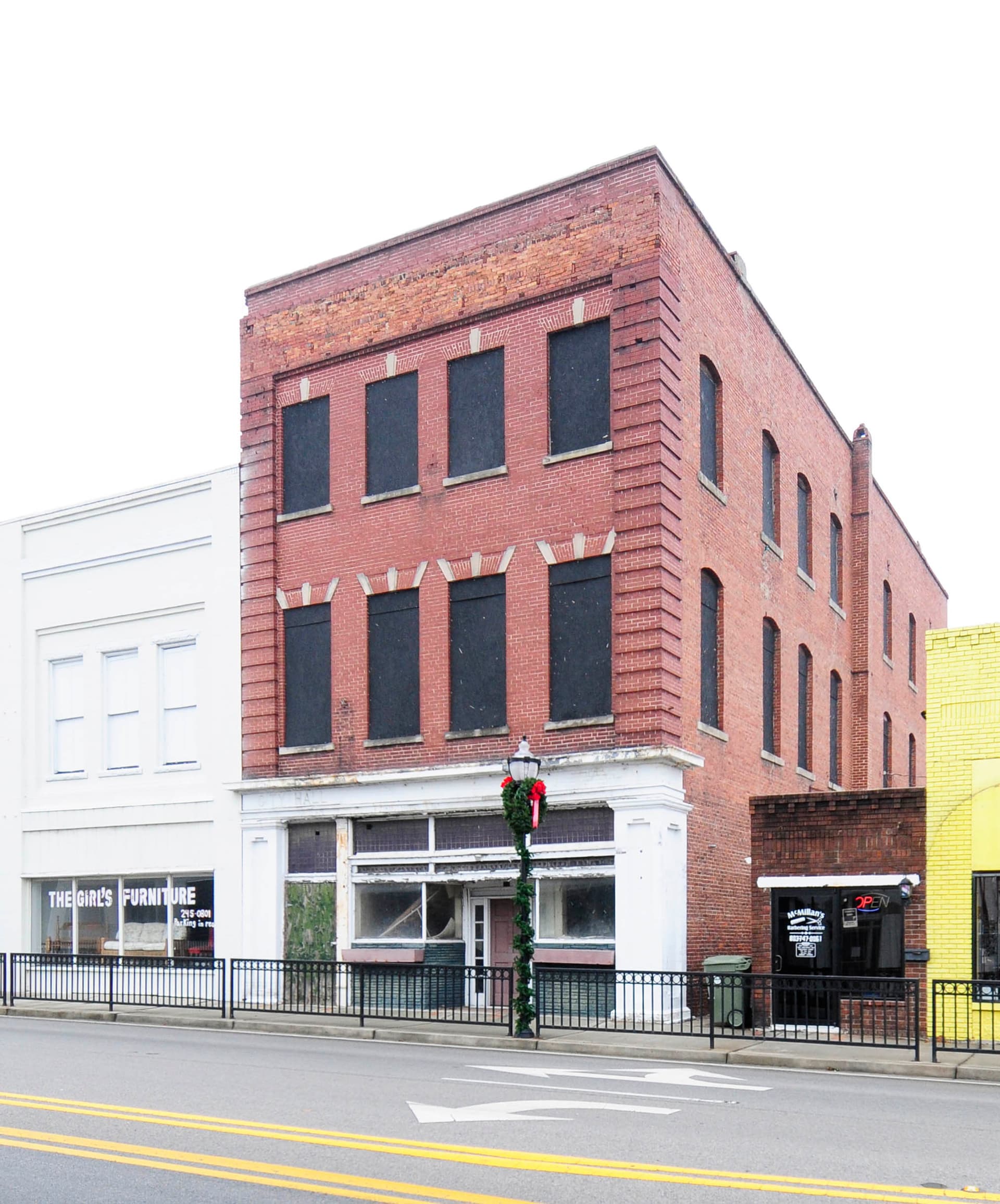
Bamberg City Hall, a campus corridor in Denmark, Woodlands near Midway and Rivers Bridge near Ehrhardt already give Bamberg County the bones of a one-day history trail. The state’s National Register pages include summary text, photographs, full nomination forms and district boundary maps, but they also note that most listed properties are privately owned and not open to the public. That makes this less a leisurely heritage stroll than a practical driving guide with a few reliable stops and several exterior-view sites.
Start in Bamberg
The easiest place to begin is the county seat itself, where the register list pulls together Bamberg City Hall, the Bamberg Historic District, the Bamberg Post Office, the American Telephone & Telegraph Company Building and the Gen. Francis Marion Bamberg House. The historic district is the strongest walkable cluster: the state record lists about 56 contributing buildings from 1880 to 1930, with the most prominent buildings along East Railroad Avenue.
For a public-facing first stop, City Hall at 2340 Main Highway and the post office on Heritage Highway give you two easy anchors before you move deeper into the historic district. The AT&T building points to Bamberg’s communications era, while the Gen. Francis Marion Bamberg House ties the town’s built environment to the family name that still defines the county seat.
Denmark adds the education chapter
From Bamberg to Denmark is a short hop, about 6.9 miles by road and roughly nine minutes of driving. That makes Denmark the second stop in a realistic county loop, not an all-day detour. Bamberg County was carved from Barnwell County in 1897, and several towns developed along the South Carolina Railroad in the mid-19th century, which helps explain why the county’s historic sites line up along old transportation corridors rather than one central museum district.
Denmark’s National Register sites, Denmark High School and the Voorhees College Historic District, give the town a strong educational identity. Elizabeth Evelyn Wright founded Denmark Industrial School in 1897. Ralph Voorhees and his wife donated $5,000 for land and the first building. The school opened in 1902, and the institution says it was the first Historically Black College and University in South Carolina accredited by the Commission on Colleges of the Southern Association of Colleges and Schools. Denmark still functions as an education town today, with Denmark Technical College alongside Voorhees.
The rural leg: Woodlands and Rivers Bridge
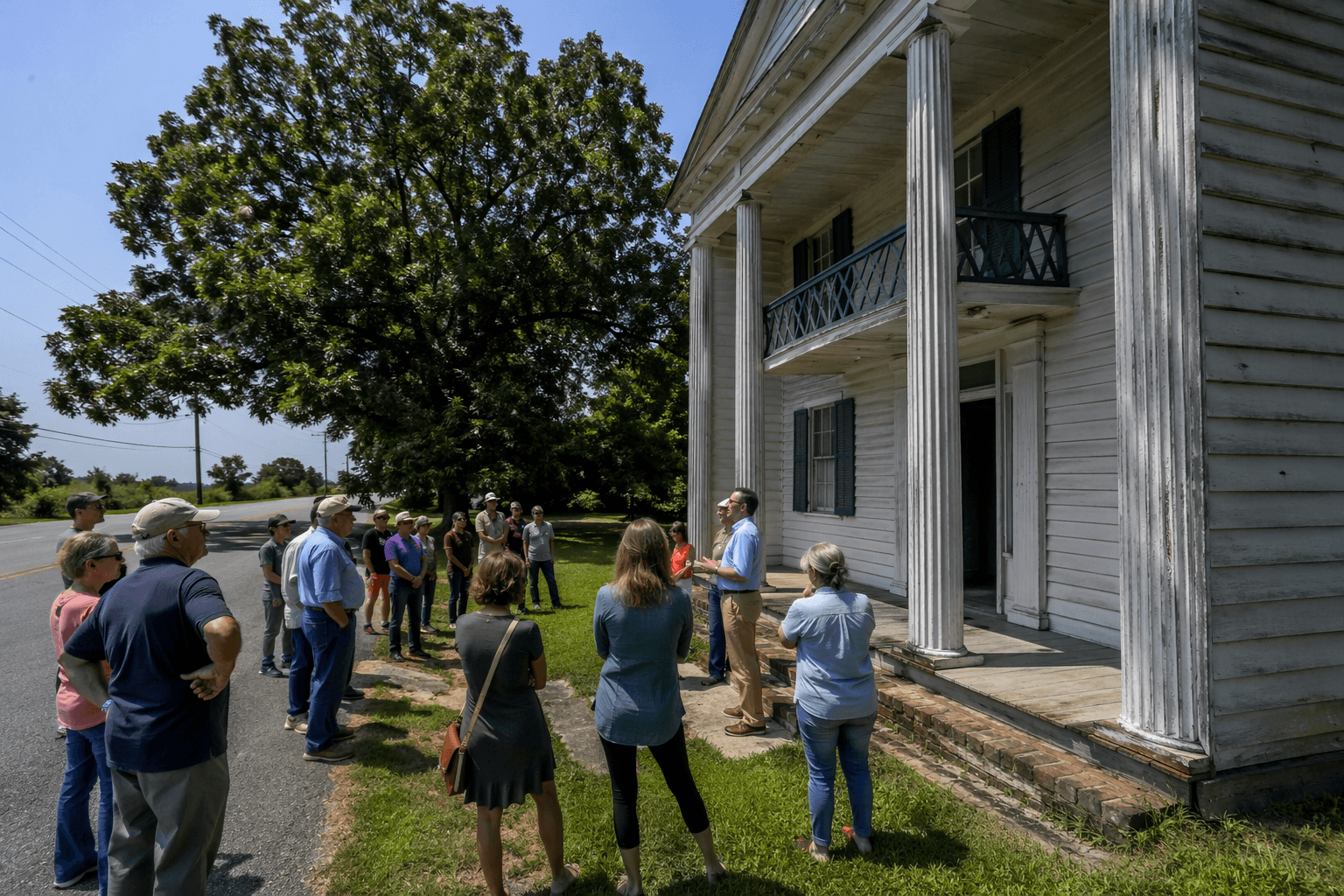
Woodlands sits about three miles south of Bamberg on U.S. Highway 78 near Midway, which makes it the easiest rural stop to add after downtown. Woodlands is the William Gilmore Simms House, and the Library of Congress record dates the structure to after 1800 with later work after 1865. The site is linked to Simms’s writing life, which gives it a literary importance that stands apart from the county’s civic and military landmarks. Because the county’s own National Register page notes that most properties are privately owned, Woodlands is better treated as a roadside literary landmark than as a guaranteed walk-in destination.
Rivers Bridge is the farthest stop and the one with the clearest public access. It is about 22.5 miles from Bamberg by road, and the park sits near Ehrhardt, about seven miles southwest of that town. The battlefield record dates the Confederate position to February 2, 1865, with roughly 1,200 Confederate men under elements of Lafayette McLaws’s division, and the fight lasted two days before Confederate withdrawal. Rivers Bridge is the only state historic site in South Carolina that preserves a Civil War battlefield, and its battlefield trail is 0.56 miles long with interpretive panels and ranger-guided tours. The site includes roads, earthworks and memorial grounds.
What the route says about Bamberg County
The state register system includes more than 1,300 listings and more than 160 historic districts, and the Bamberg County pages are detailed enough to support a self-guided route rather than a vague list of names. Several of the best-known listings are private properties or campuses, so the tourism payoff depends on whether visitors can easily move from exterior viewing to open, programmed places like downtown Bamberg and Rivers Bridge.
Bamberg County covers about 395 square miles and had a 2020 population of 13,906, and Bamberg, Denmark and Ehrhardt are the main wayfinding towns.
This article was produced by Prism’s automated news system from verified source data, official records, and press releases, then run through automated quality and moderation checks before publishing. The system is built and supervised by the people who set the standards it runs under. Read our full AI policy.
Did this article answer your question?

