Bamberg County Spotlights Isaiah DeQuincey Newman for Black History Month
Bamberg County highlights Isaiah DeQuincey Newman for Black History Month, reminding residents of his NAACP leadership and historic 1983 election to the South Carolina Senate.
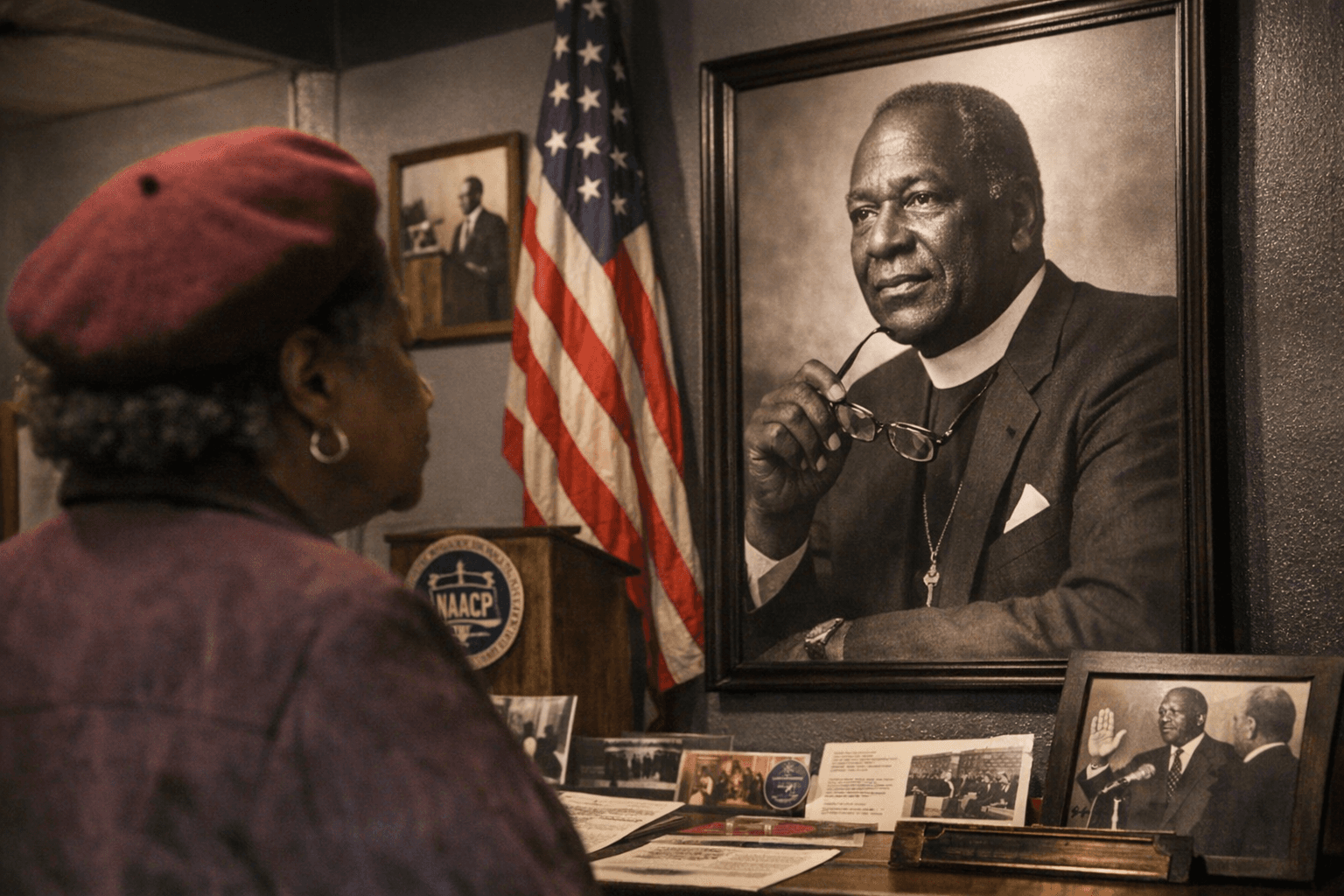
Bamberg County is placing a spotlight on Isaiah DeQuincey Newman for Black History Month, linking a local public-history program to the life of a Darlington-born pastor and civil-rights leader who became the first African-American elected to the South Carolina Senate since Reconstruction. The county post underscores Newman's roles in the NAACP, the United Methodist Church, and state politics, and ties those milestones to neighborhood history in Columbia.
Newman won election on November 8, 1983, a milestone that Scafricanamerican summed up bluntly: "The Reverend Isaiah DeQuincey Newman earned his place in the pages of South Carolina history books on November 8, 1983, when he became the first African-American to be elected to the South Carolina Senate since Reconstruction. He was the first black to serve in the state senate since 1887." Records indicate Newman represented the 19th district from 1983 to 1985, with Alex Sanders preceding him and Kay Patterson succeeding him. Following the election, he served on the Senate Rules, Agricultural, Corrections, and Fish, Game and Forestry Committees.
Newman's trajectory began in Darlington County on April 17, 1911. Biographical accounts record that as a youngster he shined shoes to earn money, and at age eight he witnessed a Ku Klux Klan atrocity that he said shaped his commitment to justice. Newman later said, "I tell you I put that in my memory bank. I kept that in my heart for a long time and I held it against my father. There was a man being burned alive, and my father wouldn't turn a hand to help him. Of course, I learned since then had he gone to give help, he would have been shot down, just killed."
Newman combined ministry and civil-rights organizing. Historic Columbia notes that he served for over forty years in the United Methodist Church, lived at the site now identified as 2227 College Street in 1960-1961 while pastoring Wesley Methodist Church, and acted as state field director for the NAACP during the 1960s. Scafricanamerican and other accounts place his NAACP field-director tenure from 1960 to 1969, and credit him with founding the Society for the Preservation of Black History, Art and Folklore.
Public reaction at the time emphasized the symbolic and practical significance of Newman's election. Voices recorded on a PBS broadcast included, "Well, simply for the fact, because he is the first Black to be elected- that's a big step for us as a whole," and, "It's been a long time coming. You know, the people pulled together and voted for him and which, I think, you know, was a, a good thing, you know, to have somebody, Black representation in the Senate, you know, at this present time." The same broadcast noted Newman had publicly said he supported the Governor's education package as he prepared to take his Senate seat.
Historic Columbia’s community programs anchor Newman's story locally. The Early Adventures: History & Heritage program is available by reservation for groups of 10 or more at $6 per child and can be tailored to age and interest; the foundation can be reached by phone at 252-1770 or via its website for reservations. The Second Sunday Stroll focuses on the Lower Waverly neighborhood, once a self-contained African-American community and home to Newman and educator Celia Dial Saxon. Children’s activities in the program include T-ball, badminton, and arts and crafts that highlight sports pioneers such as Larry Doby, Willie Larry Randolph Jr. "born in Holly Hill and played for the New York Yankees," and Althea Gibson.
Some biographical details remain inconsistent across records. Sources differ on the spelling of his middle name (DeQuincey vs DeQuincy), his father’s given name (Melton vs Milton C. Newman), and on the timing of his retirement and death; the most specific date available lists his death as July 31, 1985. For Bamberg County residents, the county’s Black History Month focus reconnects community programming with statewide civil-rights history, offers family-friendly opportunities to learn local stories, and underscores the civic value of representation and negotiation in advancing policy and community ties.
This article was produced by Prism’s automated news system from verified source data, official records, and press releases, then run through automated quality and moderation checks before publishing. The system is built and supervised by the people who set the standards it runs under. Read our full AI policy.
Did this article answer your question?

