Bamberg County unveils monument honoring diverse Revolutionary War roles
A new Bamberg monument shows one Black soldier and one white soldier back-to-back, honoring African American, Native American and women’s Revolutionary War roles.
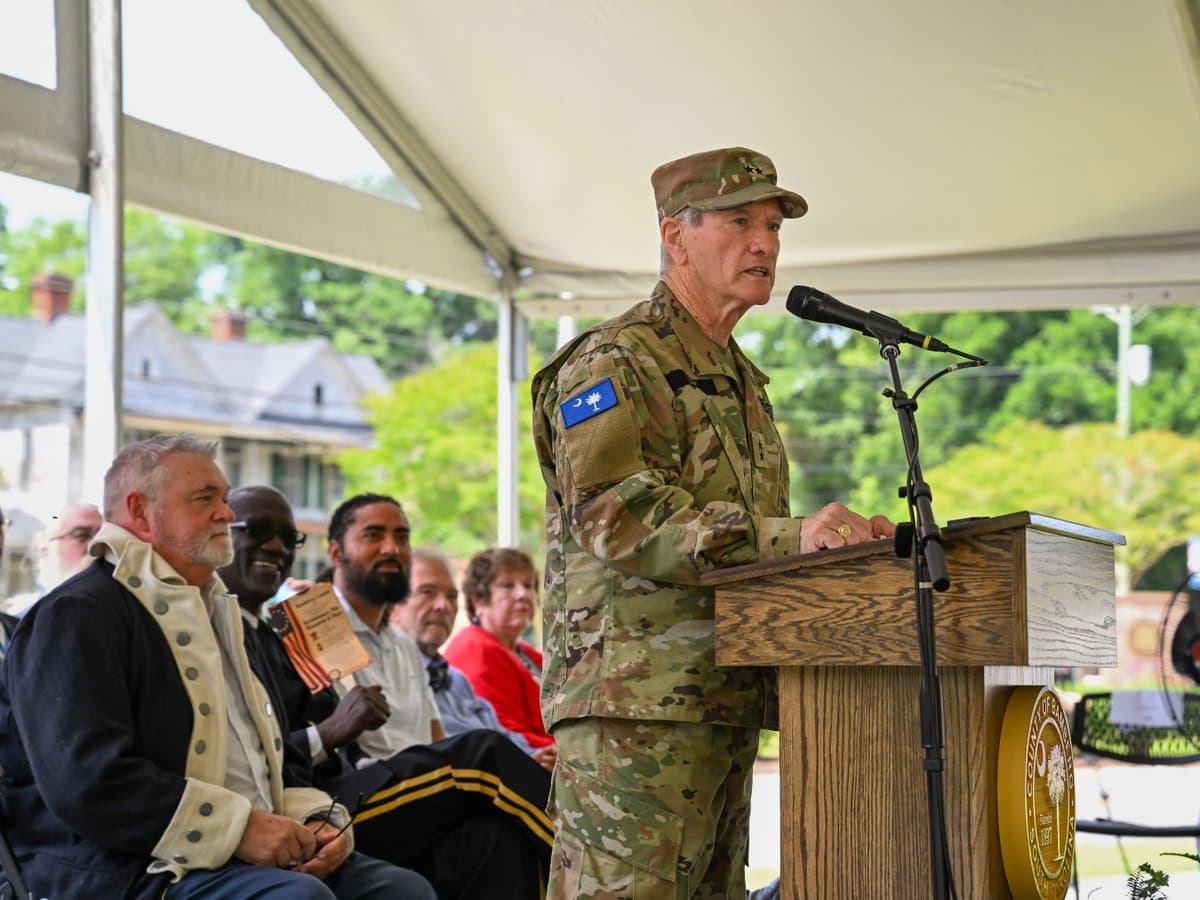
Bamberg County marked its Revolutionary War past with a new monument on Railroad Avenue that shows one Black soldier and one white soldier standing back-to-back. The dedication was held at 11 a.m. Saturday, June 27, 2026, at the Revolutionary War Monument & Plaza in Bamberg, and the ceremony drew historical reenactors, military honors and descendants of Revolutionary War participants. Sheriff Leon Lott of Richland County spoke at the unveiling.
The project is a first-of-its-kind Revolutionary War monument. It was commissioned through Bamberg County’s America250 initiative. Artist Brad Spencer built the piece in brick, not bronze, from roughly 250 clay pieces. The research behind the design was meant to reflect the region’s militiamen and their historical clothing and gear, including hunting clothes and hunting rifles.

The monument was designed to honor African Americans, Native Americans, women and Patriot soldiers whose roles in the Revolution have often gone untold. The figures reflect the reality that African Americans, Native Americans and white soldiers all fought in the region, including enslaved and free Black men.

That broader effort is tied to the Bamberg County Veterans Trail and aims to honor every recorded regional Revolutionary War participant, with particular attention to women and men of color. Bamberg County’s Revolutionary War history includes the 1782 killing of Patriot supporter George Hartzog at Rush’s Mill near present-day Olar, a story preserved through markers, family accounts and local tradition. The county’s focus also parallels South Carolina’s wider 250th-anniversary observance, including SC250’s Founding Mothers event on May 12, 2025, centered on Rebecca Brewton Motte at Fort Motte.
This article was produced by Prism’s automated news system from verified source data, official records, and press releases, then run through automated quality and moderation checks before publishing. The system is built and supervised by the people who set the standards it runs under. Read our full AI policy.
Did this article answer your question?

