Bamberg County's Historic Sites, Battlefields Draw Visitors and Anchor Local Identity
Rivers Bridge's 1865 earthworks near Ehrhardt anchor Bamberg County's heritage circuit, connecting Civil War battlefields, the Hooten-Black House, and the Edisto River in one compact county.
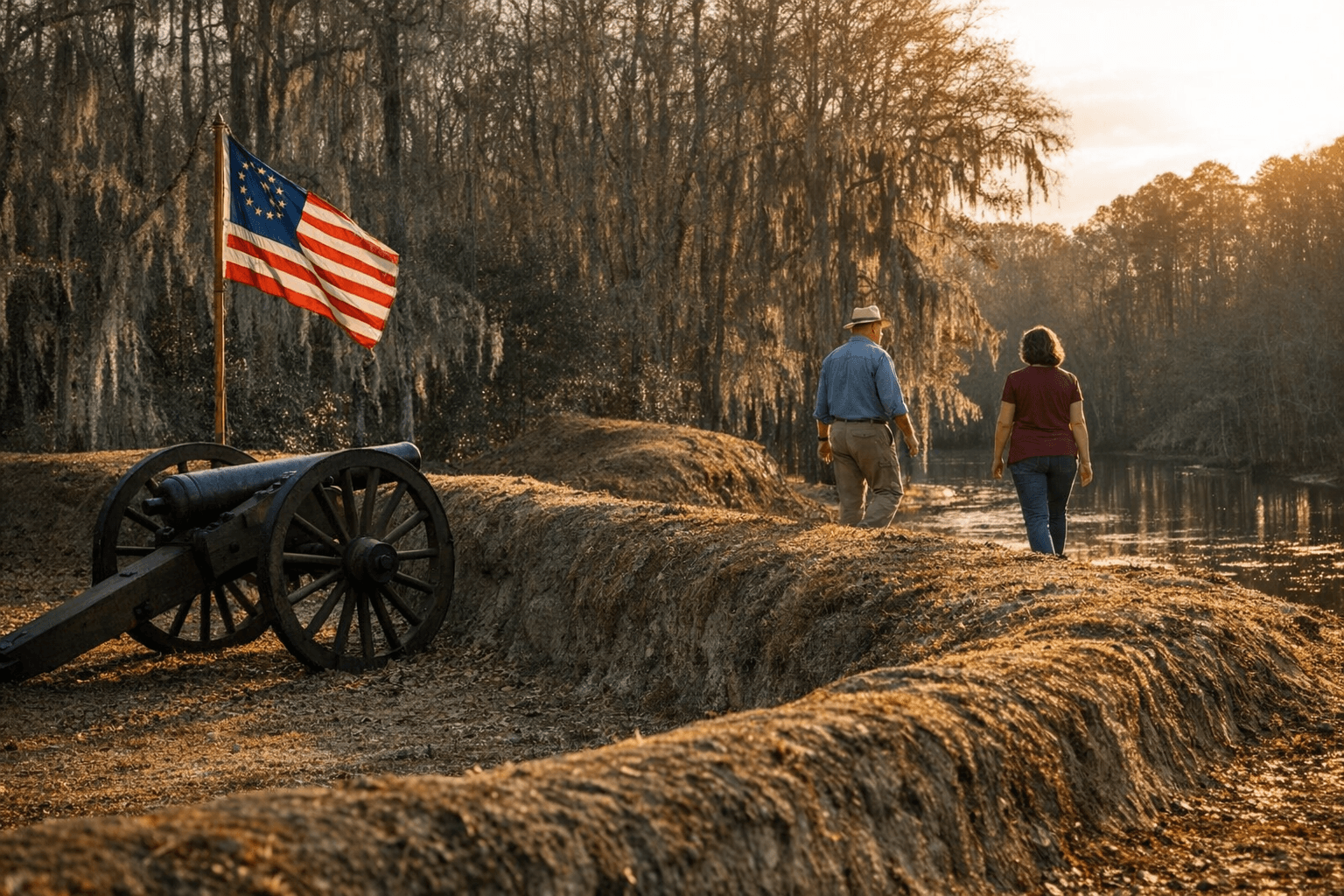
The earthworks at Rivers Bridge State Historic Site have stood since 1865, when Confederate forces dug in along the Salkehatchie River in a rearguard action during the final months of the Civil War. That engagement left one of the best-preserved battlefield earthworks in South Carolina, and today it anchors a heritage circuit in Bamberg County that runs from a Civil War battlefield near Ehrhardt through a National Register downtown, past a local museum in a 19th-century house, and out onto one of the Southeast's most historically layered rivers.
Rivers Bridge State Historic Site: Where the Circuit Begins
Near the town of Ehrhardt, Rivers Bridge State Historic Site preserves the earthworks and terrain of the February 1865 battle, offering walking trails and wayside exhibits that put visitors directly inside the tactical landscape. The site is one of the county's most widely recommended historic stops, drawing history groups, Civil War researchers, and school field trips looking for an immersive, low-cost experience. The combination of preserved earthworks and on-site interpretation makes it unusually tangible: visitors aren't reading about history through a glass case but walking the actual ground where it unfolded. Before making the drive, confirm current seasonal hours through the South Carolina state parks system, since the site may close periodically for maintenance.
Downtown Bamberg and the Historic District
The county seat's downtown delivers a different but complementary kind of history. The Bamberg Historic District contains commercial streetscapes and architecture that trace the town's development from the 19th into the 20th century, and several properties carry listings in the National Register of Historic Places. Walking the district is free and self-guided, with historic markers and preserved facades offering enough context for an informative stroll without requiring a scheduled tour or admission fee.
At the center of downtown's cultural life sits the Hooten-Black House, which functions today as a small local museum and arts hub. The building connects the county's architectural heritage to its contemporary arts programming, hosting exhibits and community gatherings that keep the historic fabric of downtown in active use rather than frozen in amber. For visitors who want a focused introduction to local history before exploring the broader circuit, it's a natural first stop.
The Dane Theater and Civic Culture in the Historic Core
Restored civic venues like the Dane Theater extend downtown Bamberg's cultural footprint beyond static preservation. The theater hosts performances, lectures, and seasonal events that draw residents into the county's historic core for contemporary programming, a model that ties heritage tourism to living community life. Local organizations periodically program concerts and exhibits that connect the county's historical identity to current cultural expression, giving both residents and out-of-town visitors a reason to return well beyond a single afternoon walk.
The Edisto River Corridor: Natural Landscape, Deep History
The Edisto River doesn't simply border Bamberg County; it runs through its history. The river corridor frames the remnants of historic plantations, marks the traces of old ferry crossings, and holds archaeological evidence of the region's long human occupation. Paddling or walking alongside the Edisto means moving through a landscape where natural scenery and cultural history are layered on top of each other, making the river one of the most interpretively rich experiences the county has to offer.
For those who want to connect outdoor recreation to historical understanding, local outfitters and the chamber of commerce occasionally run guided river trips and heritage walks. A knowledgeable local guide can identify a plantation tract from the water or point out the trace of an old ferry road that a self-guided paddler would almost certainly miss. Booking ahead is advisable during peak season when guided trip slots fill quickly.
Planning Your Visit
Bamberg County's heritage circuit is accessible and largely low-cost, but a few logistical points are worth noting before you go:
- Rivers Bridge State Historic Site operates on seasonal hours and occasionally closes for maintenance; confirm through the state parks system before making the drive to Ehrhardt.
- The Bamberg Historic District walking tour is self-guided and free; historic markers throughout the district supply on-site context at no cost.
- The Hooten-Black House and Dane Theater run scheduled programming; checking with the Bamberg County chamber before your visit increases the odds of catching a live event or open exhibition.
- Guided Edisto River trips are available through local outfitters affiliated with the chamber; advance booking is recommended.
- Archaeological and protected sites along the river corridor require visitors to use designated boat launches and marked trails. Posted rules exist to protect irreplaceable resources, and following them is both a legal requirement and a basic civic responsibility.
Heritage as Economic Engine and Community Identity
For a small county, the density of Bamberg's heritage assets is striking: a Civil War battlefield, a National Register downtown, a functioning historic house museum, a restored civic theater, and a historically layered river corridor, all within a compact geography. Preserving these landmarks supports small cultural enterprises including antique shops, cafes, and guide services while generating modest but meaningful tourism spending on restaurants and lodging from visitors who might otherwise pass through without stopping.
The stakes extend beyond economics. In a county where community identity and civic memory are closely tied to specific places, the earthworks at Rivers Bridge and the streetscapes of downtown Bamberg serve as shared reference points that schools, families, and local institutions return to year after year. The circuit of sites that connects them gives that identity a form visitors can follow and residents can confidently call their own.
This article was produced by Prism’s automated news system from verified source data, official records, and press releases, then run through automated quality and moderation checks before publishing. The system is built and supervised by the people who set the standards it runs under. Read our full AI policy.
Did this article answer your question?

