Bamberg highlights Edisto River South Fork on official attractions page
Bamberg’s official attractions page puts the Edisto River South Fork at the center of the city’s image, raising a bigger question: what investment backs that story?
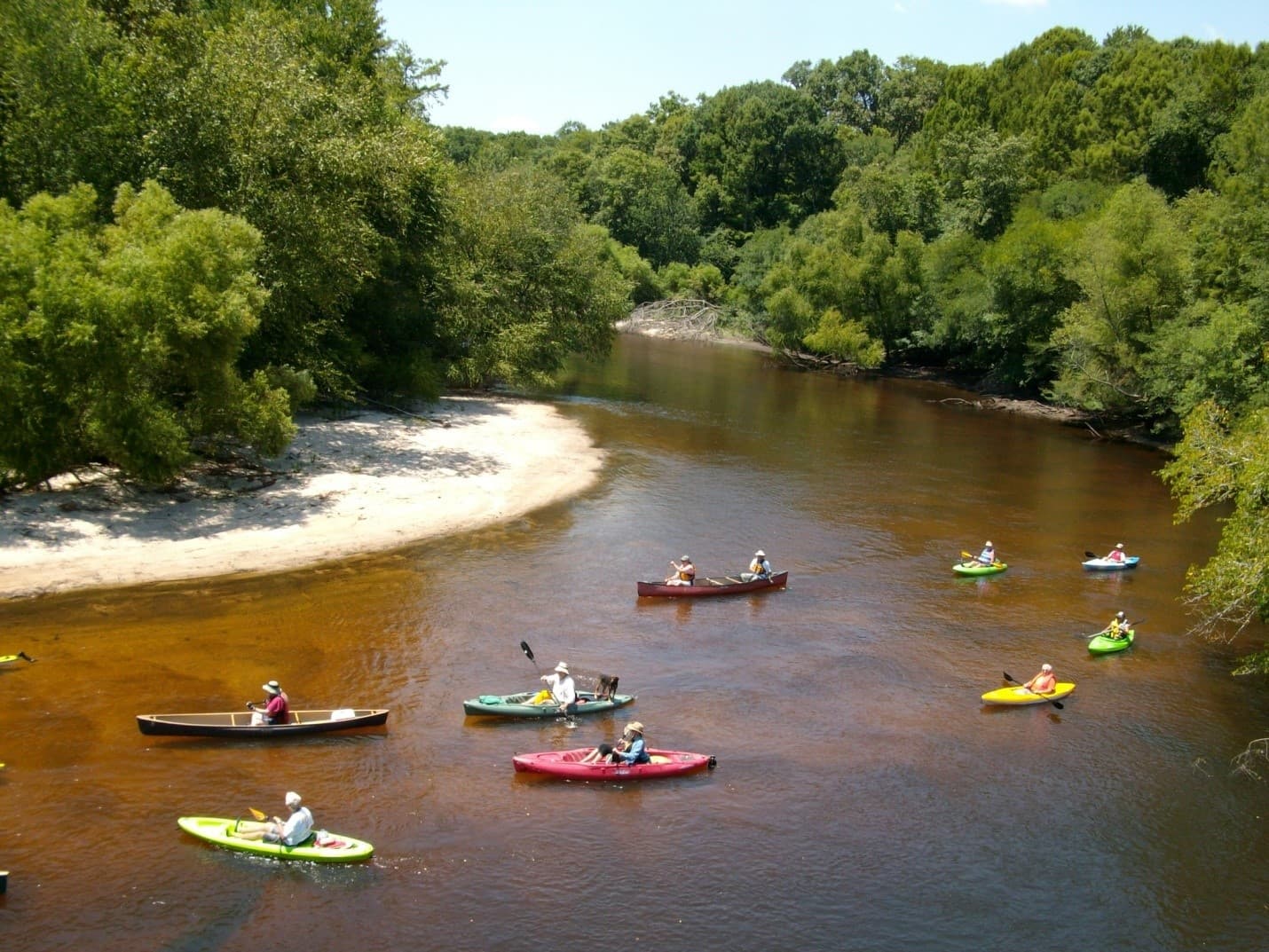
The river at the center of Bamberg’s pitch
Bamberg’s official attractions page does more than list a place to visit. It shows what the city believes defines it: the Edisto River, especially the South Fork, as a major natural feature shaping local identity, recreation, and civic pride. That choice matters because a city’s attractions page is also a statement of economic development priorities, and Bamberg’s version leans hard on water, history, and a sense of place.

The page describes the Edisto River as one of the longest free-flowing blackwater rivers in North America. It places the South Fork in the larger Edisto Basin, noting that the branch begins in Johnston, South Carolina, flows about 105 miles, and joins the North Fork near Branchville to form the main stem of the river. That is not just scenery language. It is a definition of Bamberg as a river town, with the county seat tied to a landscape that reaches far beyond city limits.
The South Carolina Department of Natural Resources adds a deeper layer to that picture: the Edisto Basin has supported people for at least 10,000 years. Its boating guide emphasizes the river’s natural and cultural history and points of interest, which helps explain why the city would treat the Edisto not as a side note but as a core civic asset. In Bamberg, the river is not only about paddling or fishing. It is part of the story the city tells about itself.
What the city says Bamberg is, and who it is for
The city’s online profile goes beyond the attractions page. Its homepage and about page emphasize family life, recreation, and a welcoming tone for people who live there or may be considering a move. The language points toward “high-achieving schools,” “safe streets,” city parks, and recreation programs, along with “a safer, more wholesome way of life.” That is a clear municipal brand: Bamberg is presenting itself as a small place with stability, community, and manageable scale.
The city’s homepage also notes that Bamberg was long incorporated as a circle with a 3- to 4-mile radius centered on the old Southern passenger station. That detail matters because it ties the town’s identity to a compact rail-era center rather than a sprawling modern footprint. The message is that Bamberg grew from a transportation hub, but still thinks of itself as a close-knit place where geography, history, and public services remain tightly linked.
For residents, that kind of page is more than marketing. It is a quick official snapshot of what the city believes is worth protecting and promoting. For anyone looking at Bamberg County through the usual lens of council meetings, election notices, and public administration, the attractions page reminds readers that the county seat also wants to be understood as a place with a distinct character, not just a government address.
History as a civic asset
Bamberg’s heritage pitch is built into the ground. The city history page says some of the earliest settlers were Germans, Swiss, Scots-Irish, English, and Huguenots who moved south across both forks of the Edisto River. It also says Bamberg was once known as a cypress swamp and that the Charleston-Hamburg railroad, built in 1832, brought major change to the area.
That rail connection remains central to the town’s development story. The city says H. J. Brabham helped secure a bridge over the Edisto River in 1882 near the current U.S. Highway 301 bridge to pull Orangeburg County trade into Bamberg stores. Taken together, those details show a town whose identity has long been shaped by transportation corridors, river crossings, and commercial access. Bamberg’s public image today is still drawing on that history.
The county’s own history page says Bamberg County and its county seat were named for William Seaborn Bamberg and other members of the Bamberg family. The county was carved out of Barnwell County in 1897. The South Carolina Encyclopedia adds that the broader area was originally populated by the Edisto tribe and that the county was formed from the southeastern section of Barnwell County in 1897. In other words, the story the city tells about itself rests on layers of native, colonial, railroad, and family-name history.
The historic district and Rivers Bridge widen the frame
The city’s attractions page is not the only place where Bamberg leans on heritage. The Bamberg Historic District, listed on the National Register of Historic Places, includes about 56 contributing buildings dating from 1880 to 1930, according to the South Carolina Department of Archives and History. That gives the town a preserved residential core that reflects its leading neighborhood during that period and reinforces the city’s sense of continuity.
Bamberg County also includes Rivers Bridge State Historic Site, which marks the Battle of Rivers Bridge fought February 2-3, 1865. The National Park Service says the site is open daily from 9 a.m. to 6 p.m. Official materials describe it as the last substantial Confederate resistance Sherman’s troops faced in South Carolina. That makes the county’s heritage profile larger than a single downtown district or a river launch. It is a landscape of memory, with Civil War history and preserved neighborhoods sitting alongside outdoor recreation.
That combination helps explain why Bamberg’s attractions page matters politically as well as culturally. A city that markets its river, history, and identity is also making an argument about what deserves attention, upkeep, and public investment. The question is not whether those assets exist. They do. The question is whether the city is backing the image with the kinds of improvements that make a place easier to visit, navigate, and experience.
What is missing from the picture
The attractions page offers a clear civic story, but it is also selective. It emphasizes natural beauty, historical depth, and a welcoming community tone. What it does not spell out is equally important: the page does not lay out a capital plan for river access, a maintenance schedule for visitor amenities, or a set of specific downtown improvements tied to that branding. That omission leaves residents to infer how the city is translating identity into action.
Bamberg County’s size makes that question harder to ignore. The U.S. Census Bureau says the county had 13,311 people in the 2020 Census, down from 15,987 in 2010 and 16,658 in 2000. In a county that small, even a modest tourism or quality-of-life strategy can carry outsized weight. A polished attractions page can signal ambition, but the county’s long-term economic challenge is whether the image is matched by visible public investment.
There are signs that the river is being treated as an active asset, not just a symbol. South Carolina tourism material says the Bamberg County Chamber of Commerce offers free monthly shuttles to remote sections of the Edisto River, suggesting that river access is part of the county’s recreation strategy. The county seat also houses county administrative offices, the library, the health department, the Office on Aging Thomas N. Rhoad Center, the County Historic Society, and the Economic Development Commission, which shows how much of Bamberg’s civic life is concentrated in one place.
A civic identity built on place
Bamberg’s official attractions page tells a coherent story: river, history, compact town center, and a community that wants to be seen as welcoming and rooted. It also points to a broader civic truth. In Bamberg, the public image is not built around a major industry corridor or a sprawling metro identity. It is built around the Edisto, the rail line, the historic district, and the institutions that keep county life running.
That makes the attractions page more than a travel note. It is a window into how Bamberg sees itself, and a quiet test of whether the city’s economic development priorities match the image it is putting in front of the public.
This article was produced by Prism’s automated news system from verified source data, official records, and press releases, then run through automated quality and moderation checks before publishing. The system is built and supervised by the people who set the standards it runs under. Read our full AI policy.
Did this article answer your question?

