Bamberg Historic District Anchors Downtown Revival and Heritage Tourism
Bamberg’s downtown core is centered on the Bamberg Historic District, with the 1897 county courthouse as its focal landmark. The district’s concentration of late 19th- and early 20th-century architecture and an active walking-tour brochure make heritage assets a tangible engine for downtown foot traffic, preservation activity, and local economic opportunity.
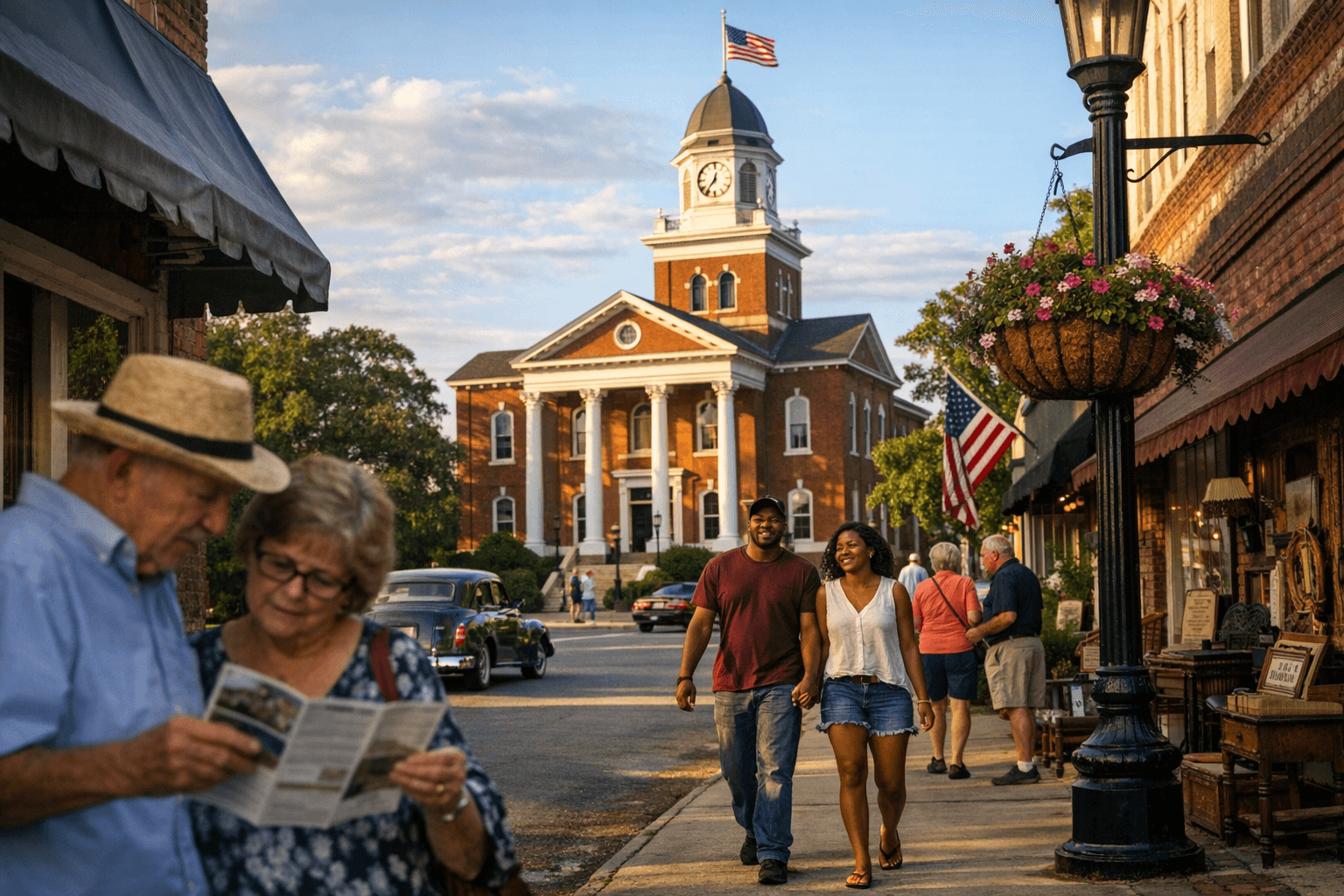
The heart of Bamberg’s downtown and courthouse area forms the Bamberg Historic District, a compact collection of commercial and residential buildings dating largely from about 1875 to 1930. These structures collectively narrate the county’s post-Reconstruction development, and the district is notable for a range of architectural styles including Georgian Revival, Second Empire, Neoclassical, and Gothic Revival.
At the center of that story is the historic county courthouse, constructed in 1897, the same year Bamberg County was formed. The courthouse was later moved and expanded in 1950 and remains a visible landmark for downtown walking tours and local preservation efforts. For residents and visitors, the courthouse, the surrounding historic district, and nearby museums and memorials are the primary, openly accessible heritage resources in the county. A walking-tour brochure is available through the Bamberg County Chamber and online at bambergcountysc.gov/History-of-Bamberg-County.
These assets matter beyond aesthetic or historic value. Concentrated historic districts tend to concentrate pedestrian activity, which supports retail, restaurants, and service businesses in small downtowns. For Bamberg, the combination of a defined historic core, interpretive materials, and accessible public sites helps position the downtown for modest tourism growth and increased local visitation, particularly from regional travelers interested in architectural history and heritage routes.
Preservation, however, carries fiscal and policy implications. Maintaining and adaptively reusing buildings from the 1875–1930 period often requires targeted investment, roofing, masonry, ADA access upgrades, and climate control upgrades to protect interiors and collections. Local policymakers and property owners face choices about prioritizing public infrastructure around the district, leveraging grant funding, and aligning zoning and tax policies to encourage rehabilitation while preserving historic character.
Longer-term trends underscore the potential payoff: communities that successfully pair preservation with small-business support and visitor promotion often see improved property values, higher downtown occupancy rates, and a more resilient local tax base. For Bamberg, sustaining the courthouse and the broader historic district as active public resources, backed by clear promotion through the Chamber and county channels, will be central to translating heritage interest into steady economic benefits for downtown merchants and civic life.
For residents wanting to explore the district, the county’s walking-tour brochure provides a concise route and architectural notes and can be obtained through the Bamberg County Chamber or online at the county website.
This article was produced by Prism’s automated news system from verified source data, official records, and press releases, then run through automated quality and moderation checks before publishing. The system is built and supervised by the people who set the standards it runs under. Read our full AI policy.
Did this article answer your question?

