Bethel Park United Methodist Church traces Bamberg County's rural faith history
Bethel Park United Methodist Church still shows how Denmark’s rural faith communities held together. Its history, cemetery, and ties to First Baptist reveal what Bamberg County keeps when places like this endure.
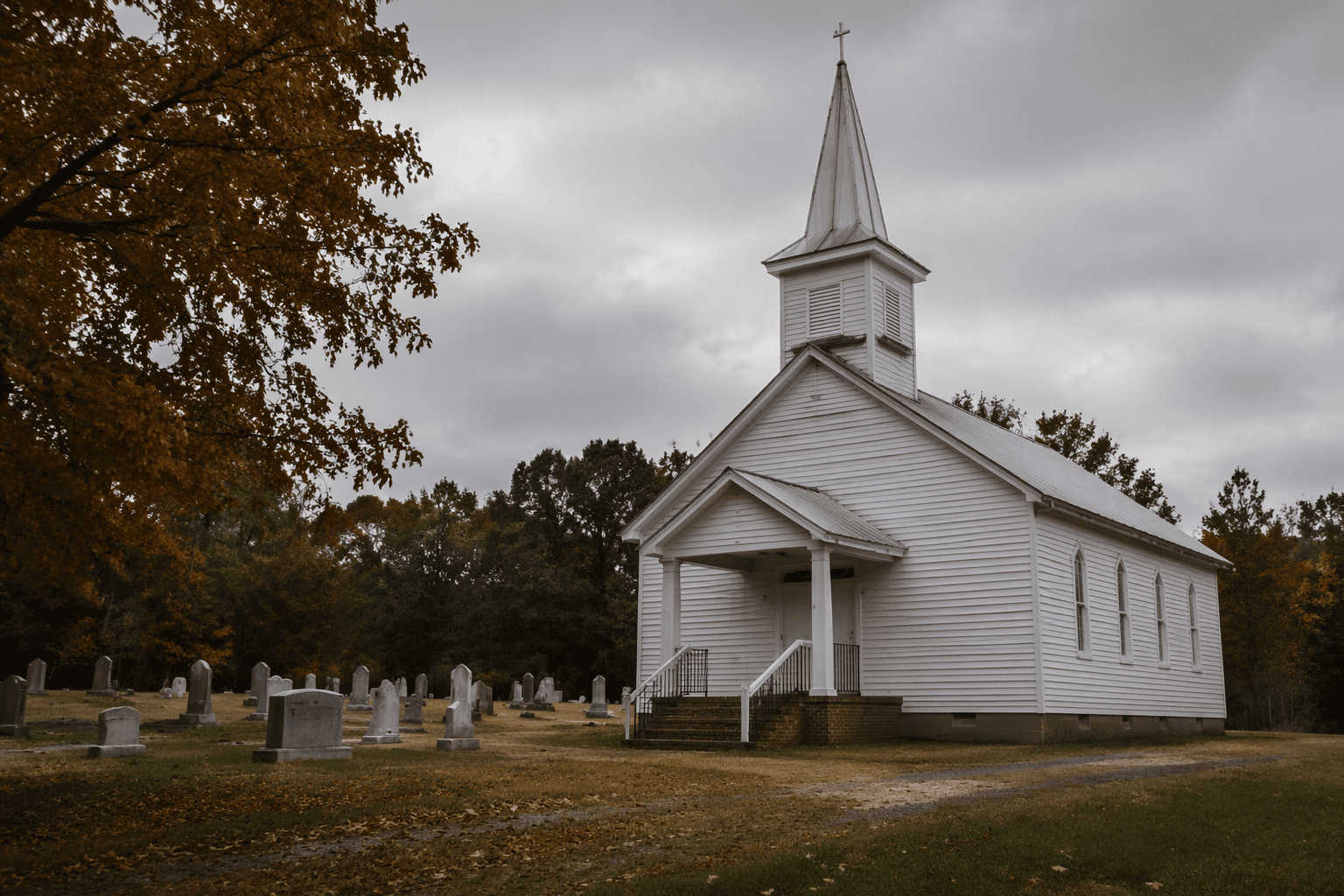
Bethel Park United Methodist Church is more than a landmark on Beech Avenue. It is one of the clearest surviving windows into how Denmark’s rural congregations organized themselves, stayed connected, and adapted as families, roads, and institutions changed around them. From its roots in 1858 to its present-day relationship with First Baptist Church of Denmark, the church carries a local story about continuity that still shapes Bamberg County.
A congregation built from circuits
The congregation’s history begins in 1858, when a Methodist church formed there as part of the Bethel and Graham’s Circuits, later known as the Denmark Circuit. That matters because a circuit was not a single church but a network of churches served across a wide area, a practical structure that helped rural faith life survive before modern transportation made it easy to gather in one central place. In that system, churches were linked by shared ministers, shared schedules, and shared needs, which gave small communities a way to keep worship going even when population was scattered.
By 1908, two separate churches, Graham’s Church and Bethel Church, merged to form Bethel Park United Methodist Church. The modern brick church rose to serve that larger congregation, showing how local faith life in Denmark evolved through consolidation rather than replacement. Older institutions did not simply disappear; they joined forces, built something larger, and kept serving the town.
Old Bethel Memorial marks the first home
The church’s deeper past is tied to Old Bethel Memorial, the cemetery that belonged to Bethel Park Methodist Church and served as the congregation’s first location. Local memory places the original church there before it burned and the congregation moved into Denmark, a shift that makes the cemetery more than a burial ground. It is part of the church’s origin story, a physical reminder that the congregation’s life began outside the town center before later settling into the Denmark community.
Old Bethel Memorial covers about 4 acres and was used for roughly 80 years. That scale matters because it shows how long one place can anchor local memory even after the congregation itself has moved on to a different site. In a county where so many family histories overlap, a cemetery like this becomes a record of who built the community, who stayed, and how the land itself carried faith across generations.
A living relationship, not a frozen monument
Bethel Park United Methodist Church remains active today, and its present-day value is not limited to preservation. It has a notably strong ecumenical relationship with First Baptist Church of Denmark, and the two congregations have long been connected by both family ties and community life. Members from the two churches have intermarried, and the churches cooperate through worship services and community projects, which gives the relationship a practical shape rather than a symbolic one.
That partnership is part of what keeps church life relevant in a town like Denmark. A church that still works alongside another congregation is not just preserving a building or a name; it is maintaining a network of people who share funerals, celebrations, service work, and regular worship. When First Baptist Church of Denmark says it maintains an ecumenical relationship with Bethel Park United Methodist, and that both churches remain active in the Denmark community, it points to a living arrangement that still helps define local identity.
Why this corner of Denmark still reads as one community
Bethel Park sits in a compact, walkable part of Denmark that makes the church easy to read as part of the town’s daily geography. It is about a half-mile from First Baptist Church of Denmark along Beech Avenue, and it sits about 0.1 mile from Denmark High School. Nearby landmarks such as the Jim Harrison Gallery, the Edisto Drive-In, and the AT&T Building place the church within a small cluster of places that shape how residents move through town and remember it.
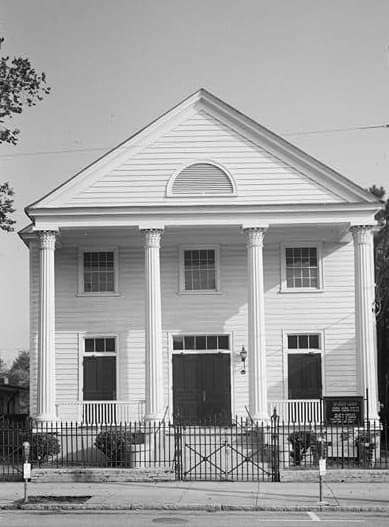
That proximity is part of the story. In a place like Denmark, a church is not only a place of worship. It is also one of the fixed points that helps residents orient themselves, remember family connections, and understand how the town developed over time. If churches like Bethel Park fade from daily life, the loss is not just architectural. It weakens a chain of memory that links older burial grounds, shared worship, school routes, and neighborhood identity.
Denmark’s older rail-era roots still show through
The church also makes more sense when set against Denmark’s own beginnings. The town was not officially established until 1837, but its roots go back to 1830, when founder Zack Graham sold 17 acres to the South Carolina Canal and Railroad Company. The area was then known as Graham’s Turnout, a name tied to the Charleston-to-Hamburg rail line that helped shape the town’s early growth.
That background explains why Bethel Park’s history matters beyond church walls. Denmark developed through rail, land sales, and settlement patterns, and rural congregations grew alongside those changes by building networks that could hold communities together when the town was still taking shape. Bethel Park United Methodist Church stands at the intersection of those histories: rail-era Denmark, circuit-era Methodism, and a present-day community that still leans on its churches for identity, continuity, and shared life.
The result is a place that remains useful to Bamberg County in the most practical sense. It preserves family memory, marks the edge of an older settlement pattern, and shows how a rural congregation can stay active long after its first site, its first building, and its original circuit have changed.
This article was produced by Prism’s automated news system from verified source data, official records, and press releases, then run through automated quality and moderation checks before publishing. The system is built and supervised by the people who set the standards it runs under. Read our full AI policy.
Did this article answer your question?