Downtown Denmark blends railroad history, art, and Dogwood Festival charm
Downtown Denmark pairs rail history with an easy walking loop of art, antiques, and bakery stops, while Dogwood Festival season still gives Main Street its biggest annual surge.
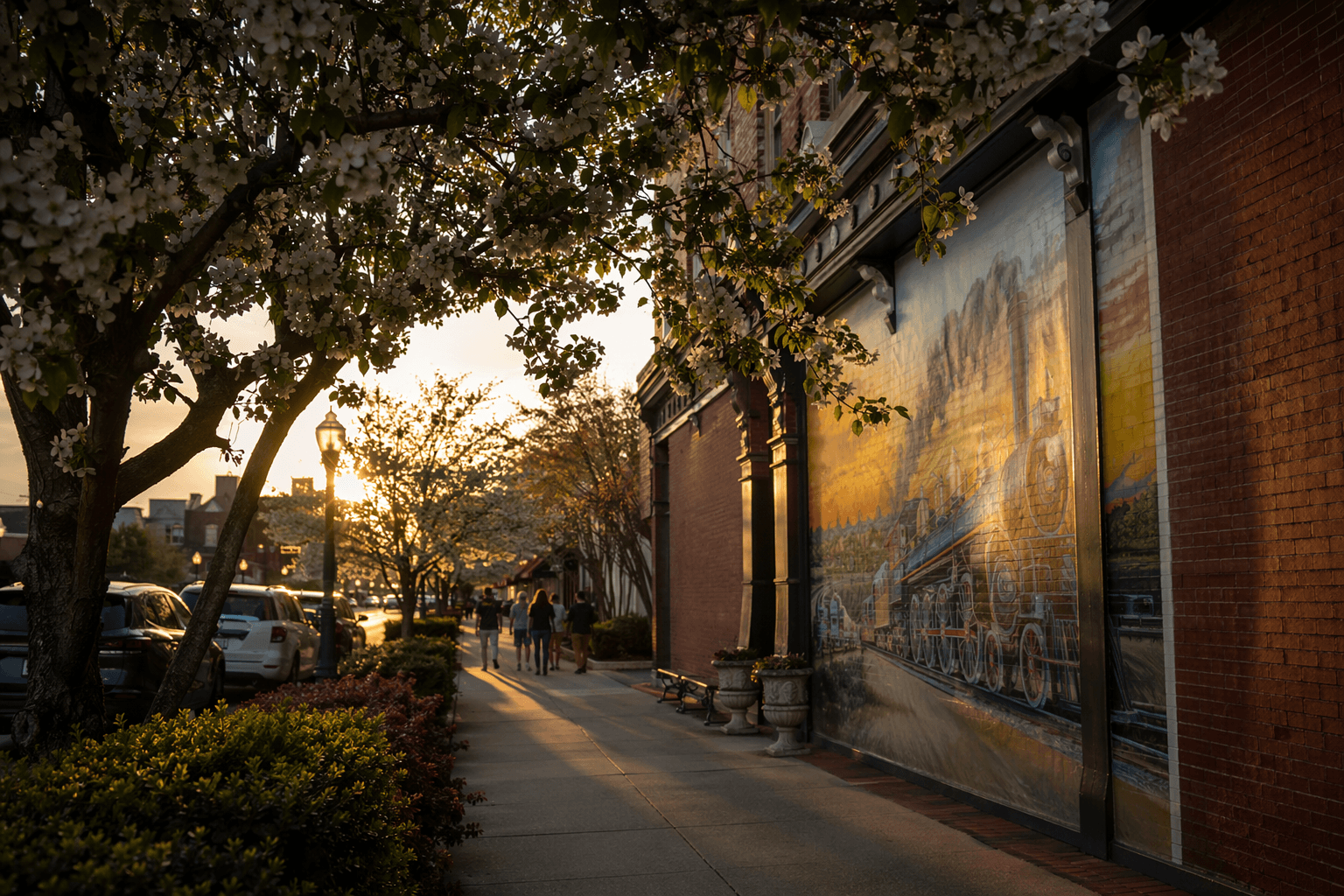
Denmark’s downtown is built for a walk, and its shape makes sense the moment you trace it back to the rails. The city says the town began in 1837 as Graham’s Turnout on the South Carolina Canal and Rail Road Company line, then took the name Denmark from railroad official B. A. Denmark. That compact origin still shows up in the way Main Street, Carolina Highway, historic storefronts, public art, and festival spaces cluster close together.
A rail town that still reads like one
Denmark sits inside the early rail story of South Carolina. The South Carolina Canal and Rail Road Company’s Best Friend of Charleston made the first regularly scheduled rail passenger run in the state on December 25, 1830, and SCIWAY places the state’s first railroad junction in 1838. That puts Denmark’s 1837 beginnings right in the middle of the opening era of American rail expansion, when towns formed around movement, freight, and the people who kept both running.
That history matters for a downtown visit because the center is still legible at walking speed. Streets stay close, landmarks are easy to spot, and the buildings feel tied to one another rather than spread out into separate districts. The result is a downtown that works best as a short loop, not a drive-by.
Start at Jim Harrison Square
A practical first stop is Jim Harrison Square, the award-winning downtown park dedicated to Denmark’s own artist, writer, lecturer, and preservationist. The square includes a gazebo and a fountain, which makes it one of the clearest public gathering places in the district and a good place to orient before moving into the surrounding blocks. It also gives the downtown a quiet center that is useful on ordinary days, not only during festival weekends.
From there, the Jim Harrison Gallery deepens the sense of place. The gallery features bronzes, etchings, and reproductions from Harrison’s more than 40-year artistic career, and it honors a figure whose work captured earlier 20th-century rural life. Harrison’s award of the Order of the Palmetto in 2008 gives his legacy extra weight in South Carolina arts and preservation, and the gallery helps keep that legacy visible in the middle of town rather than tucked away at the edge.
Follow the dogwood trail through the streets
The Dogwood Festival still shapes how Denmark presents itself. The city says the festival started in 1985 and is held annually in April, while the downtown cultural district leans into the same symbol year-round with dogwood flower murals and etchings on walkways and roadways. The Denmark water tower is also adorned with dogwood blossoms to commemorate the event, turning a civic utility into a marker of local identity.
The festival itself is family-oriented and takes over Carolina Highway, Denmark’s main street, with a prayer brunch, parade, live entertainment, food, rides, games, contests, and a fireworks finale. That mix explains why April brings a different level of foot traffic than the rest of the year. The downtown is not waiting for a single attraction to carry it; it uses the festival as a seasonal peak and the murals, square, gallery, and shops to keep the area active the rest of the time.
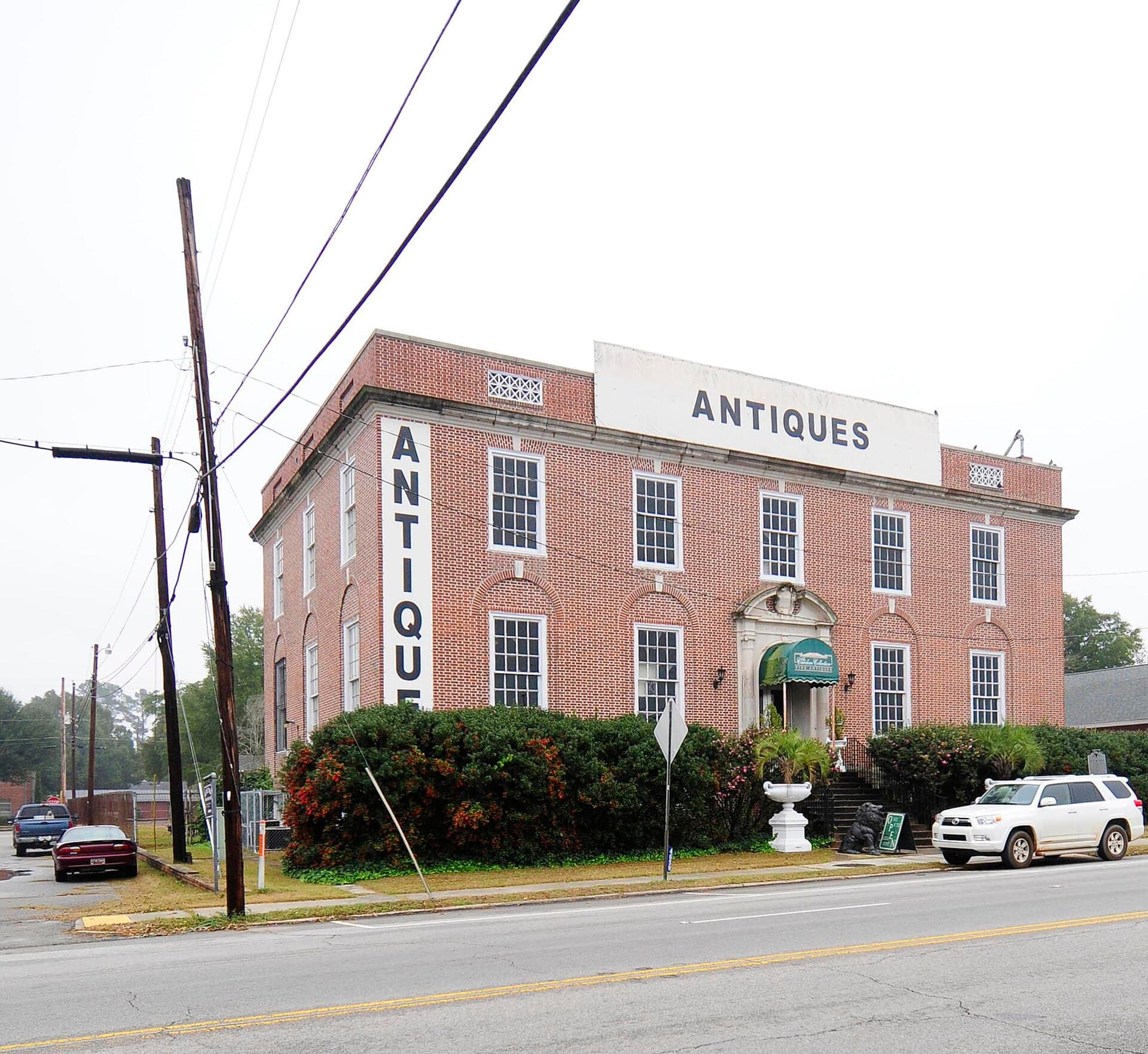
Antiques, storefront history, and the AT&T Building
The strongest year-round shopping pull sits in and around the historic commercial core. The Caroline Collection, inside the AT&T Building, is described as one of the largest privately owned antique stores in the Southeast and spans three floors. It also has several nearby locations, which makes it more than a single stop and gives antique hunters a reason to linger longer on downtown blocks.
The building itself adds another layer. The AT&T Building is listed on the National Register of Historic Places, and when it opened it was described as “the most modern telephone plant in the South.” That detail links Denmark’s commercial history to a broader telecommunications story, and it makes the antique stop feel rooted in preservation rather than nostalgia alone. Nearby, the old five-and-dime and the long-running hardware store add the kind of familiar retail texture that keeps a small downtown recognizable to residents.
A bakery stop with local history baked in
One of the most practical places in the district is Wee Bake Bakery, a Mennonite bakery that serves donuts, pies, cakes, breakfast, and lunch. The bakery reflects Denmark’s 1960s Mennonite settlement and gives the cultural district a food stop tied to a specific migration story, not just to generic small-town charm. That matters in a walking route because it turns a heritage stop into a place where people actually sit, eat, and stay awhile.
For residents, that combination of food and memory is part of downtown vitality. For visitors, it means the route is not built only around looking at old buildings. It also gives the district an everyday rhythm, with breakfast items, lunch plates, and bakery cases that can pull people in outside of festival season.
Why the district keeps working beyond April
Denmark’s downtown has a rare advantage: the same blocks that host a yearly festival also hold permanent anchors. The square, the gallery, the antique store, the bakery, and the historic building all create reasons to return after the Dogwood Festival crowds thin out. That steady mix is what gives Main Street a better chance of staying active across the calendar instead of going quiet once April ends.
The town’s education presence adds another layer to that everyday life. Denmark is home to Voorhees University, founded in 1897, and Denmark Technical College, which evolved from a trade school established in 1948. Together, those institutions place the downtown cultural district inside a larger corridor of learning, work, and civic life, which helps explain why the center of town still matters far beyond a single event weekend.
This article was produced by Prism’s automated news system from verified source data, official records, and press releases, then run through automated quality and moderation checks before publishing. The system is built and supervised by the people who set the standards it runs under. Read our full AI policy.
Did this article answer your question?