Olar roots shaped chef Chris Williams’ path to Roy’s Grille
Olar's scarcity, family gardens and gas-station beginnings still shape Chris Williams’ Roy’s Grille, from menu choices to how he carries Bamberg County outward.
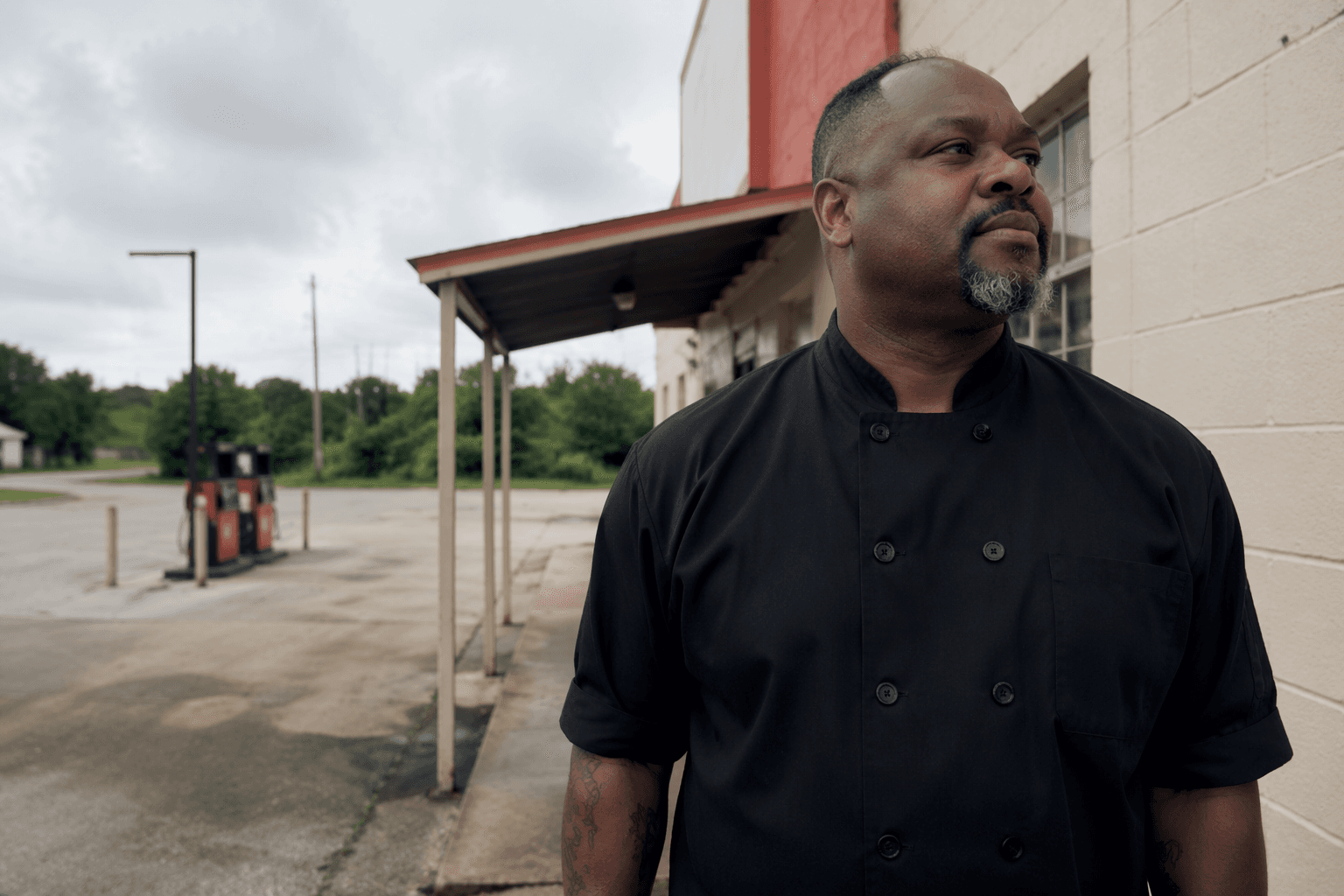
Chris Williams still cooks like someone who learned early that nothing in rural Olar came easy. In Bamberg County, where the population was estimated at 12,796 on July 1, 2025, down from 13,311 in the 2020 census, Olar sits in one of the county’s most sparsely populated corners, with just 1,061 residents spread across 87.1 square miles. That backdrop matters because Williams’ food story begins in a place where self-reliance was not a slogan, it was the daily routine.
Olar taught speed, discipline and resourcefulness
Williams has said that growing up in the small town of Olar, where opportunities were few and far between, taught him not to wait and not to hesitate. He learned to be ready when a chance appeared, and that urgency became part of the way he approached both cooking and business. The same upbringing also gave him an early respect for locally grown food, because his grandparents stressed community and he grew up cooking what came out of the garden.
The lessons did not stop with produce. Several profiles of Williams say his mother and grandmother taught him in the kitchen, and that his family in rural Olar often produced much of its own fruits and vegetables and sometimes raised livestock. That combination of home cooking, farming and improvisation helps explain why Williams’ food reads less like restaurant theater and more like a direct extension of a county that had to make things work with what was on hand.
Roy’s Grille began as a family tribute
Roy’s Grille opened on September 16, 2014, and Williams established it as a tribute to his late grandfather, Leroy Carter. The restaurant’s own history places the business in a small, unlikely beginning, and another local listing says Williams opened Roy’s Grille at 711 West Main St. in Lexington before the business later relocated to Irmo. That path mirrors the Olar mindset: start where you can, build from there, and let the work speak for itself.
The menu also reflects that family and place-based approach. Roy’s Grille describes itself as a from-scratch kitchen, and its South Carolina profile says Williams drew on the cooking he learned from his mother and grandmother in Olar to shape the food he serves now. The result is a restaurant brand built around memory as much as technique, with the name itself keeping Leroy Carter present in the business every day.
The ingredients point back to South Carolina farms
Williams’ cooking is not rooted only in memory. Titan Farms, the Ridge Spring grower he has used in seasonal dishes, says it is the largest peach grower on the East Coast and farms more than 6,000 acres of peaches and other crops, including bell pepper, eggplant and broccoli. The company’s own orchard lineup includes more than 60 peach varieties, and industry coverage says South Carolina’s peach season stretches into early September. For a chef like Williams, that gives local fruit a longer window and a wider range of uses in desserts, sauces and specials.

That peach connection is important because it shows how Williams’ Olar instincts travel with him into higher-profile settings. He learned early to value what was close at hand, and South Carolina produce gives him a way to keep that principle visible on the plate even as Roy’s Grille serves a much broader Midlands audience. The ingredients are seasonal, but the philosophy is not.
Why Bamberg County still shows up in the bigger story
Williams is now more than a county story. He has been recognized as a South Carolina Chef Ambassador, a role that puts him in front of audiences as a representative of the state’s culinary identity, and a Lake Murray Country podcast episode featuring Kelly Hughes frames his conversation around authenticity, community and the journey from Olar to Roy’s Grille. That broader platform makes his Bamberg County roots part of a larger public narrative about rural South Carolina talent reaching statewide and national audiences.
For Bamberg County, the significance is concrete. Olar is a small place, and the county itself has been shrinking, but Williams’ career shows how talent from a rural community can move outward without losing its source material. The garden, the grandmother’s kitchen, the family tribute in the restaurant name and the gas-station origin story all still sit behind the menu at Roy’s Grille, and that is why his success remains distinctly Bamberg County, even when the restaurant and the audience are far beyond its borders.
This article was produced by Prism’s automated news system from verified source data, official records, and press releases, then run through automated quality and moderation checks before publishing. The system is built and supervised by the people who set the standards it runs under. Read our full AI policy.
Did this article answer your question?