Olar’s Model T legacy, tiny Bamberg County town with big auto history
Olar's Model T story is bigger than nostalgia: a rail-era crossroads, a Ford gamble, and an October parade still give the tiny town a public identity.
Olar is one of those places where a few hard facts explain a surprising amount of local character. The Bamberg County town had just 215 residents in the 2020 census, yet its name still comes up whenever South Carolina auto history is discussed because a Ford dealership, a railroad stop, and an October parade turned a small community into a durable landmark.
From railroad stop to town name
Olar did not begin as a car town. Before it was Olar, the community was known as Buford’s Bridge, then as Hammond after a depot on South Bound Railroad land, and only later took the Olar name when the post office adopted it in the 1890s. That sequence matters because it shows how rail lines, landownership, and postal decisions shaped the town long before the first Model T arrived.
The railroad backdrop helps explain why Olar could matter beyond its size. The South Bound Railroad operated in South Carolina and Georgia in the late 19th and early 20th centuries, when depot towns could become practical centers for shipping, commerce, and local travel. Olar’s layered naming history still reads like a map of who had power at different moments: railroad officials, landholders, and postal authorities all left a mark before the automobile era gave the town its best-known story.
C.F. Rizer and the Ford era
The human center of Olar’s auto legacy is C.F. Rizer, the local businessman tied to the town’s Ford history. Local history documents him first as a general merchant who sold buggies, accessories, and farm equipment, a mix that fits a town moving from horse-powered transport toward mechanized mobility. By 1913, he had expanded into a Ford dealership.
That dealership is wrapped in local lore that is unusually detailed. It is described as the largest in South Carolina, and the story says Rizer put $25,000 into Ford. Another part of the legend is that Henry Ford reached out to him personally, and a train car reportedly delivered 256 Model Ts straight to Olar. Taken together, those details point to something more than nostalgia: Olar was briefly part of a real distribution and sales network that tied one small Bamberg County town to the national rise of Ford Motor Company.
Why the Model T legacy still shows up in town
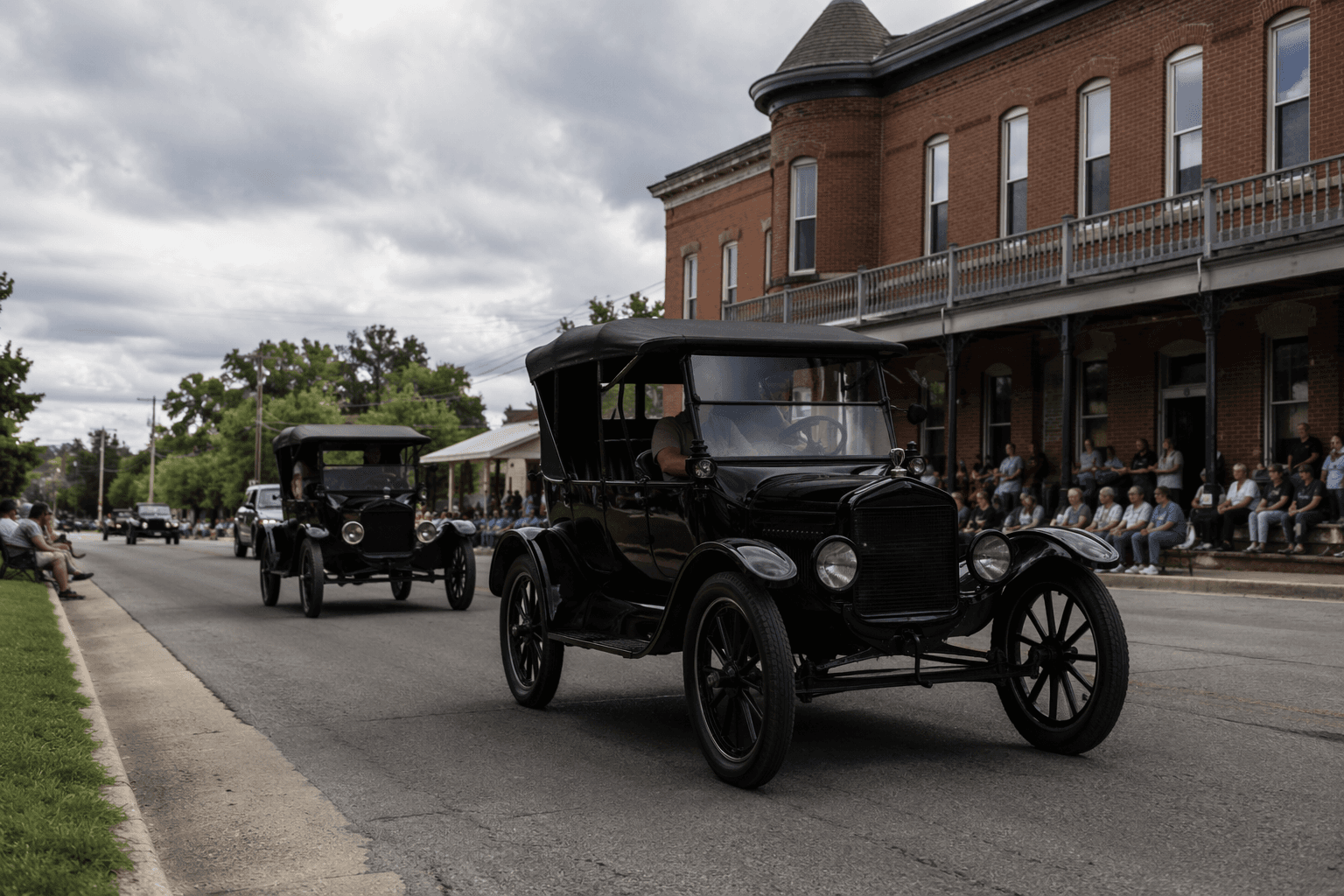
Olar keeps that history visible through the annual Model T’s to Olar Festival, which turns the town’s car past into a public event each October. The parade is not just a row of old vehicles for decoration. SC Picture Project says the antique police car leads the procession of Model T’s, Model A’s, and tractors, giving the celebration a specific local signature instead of a generic street-fair feel.
The visual symbols matter because they connect the festival to the built environment in town. The former tiny police house still stands in the center of Olar as a nostalgic reminder of earlier days, and the antique police car turns that memory into a moving centerpiece. In a town of 215 people, the event gives residents a shared ritual built around a local story that is unusually easy to recognize: a rail town became a Ford town, and the town keeps that identity alive with machinery, not just memory.
What to notice when you visit
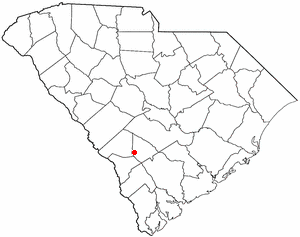
Olar sits on U.S. Route 321 in western Bamberg County, about 10 miles south of Denmark and 16 miles north of Fairfax. That location helps explain why it has always been more connected than its population suggests. It is small enough to miss if you are not looking for it, but it sits on a route that still links nearby county communities.
There is more to note than the festival. Mizpah Methodist Church in Olar was listed on the National Register of Historic Places in 2000, adding another preserved landmark to the town’s historic record. The church gives visitors a second reason to slow down in Olar, especially if they are interested in how religious, civic, and transportation history overlap in one compact place.
Bamberg County’s naming pattern
Olar’s story also fits a broader county pattern. Bamberg County was named after William Seaborn Bamberg and other members of the Bamberg family, a reminder that local identity in this part of South Carolina often traces back to people and landholders rather than abstract geography. That same pattern shows up in Olar’s own name changes, which moved from a bridge reference to a railroad depot to a post office designation.
Seen that way, Olar is not just a place with an old car story. It is a case study in how small Southern communities preserve relevance through a mix of transportation history, family names, and annual public ritual. The Model T legacy endures because it is tied to a real business story, a visible parade route, and a town that still knows how to turn its past into a present-day landmark.
This article was produced by Prism’s automated news system from verified source data, official records, and press releases, then run through automated quality and moderation checks before publishing. The system is built and supervised by the people who set the standards it runs under. Read our full AI policy.
Did this article answer your question?