Woodlands in Bamberg County, home of writer William Gilmore Simms
Woodlands is Bamberg County’s literary landmark, where William Gilmore Simms lived, wrote, and rebuilt after repeated fires. The private estate still anchors local history on Highway 78.
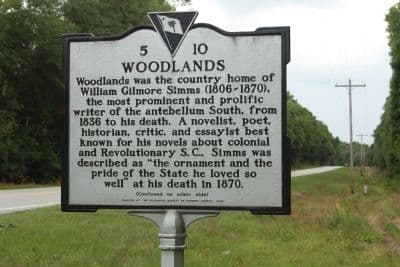
A few miles south of Bamberg, Woodlands still carries the weight of William Gilmore Simms’s life and work. The estate is a private residence on its original site, but it is also a National Historic Landmark and a place the state archives calls a “significant literary landmark,” which puts it at the center of Bamberg County’s heritage on Highway 78.
Where Woodlands sits in the county
Woodlands stands three miles south of Bamberg on Highway 78, on the south bank of the South Branch of the Edisto River, near Midway. That location matters because the house was never isolated from the county’s development. It sat within the same river-and-rail landscape that helped shape this part of South Carolina, and that makes it more than a preserved house story. It is part of the geography that still defines the county.
The property’s formal recognition came on November 11, 1971, when it was designated a National Historic Landmark and added to the National Register of Historic Places. That listing describes Woodlands as a private residence on the original site, which means the estate is not a public museum in the usual sense. Its public value rests instead on its visibility, its surviving fabric, and the fact that one of the state’s best-known 19th-century writers lived and worked there.
How Simms turned the estate into a working literary home
Woodlands began with Nash Roach, a wealthy plantation owner of English descent, who started assembling the property in 1821. William Gilmore Simms entered that family through his marriage to Chevilette Eliza Roach in 1836, and the plantation came to him through that marriage. The South Carolina Encyclopedia describes Simms as a poet, historian, novelist, and editor born in Charleston in 1806, and the South Carolina Hall of Fame says he wrote more than 80 books.
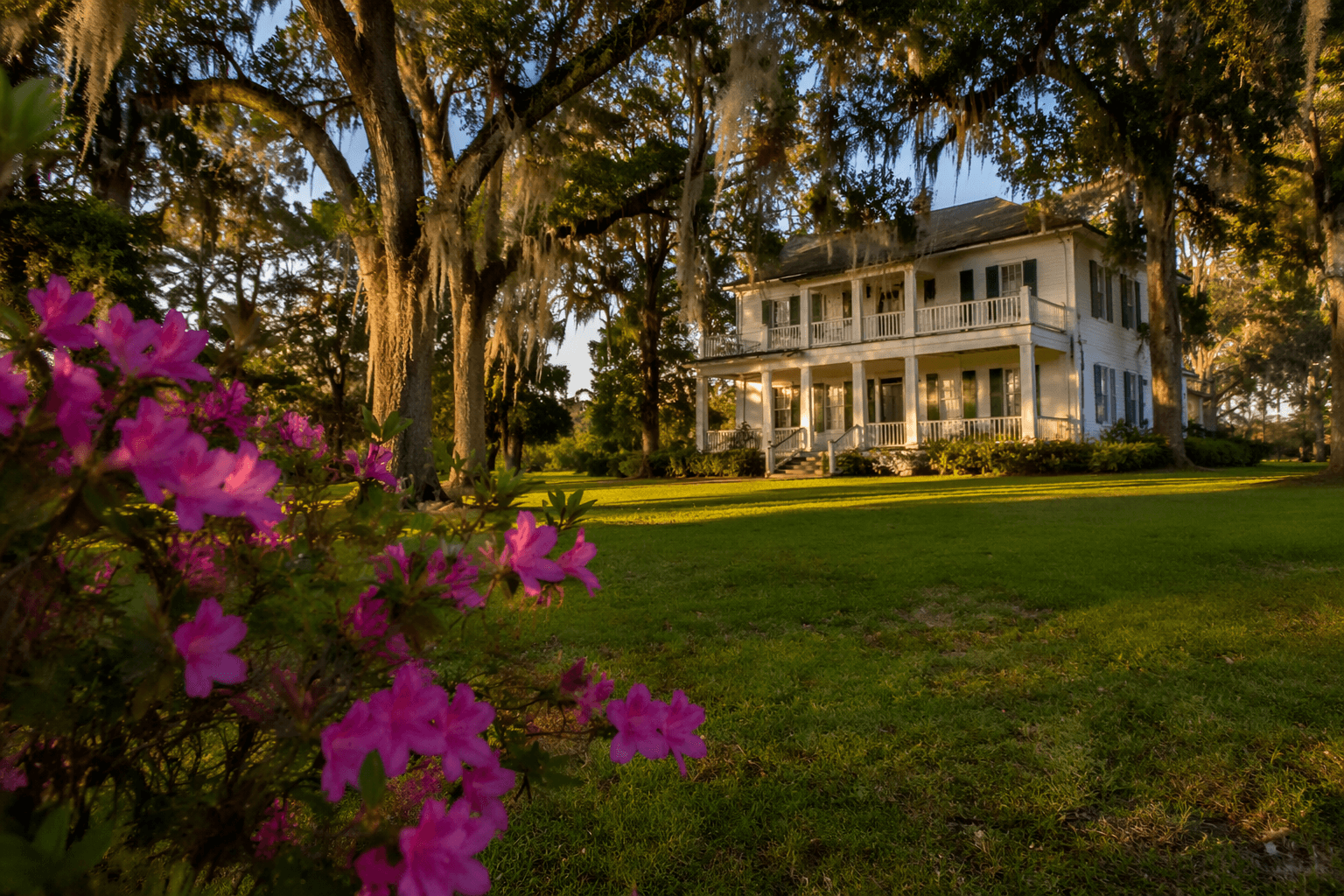
At Woodlands, Simms was not simply living in a country house. He was building a working literary base. The estate became a center of literary activity, with visitors including William Cullen Bryant, G. P. R. James, John R. Thompson, Paul Hayne, James Lawson, and Henry Timrod. That list places Bamberg County in a much wider literary world, one tied to antebellum letters, travel, and the exchange of ideas across the South and beyond.
The fires, rebuilding, and what still survives
The house Simms expanded in 1859 gained both a library wing and a nursery wing, a sign that Woodlands had become a place where family life and writing were intertwined. The original house was destroyed in 1862 except for the library wing, and a second house, including much of Simms’s personal library, burned in 1865. By 1868, Simms was still trying to make Woodlands habitable again, which shows how much effort went into keeping the estate alive after repeated losses.
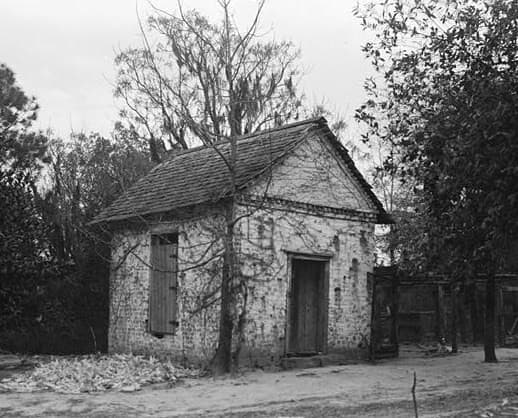
The brick house Simms completed in 1867 was originally a one-story structure. A second story added in 1893 was blown off by a hurricane, and around 1917 or 1918 the family added the present second story. Even with those changes, the house still reportedly contains furniture, books, and personal mementos belonging to Simms. Two of the original twelve small outbuildings also remain, including one that became his study, which gives the site a rare sense of continuity.
What survives is especially important because so much disappeared. The house’s windows and much of the woodwork were assembled by Simms in Charleston, and those details help connect the Bamberg property to the materials and tastes of the period. The surviving outbuildings, along with the room arrangement that dates back to 1867, are among the few tangible links to the daily life of a writer who repeatedly had to start again after fire.
Why Woodlands still matters to Bamberg County now
Woodlands is important not only because of Simms, but because it holds several layers of county history at once. The Clio entry says descendants of both white and Black families connected to the plantation have held reunions there for decades, and the site was featured in a 2008 documentary titled Shared History. That makes Woodlands a place where family memory, labor history, and literary history overlap.
The labor history is central. A JSTOR article on Woodlands and the Freedmen’s Bureau says about forty-five enslaved people remained on the place after the war. That number gives a clearer sense of the plantation’s scale and of the human labor that supported it. It also reminds readers that the story of the estate is not only about authorship and architecture, but about the people whose work made the place function.
For Bamberg County, preservation is the practical issue that hangs over all of it. Woodlands still has national recognition, but it is also a private residence, which means its survival depends on private stewardship and continued attention from the wider community. The risk of fading interest is not abstract. It is measured in the loss of original woodwork, old outbuildings, archival objects, and the local memory that keeps a place like this legible to younger generations.
The county’s best case for Woodlands is straightforward: it is a roadside landmark with a national story, a local family history, and a documented literary legacy. If Bamberg County keeps that story visible, the site can continue to serve as a point of identity, a teaching tool, and a reminder that one small stretch of Highway 78 helped shelter a major American writer’s work.
This article was produced by Prism’s automated news system from verified source data, official records, and press releases, then run through automated quality and moderation checks before publishing. The system is built and supervised by the people who set the standards it runs under. Read our full AI policy.
Know something we missed? Have a correction or additional information?
Submit a Tip