Baby Boomer wealth transfer could reshape Beltrami County economy
A $105 billion transfer is coming to Minnesota, and Beltrami County's homes, farms and businesses could change hands unless local leaders plan now.
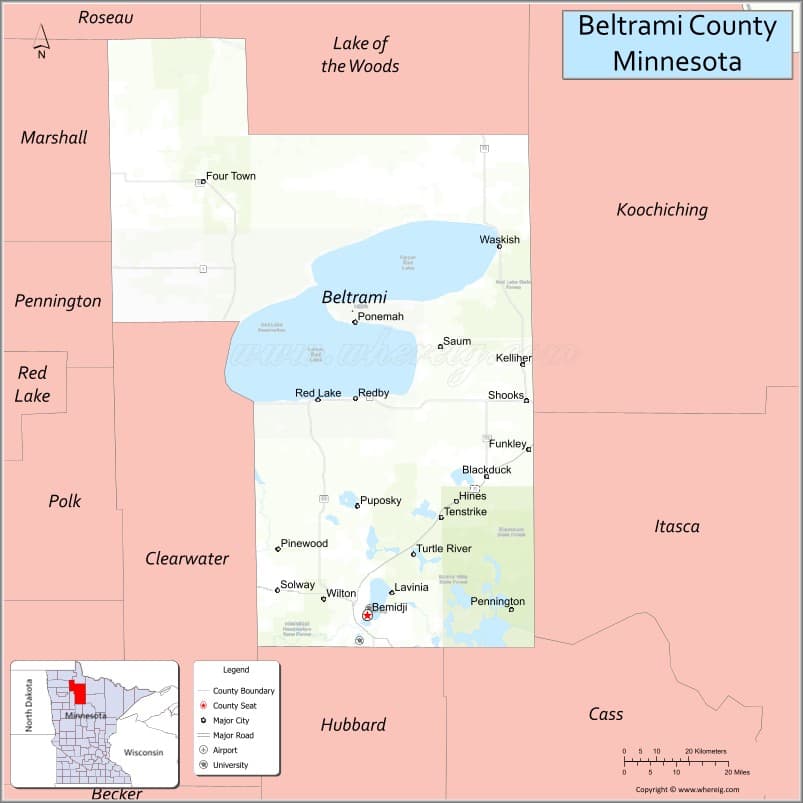
The biggest economic question in Beltrami County is who will own what next. Minnesota baby boomers are set to transfer $105 billion in wealth over the next 10 years, and in a county where 18.4% of residents are 65 or older, that shift will determine who ends up with homes, land and small businesses across Beltrami County.
Beltrami’s local numbers show why the stakes are so high. The county’s population was estimated at 47,055 on July 1, 2025, with a median age of 35.3, a 70.1% owner-occupied housing rate and a median owner-occupied home value of $237,500. It also had 1,250 employer establishments, a median household income of $68,975 and total retail sales of $1.101 billion in 2022. That is a sizable base of family-owned property and operating businesses, and a large share of it is moving into the transfer window now.
Why the wealth wave matters here
UMN Extension says Minnesota’s total wealth rose from $2.2 trillion in 2021 to $3.1 trillion in 2024, a gain of 38%, and researchers say rural counties are growing wealth faster than metro areas even as assets can leave the community when heirs live elsewhere. Extension also says the transfer of wealth is expected to peak in Minnesota by 2040, which gives local leaders a narrow window to keep more of that money, property and decision-making power close to home.
That is the deeper local story for Beltrami County. The issue is not just inheritances arriving, it is whether those inheritances turn into local ownership, local payroll and local giving, or whether they quietly shift out of the county with the next generation. UMN Extension researchers Ben Winchester, Michael Darger, Aiden Opatz, Liz Templin, Jill Chi and Michelle Maryns have all framed the transfer as a planning challenge that can shape long-term community stability.
The business succession gap is the first pressure point
The sharpest risk comes from business ownership. The Minnesota Chamber of Commerce, citing MNCEO and Project Equity research, says roughly half of Minnesota employer businesses have owners over age 55, and about 85% do not have succession plans. A 2021 Minnesota Chamber survey found that nearly 1 in 5 businesses expected to sell or transition within five years, but only 37% had a succession plan in place.
In Beltrami County, that matters because 1,250 employer establishments are part of the local economy. If even a fraction of those owners exit without a buyer, the county could see closures, outside sales or a shrinking tax base. For local bankers, estate planners, county officials and economic development leaders, the real question is whether the next transition becomes a shutdown or a handoff.
UMN Extension’s rural business succession study suggests the handoff can pay off. In a review of 358 businesses that changed hands in Greater Minnesota cities under 7,500 between 2008 and 2012, 69% of new owners increased sales, 68% increased the customer base and 87% maintained or increased employment. That makes succession planning more than a rescue plan. It is an economic-development tool that can preserve jobs and help local firms grow under new ownership.
The local response is already taking shape
Northwest Minnesota is not waiting passively. The North Central Small Business Development Center and the Minnesota Center for Employee Ownership launched the Rural Business Legacy Initiative on June 4, 2025, to provide no-cost valuation, succession planning and employee ownership resources to rural entrepreneurs across a nine-county region. That is the kind of practical support needed when older owners want to keep a company local but do not yet have a buyer in the family.
Greater Bemidji, which works with Beltrami County and the City of Bemidji, says it has a 28-member volunteer board and staff focused on business retention and development. That gives the county a local platform for the next phase of planning, especially if owners want to transfer businesses to employees, younger managers or other local buyers rather than selling to distant interests. The succession question is not theoretical in a place built on small firms, service businesses and local suppliers.
Housing, land and the risk of consolidation
The same transfer pressure applies to real estate. With 70.1% of Beltrami County homes owner-occupied and a median owner-occupied value of $237,500, a large amount of household wealth is tied up in property. As older owners pass assets along, the county could see more turnover in homes, cabins and rural land, and that turnover could either broaden ownership or concentrate it.
That is where the county’s demographic mix matters. Beltrami County is young enough, with a median age of 35.3, to need a steady pipeline of first-time buyers, new entrepreneurs and younger families. But it is also old enough that a substantial share of property is approaching transfer. If heirs live elsewhere or if estates are settled without a local plan, the assets can leave the community, and the result can be fewer openings for lower-wealth residents trying to buy in.
Philanthropy could be part of the answer
Extension says communities can improve the odds that the money stays local by building intentional plans for philanthropy, entrepreneurship, infrastructure and business succession. It also says that capturing just 5% of the transfer could support more than $6.3 billion in local grantmaking investments over the next 20 years.
That is a statewide number, but it points to a local opportunity in Beltrami County: community foundations, donors and civic leaders can turn a portion of inherited wealth into grants that support housing, child care, downtown investment, workforce training and business starts. The Minnesota Council on Foundations sits inside that larger philanthropic ecosystem, and its kind of network matters when communities want charitable dollars to stay near where the wealth was built.
The next decade will reveal whether Beltrami County experiences a quiet ownership drain or a generational handoff that keeps land, housing, businesses and giving in local hands. If local leaders act early, the transfer of wealth can become the transfer of control to the next generation, and that may be the difference between a county that consolidates and a county that renews itself.
This article was produced by Prism’s automated news system from verified source data, official records, and press releases, then run through automated quality and moderation checks before publishing. The system is built and supervised by the people who set the standards it runs under. Read our full AI policy.
Did this article answer your question?