Bemidji officer revives police K-9 program with dog Doc
A three-decade K-9 gap ended in Bemidji when Rachel Kniss and Doc hit the street, adding drug detection, tracking and search capability the city had lacked since the early 1990s.
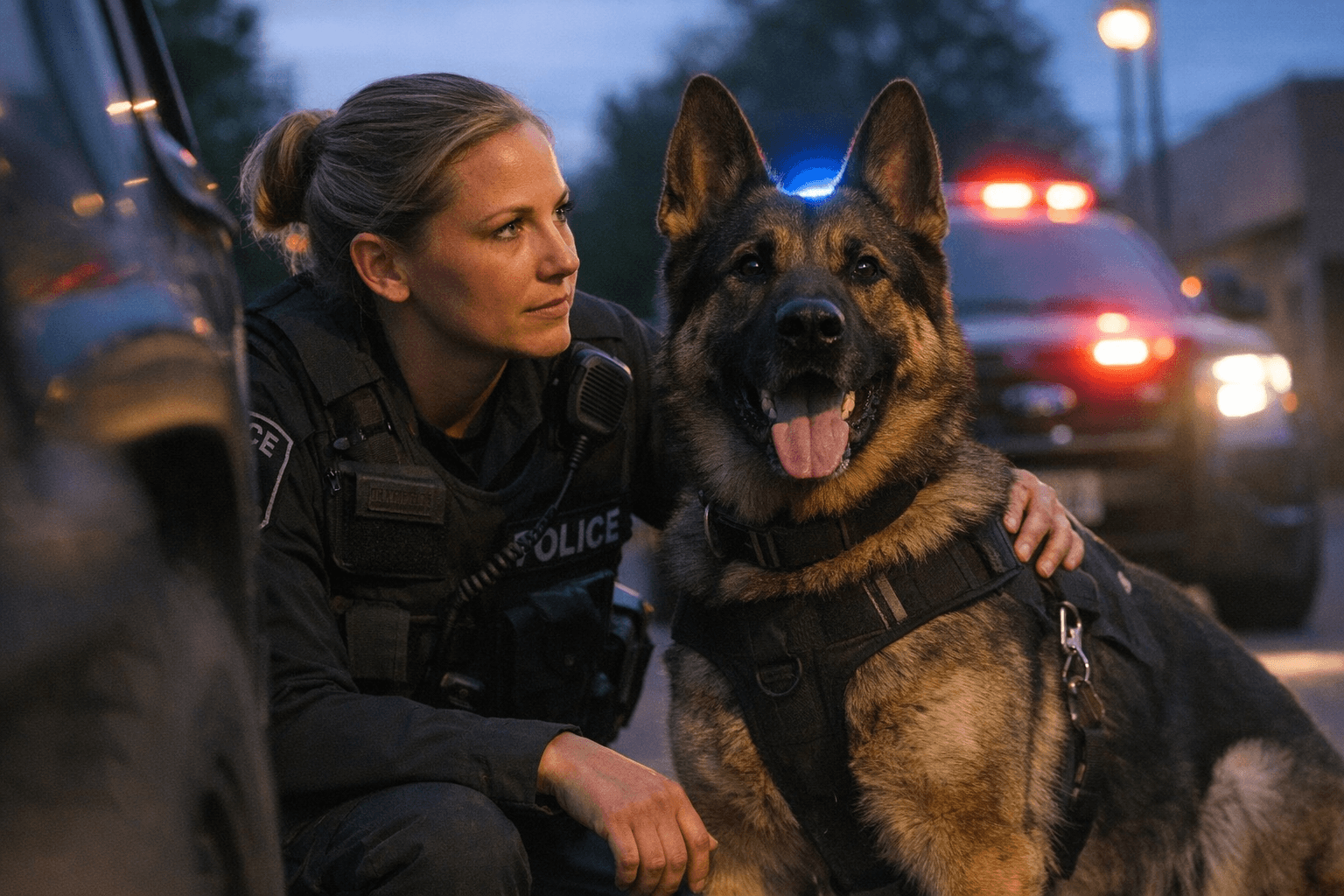
Bemidji has put a police dog back on the street after more than three decades without one, and the change reaches well beyond a single patrol shift. Officer Rachel Kniss and Doc, a Labrador Retriever, restored a capability the department says it had been building since 2023, giving Bemidji Police a K-9 for controlled-substance detection, evidence recovery, missing-person searches and locating non-violent offenders.
The last Bemidji police K-9 before Doc was K9 Justus, who retired in the early 1990s. Since then, the department has depended on surrounding agencies, including the Beltrami County Sheriff’s Office and the Hubbard County Sheriff’s Office, when a dog was needed for searches or drug work. The return of a city-owned K-9 changes that response time and gives officers a tool that can stay with the department instead of being borrowed from elsewhere.
Kniss is the only handler for Doc, a job that requires more than bringing a dog to work. The pair attended 12 weeks of training beginning in early March 2024, and Doc made his debut in March 2024. According to Bemidji State University’s alumni profile, Kniss and Doc have served Bemidji together since July 2024. That profile also says Kniss worked a state-funded traffic grant that led to around 140 DWI arrests before she moved toward reviving the K-9 unit.
For Bemidji, the K-9 program is both an operational asset and a community investment. City materials say the squad car will patrol the city for nearly 160 hours each month, and the donor packet says contributions are 100% tax deductible. Local fundraising for the program set a goal of at least $130,000 to buy the dog, send the dog and officer to training, and equip the vehicle. The city’s K-9 materials also say the program is intended to strengthen police-community relationships through public outreach.
Kniss’s path helps explain why the program has drawn attention in a city of 12,073 people. A 2020 Bemidji State University graduate, she grew up around law enforcement through her family and early ride-alongs with her father. Now, her work with Doc gives Bemidji a specialized policing tool it has not had since the early 1990s, while putting a familiar local face on a public-safety service that can matter most when someone is missing, a suspect is fleeing or evidence has to be found fast.
This article was produced by Prism’s automated news system from verified source data, official records, and press releases, then run through automated quality and moderation checks before publishing. The system is built and supervised by the people who set the standards it runs under. Read our full AI policy.
Did this article answer your question?