Paul Bunyan and Babe remain Beltrami County's most iconic landmark
Paul Bunyan and Babe still draw travelers to the Lake Bemidji shore, where a 1937 winter-carnival stunt became Beltrami County’s most recognizable symbol.
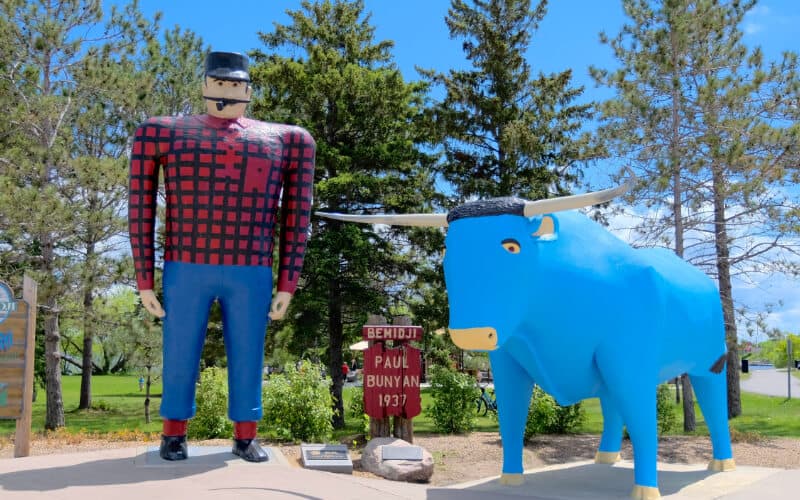
Paul Bunyan and Babe the Blue Ox still pull travelers to the Lake Bemidji shoreline, where a single photo stop does more than collect souvenirs. The statues now function as Beltrami County’s most bankable civic brand, the image many outsiders carry home when they picture Bemidji at all.
From carnival gimmick to lasting landmark
The figures were never meant to be permanent. Local Bemidji residents created them for the city’s 1936 winter carnival, a promotion backed by civic organizations and businesses, and the original plan was to use them as a tourism gimmick for the 1937 Winter Carnival. When the carnival ended in 1937, the statues stayed put on the shore of Lake Bemidji, and that decision changed the story of the city.
Today, the Bemidji Area Chamber of Commerce describes the pair as symbols of Bemidji’s heritage and hospitality, and the site is listed on the National Register of Historic Places. That designation matters because it places the statues in the realm of preserved public history, not just roadside novelty. What began as a temporary attraction became a fixed marker of place, one that still anchors the way Bemidji tells its own story.
Why the statues still shape the city’s image
Paul Bunyan is a national lumberjack figure, but Bemidji made the legend local by giving him a permanent home beside Babe. That move turned a floating folktale into a specific destination, which is exactly what makes the landmark so durable for tourism. Visitors do not just hear about Bunyan in Bemidji, they stand beside him, look over Lake Bemidji, and photograph the same scene that has defined the city for generations.
The Minnesota Historical Society’s MNopedia notes that the statues became the second-most-photographed sculptures in the country in the 1940s. That detail captures how quickly the gimmick became a symbol with staying power. The statues also reflect the region’s broader history, which is tied to logging, railroads, and the development of north-central Minnesota. In Beltrami County, the legend fits the landscape because the place itself already carries a northwoods identity.
Visit Bemidji treats the statues as a signature attraction on the lake shore, and that language is more than marketing. For many travelers, the figures are the shorthand for Bemidji, the image that makes the city instantly recognizable before they ever reach downtown. A landmark that can be identified in a single glance has real value in a tourism economy built on memory, repeat visits, and the kind of stop that makes a road trip feel complete.
The scale is part of the appeal
Part of the landmark’s power comes from sheer size. Paul Bunyan stands 18 feet tall and weighs about 2.5 tons. Babe the Blue Ox rises about 10 feet at the shoulder and reaches 26 feet tall overall when seated. Their proportions make the pair impossible to mistake for a garden ornament or a small-town mascot.
That scale matters because it turns folklore into something physical and local. The statues do not just symbolize a mythic frontier, they occupy real space at Paul Bunyan Park and on the Lake Bemidji shoreline, where the backdrop reinforces the northwoods image that travelers expect from the region. The result is a landmark that works as both a photograph and a place marker, one that keeps Bemidji attached to the Bunyan story in a way that no slogan could match.
A photo stop that still draws attention
The site’s draw has not faded with age. In 2022, MPR News noted that visitors to Paul Bunyan Park could again take unobstructed selfies once final construction work wrapped up, a reminder that the statues remain an active public destination, not a static relic. A 2024 MPR follow-up revisited the figures in a then-and-now look, showing that Bemidji continues to treat them as part of the city’s living identity.
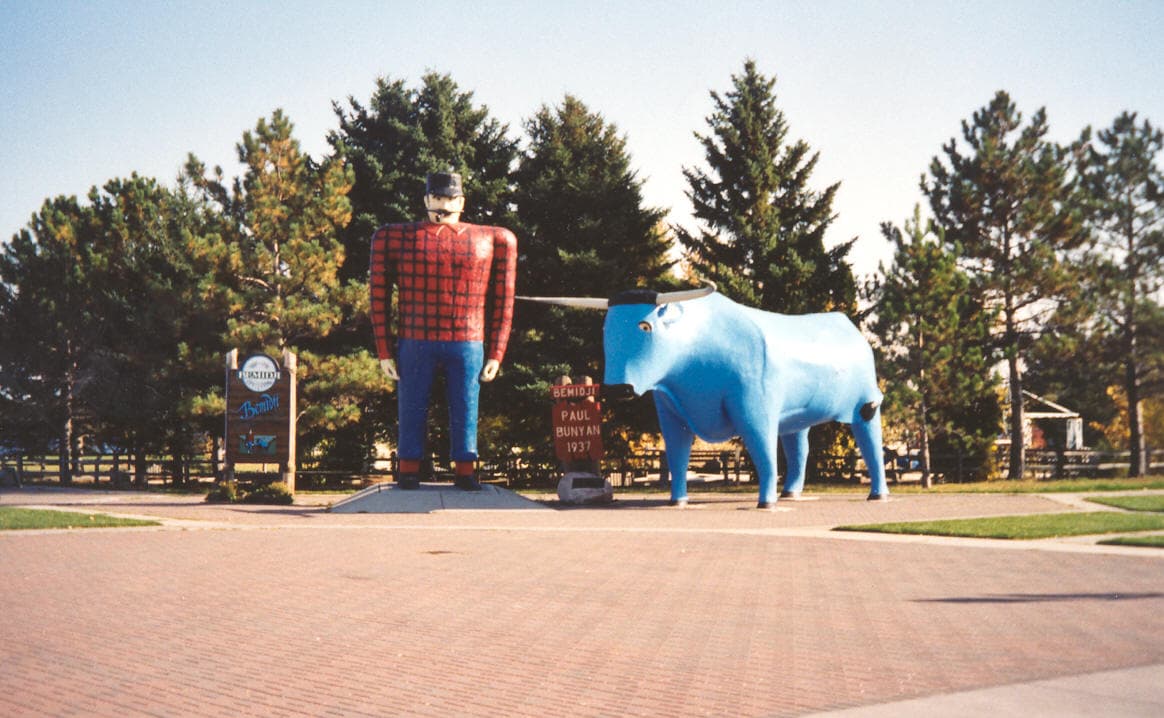
That ongoing visibility helps explain why the statues still show up in family vacation itineraries and road-trip detours. In 2025, USA TODAY 10BEST readers ranked the site among the country’s top roadside attractions, extending its reach well beyond Beltrami County. Each new round of attention keeps the landmark in circulation and helps direct visitors toward the lakefront, nearby downtown streets, and the broader Bemidji tourism corridor.
What the landmark means now
For residents, the statues are no longer only a postcard image. They are a civic shorthand, a piece of public art with a local backstory, and a reminder that a short-term promotion can become part of a city’s permanent identity when people decide to keep it. The Chamber’s description of the figures as heritage and hospitality gets at that evolution: the landmark welcomes visitors, but it also reflects how Bemidji sees itself.
The preservation status deepens that meaning. Because the statues are listed on the National Register of Historic Places, they carry the weight of a recognized historic site, not just a popular stop. That distinction helps explain why they remain central to Beltrami County’s public image decades after the original carnival ended. Paul Bunyan and Babe still do what they were created to do, but they now do it as a lasting emblem of place, one that has outgrown the gimmick and become the county’s most iconic landmark.
This article was produced by Prism’s automated news system from verified source data, official records, and press releases, then run through automated quality and moderation checks before publishing. The system is built and supervised by the people who set the standards it runs under. Read our full AI policy.
Did this article answer your question?