White Earth microgrid powers school, elders center with solar battery system
Pine Point’s new microgrid can keep a school and elders center powered through outages, offering a model Beltrami County could copy for resilience and backup power.

The new solar-and-battery microgrid on the White Earth Reservation is built to do something practical: keep the lights on at Pine Point School and the community and elder gathering center when the grid fails. In a community that has seen 11 outages in the past five years, the project is a hard-nosed infrastructure fix, not just a green-energy showcase.
The system grows from an existing 21-kilowatt solar array into a roughly 500-kilowatt microgrid with 2.76 megawatt-hours of battery storage. That scale gives Pine Point, an Anishinaabe village of about 330 people in northern Minnesota, backup power for critical daily needs and a buffer during extreme weather. The project is also meant to reduce energy burdens in a place where one-third of residents live in poverty and where some Native households still lack reliable electricity connections.
Funding for the $4 million project has come together in pieces. In June, the project was selected for $1.75 million from the U.S. Department of Energy’s Energy Storage for Social Equity Program. Developers also secured money from Minnesota’s Solar for Schools program and from foundation grants, though they had still said they needed about $1 million more and were counting on roughly $1.5 million in federal tax credits. Sandra Kwak warned that a federal funding freeze had left 10Power carrying a $1.6 million risk, underscoring how dependent rural energy projects remain on shifting public policy.
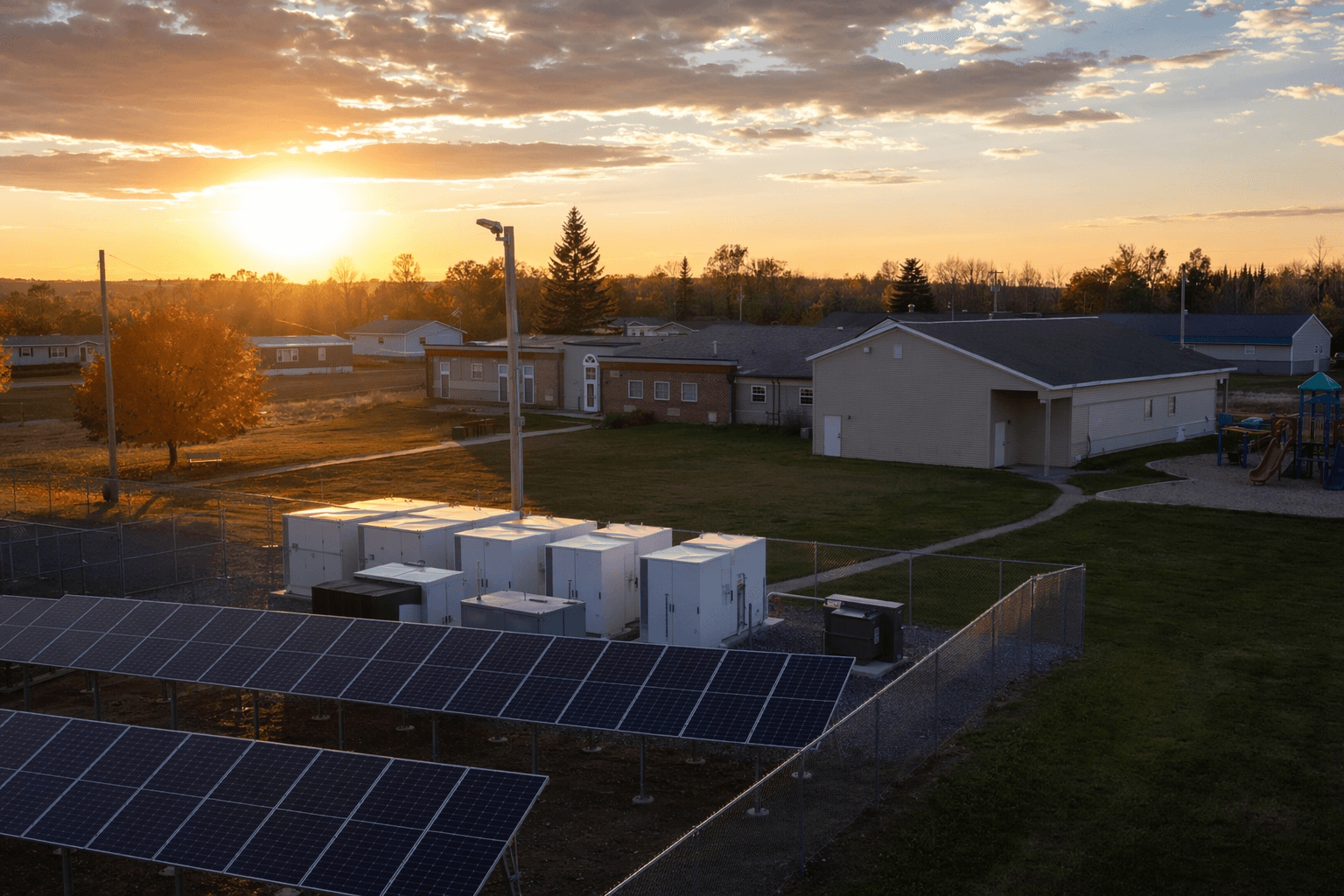
The microgrid is being led by locally owned 8th Fire Solar and San Francisco-based 10Power. Gwe Gasco of White Earth has described it as more than a power project, saying it represents infrastructure, hope, jobs, and a chance to change how the reservation is viewed. That matters in a region where tribal communities were largely bypassed during the Rural Electrification Act era and where unreliable service has long shaped everything from school planning to emergency response.
The Pine Point build also carries a classroom purpose. Developers say the system will be used as a teaching tool for students and can incorporate Ojibwe language and STEM learning into the curriculum. For Beltrami County governments, school districts, and health care providers, the lesson is straightforward: resilience pays when it is sized around real facilities, real outages, and real emergency needs.
This article was produced by Prism’s automated news system from verified source data, official records, and press releases, then run through automated quality and moderation checks before publishing. The system is built and supervised by the people who set the standards it runs under. Read our full AI policy.
Did this article answer your question?


