Albuquerque porcupines help pollinate Bosque plants, study says
Porcupines in Albuquerque’s Bosque may be carrying pollen on their quills, linking a familiar mammal to the Rio Grande forest’s night-blooming plants.
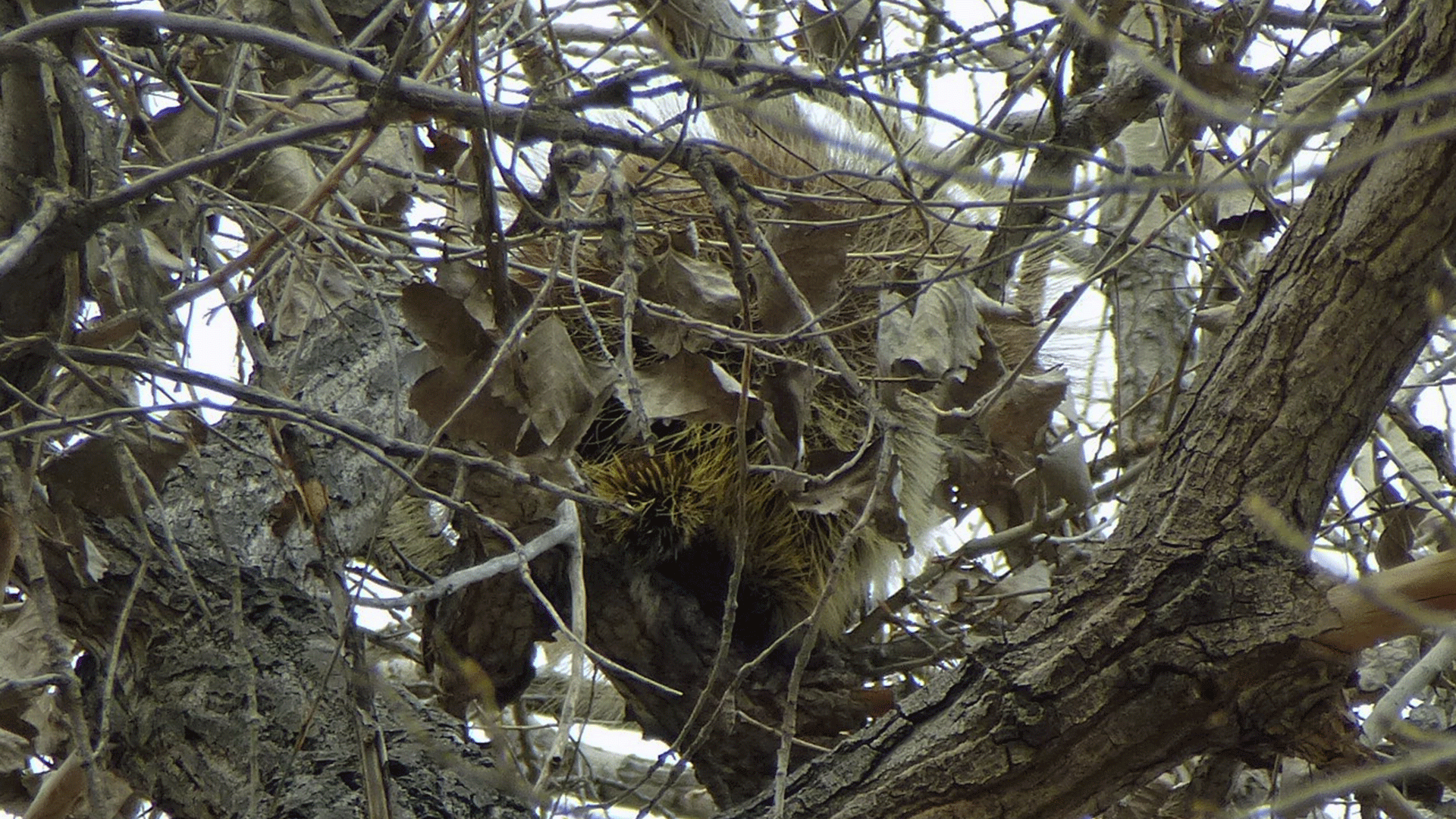
Porcupines in Albuquerque’s Bosque may be doing more than eating bark and berries. As they forage through the Rio Grande forest, pollen can stick to their quills and move from one plant to another, turning a familiar mammal into an accidental pollinator.
That role matters in a corridor the City of Albuquerque describes as both unique and diminishing. The city says cottonwoods are the heart of the Bosque, and that more than 500 different animal species claim New Mexico’s Bosque as home. In Bernalillo County, where the river forest sits between neighborhoods, trails and a heavily used urban landscape, even one overlooked animal can be part of the system that keeps native plants reproducing.

The North American porcupine is a medium-sized rodent that typically weighs 10 to 30 pounds, according to the U.S. National Park Service. Smithsonian’s National Zoo and Conservation Biology Institute says the animal is covered with nearly 30,000 quills. A University of Maryland Extension wildlife profile describes porcupines as solitary and mostly nocturnal, which helps explain why they are often missed even when they are present in the Bosque.
In Albuquerque, porcupines are commonly seen during the day in the Bosque, often in cottonwood trees, but their nighttime activity is part of what makes them useful to plants that bloom after dark. That connection is one reason the city has also been pushing pollinator habitat work in the Bosque, including a North Valley pollinator meadow planting effort involving the Albuquerque Parks and Recreation Department Open Space Division, the Middle Rio Grande Conservancy District, the Institute for Applied Ecology and Rocky Mountain Youth Corps.
The porcupine story also comes against a backdrop of habitat strain. Bosque School student research following a fire in May 2022, which burned about 30 acres near the school, estimated about a 40% decrease in the porcupine population in their study area. That local drop underscored how quickly fire and habitat change can alter the animals moving through the corridor.
For Albuquerque, the point goes beyond novelty. Cottonwoods, pollinator plants and the animals that move between them form a working ecology along the Rio Grande. When porcupines vanish or decline, the Bosque loses one more link in the chain that supports native plants, wildlife and the river forest residents cross on foot, by bike and by car every day.
This article was produced by Prism’s automated news system from verified source data, official records, and press releases, then run through automated quality and moderation checks before publishing. The system is built and supervised by the people who set the standards it runs under. Read our full AI policy.
Did this article answer your question?