Adult Day Care Advocates Urge Better Funding to Keep Kupuna Home
Hawaii Island's only adult day care center has operated since 1976, yet advocates say chronically low reimbursement rates threaten its survival and force families off the job.
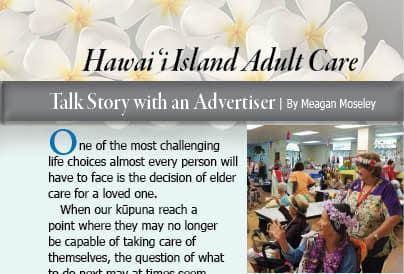
Hawaii Island Adult Care has been the only adult day care center on the Big Island for 50 years, and advocates say that singular status reflects a systemic failure to fund a service that keeps kupuna out of nursing homes and their family members in the workforce.
Writing in the Hawaii Tribune-Herald on March 8, Andrea Wernli argued that better government reimbursement and expanded access to adult day care are essential to the island's long-term care future. Her opinion column centers on Hawaii Island Adult Care, known as HIAC, which opened in January 1976 as the first adult day care center on Hawaiʻi Island and remains, five decades later, the only one.
The cost argument is stark. Adult day care in Hawaiʻi runs about $20,800 a year, while nursing homes can cost over $180,000, nearly nine times more. Yet Wernli argues the service remains chronically underused because of a persistent misconception that it is either unnecessary or too expensive, an inversion of reality that she says costs families and the public far more in the long run.
"Without HIAC's services, many families would be forced to leave the workforce to care for aging loved ones," Wernli wrote. "Kupuna would face isolation at home or be pushed prematurely into costly residential facilities, rather than aging safely and with dignity in their own communities."
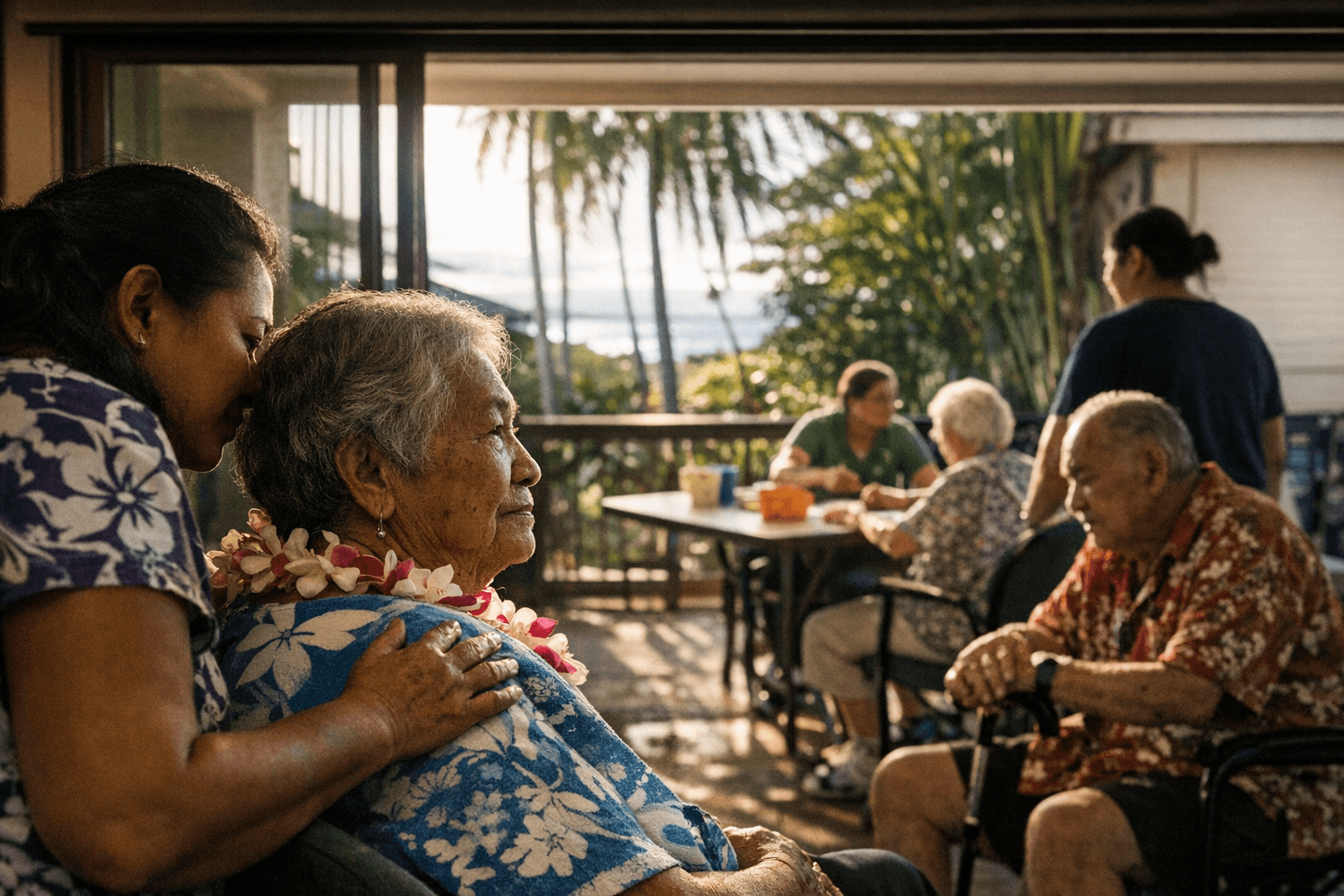
The Big Island's geographic isolation makes the stakes higher than they might be elsewhere. Wernli points out that distance from the mainland and between communities on the island intensifies existing workforce shortages, making in-person caregiving harder to arrange and adult day care more critical as a structured alternative. HIAC provides medical supervision, nutritious meals, social engagement, and respite for caregivers alongside its core daily care, allowing working adults to stay employed while their kupuna receive professional attention.
"For many families, there is no safety net," Wernli wrote. "Without increased government support and fair reimbursement, adult day care programs cannot meet rising demand."
Her policy prescriptions are direct: increase government funding, implement fair reimbursement rates for adult day care providers, expand availability to meet growing demand, and invest in supporting family caregivers to prevent burnout and workforce dropout. She also frames the issue in terms of local economic circulation, arguing that keeping care dollars on the island, rather than funneling them to large residential facilities, benefits the broader community.
The column does not identify the specific studies it cites for claims that adult day care slows dementia and lowers hospital visits, and the nursing home cost figures are drawn from a Nasdaq report without further methodological detail. Those figures and clinical claims warrant independent verification from state health data and peer-reviewed research. What is not in dispute is that HIAC has operated as the island's sole adult day care provider since the Ford administration, a fact that frames Wernli's central argument: a single center serving an island of roughly 200,000 people is not a long-term care system. It is a stopgap.
Know something we missed? Have a correction or additional information?
Submit a Tip