Big Island gas tax nearly matches national average, but fuel stays costly
Big Island drivers paid about $5.635 a gallon on May 18, even as the county's 23-cent fuel tax left the tax bite near the U.S. norm.

At Big Island pumps, the sting comes from the total bill, not just the county tax. A gallon of regular gasoline on Hawaii Island carried about 57.4 cents in combined county, state and federal fuel taxes, yet AAA put Hawaii’s statewide average regular gas price at $5.635 a gallon on May 18, far above the U.S. average of $4.515.
Hawaii County’s 23-cent fuel tax sits on top of the state’s 16-cent gasoline tax and the 18.4-cent federal tax. The county rate is tied with Maui for the highest local fuel-tax surcharge in the state, but the larger burden for households is the price at the pump, where Big Island drivers kept paying well above the mainland average even as the tax component hovered near the national norm.

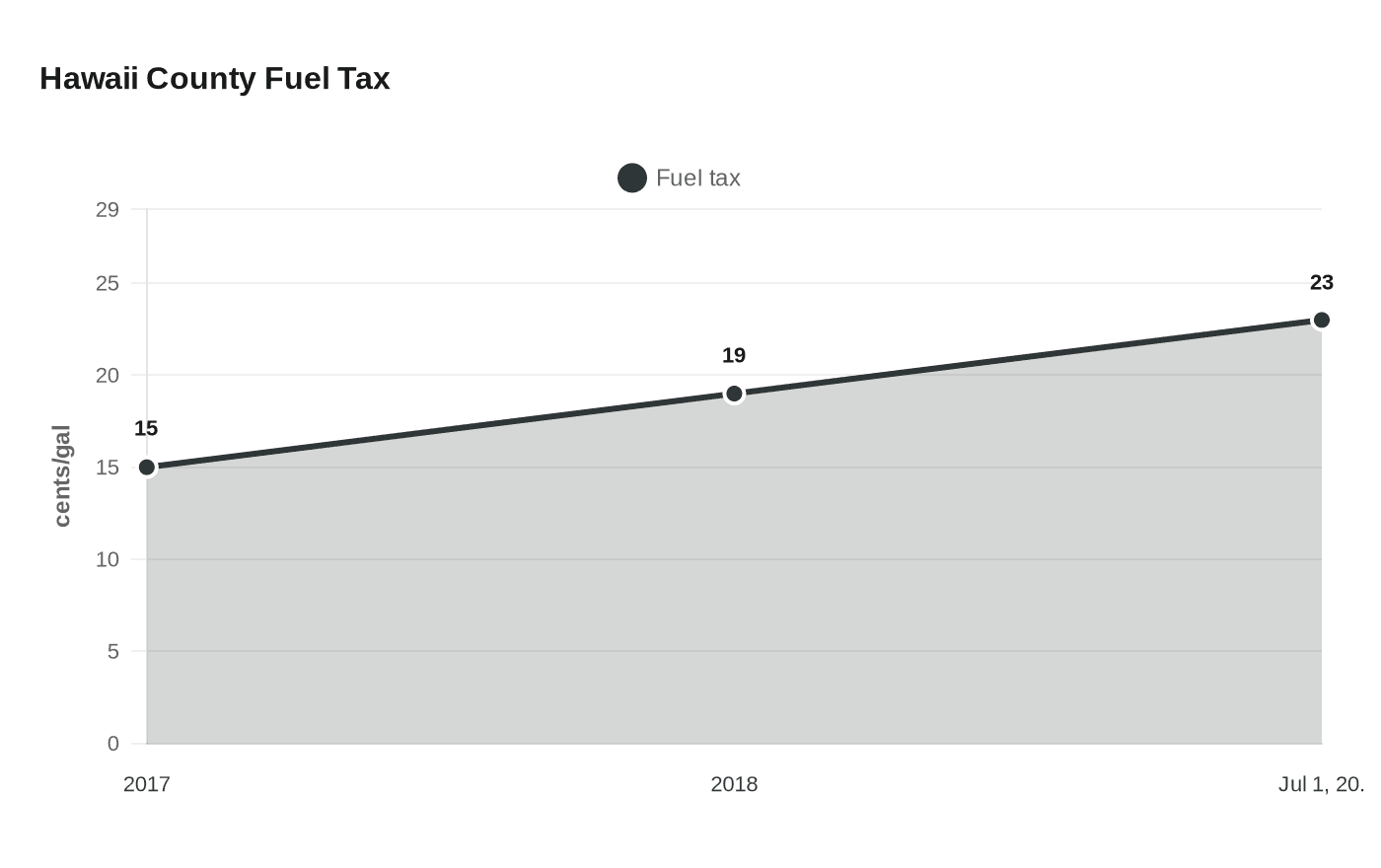
County leaders built that tax in stages. The Hawaii County Council raised the rate from 8.8 cents per gallon in 2017 to 15 cents, then added 4 cents in 2018 and another 4 cents on July 1, 2019, bringing it to 23 cents. The increases were meant to help pay for road maintenance and projects, including pavement preservation work that county officials have said depends on fuel-tax revenue.
The fiscal question for residents is whether that money has translated into visible improvements on roads from Hilo and Puna to Waikoloa. A 2023 report said Hawaii County’s 2022-23 budget estimated the highway fund balance at $19.1 million and said the county had more than $2.3 million in excess and unspent fuel taxes under consideration. Earlier county budget coverage said the first hike was expected to bring in about $8.36 million in fuel-tax revenue for fiscal 2017-18, while also supporting school safety projects, an emergency and disaster fund, signal upgrades and equipment.

That spending record has fed the county’s wider accountability debate. In 2022, Councilmember Matt Kanealii-Kleinfelder pushed to lower the tax while gas prices averaged more than $5 a gallon, arguing the burden mattered to residents. The council voted not to cut it. Since then, the bigger policy argument has remained unchanged: whether Hawaii should keep taxing fuel per gallon or eventually move toward a road-usage charge as gasoline-tax collections fluctuate with driving.
This article was produced by Prism’s automated news system from verified source data, official records, and press releases, then run through automated quality and moderation checks before publishing. The system is built and supervised by the people who set the standards it runs under. Read our full AI policy.
Did this article answer your question?