Big Island salvage firm claims debt after Ala Wai minesweeper removal
A Big Island salvage company says an Ala Wai boat-removal job turned into a former Navy minesweeper and left it owed hundreds of thousands. It says the bill could threaten its survival.
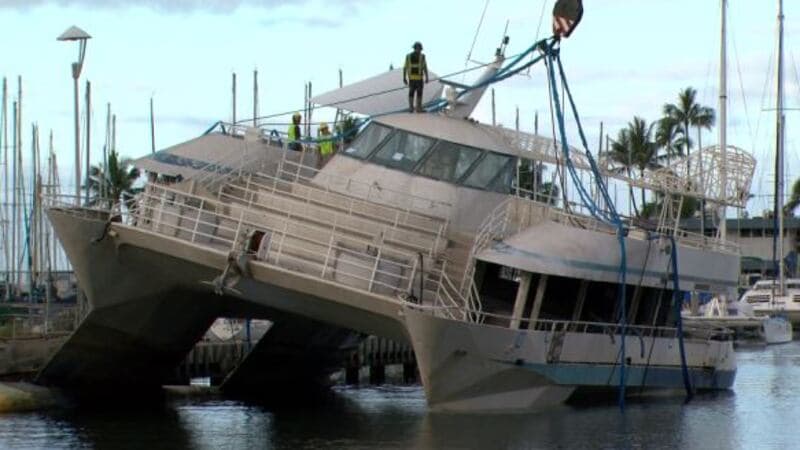
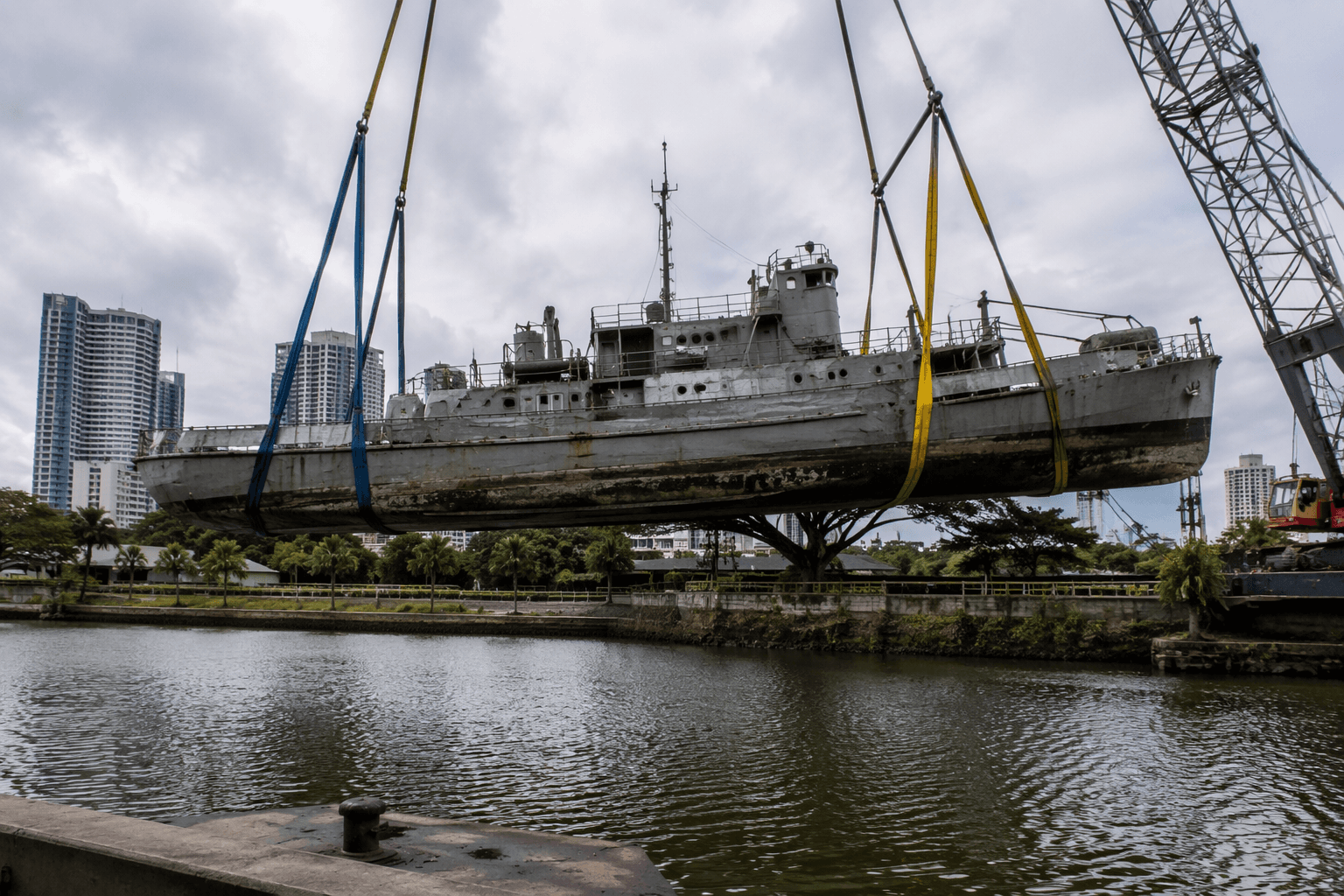
A Big Island salvage company said it is owed hundreds of thousands of dollars after lifting what turned out to be a former U.S. Navy minesweeper from Ala Wai Boat Harbor on Oahu instead of the recreational vessel it expected. The company said the unexpected scope of the job could threaten its business viability.
The dispute lands in a harbor with a long record of derelict boats. In May 2019, at least half a dozen sinking or impounded vessels were documented at Ala Wai Small Boat Harbor, and the state’s struggle to remove the Navatek II had already become a sign of deeper problems there. By September 2019, crews had begun dismantling the Navatek II near the harbor, and state officials said they would charge the owner for the removal work and other fees. That job was expected to cost about $100,000.
State officials have since moved to address abandoned vessels through a formal procurement process. The State of Hawaii HIePRO system lists solicitation B25003299, Job No. IFB-25-04, for “Abandoned Vessel Removal at the Ala Wai SBH,” with Jenna Kawasugi named as the contact. The Department of Land and Natural Resources’ Division of Boating and Ocean Recreation also publishes public instructions on how to dispose of a vessel in Hawaii.
The financial stakes are not limited to Honolulu. On the Big Island, removal of the grounded Hawaii Aloha cost $150,000. That vessel’s owners had insurance, but the policy did not cover wreck removal, and the Department of Land and Natural Resources was left with the expense after the boat was abandoned.
Cleanup at Ala Wai Boat Harbor also remained a live issue in October 2024, when debris removal there prompted renewed calls for prevention before vessels become another costly recovery. The latest dispute shows how quickly a removal contract can turn from a routine job into a major debt when a vessel is larger, more damaged, or more complicated than expected.
This article was produced by Prism’s automated news system from verified source data, official records, and press releases, then run through automated quality and moderation checks before publishing. The system is built and supervised by the people who set the standards it runs under. Read our full AI policy.
Did this article answer your question?