Food Insecurity Grips Half of Big Island Households, Advocate Urges Action
More than 60% of Big Island children face food insecurity. Advocate Kristin Frost Albrecht is calling on farms, nonprofits, and civic leaders to act before another generation goes hungry.
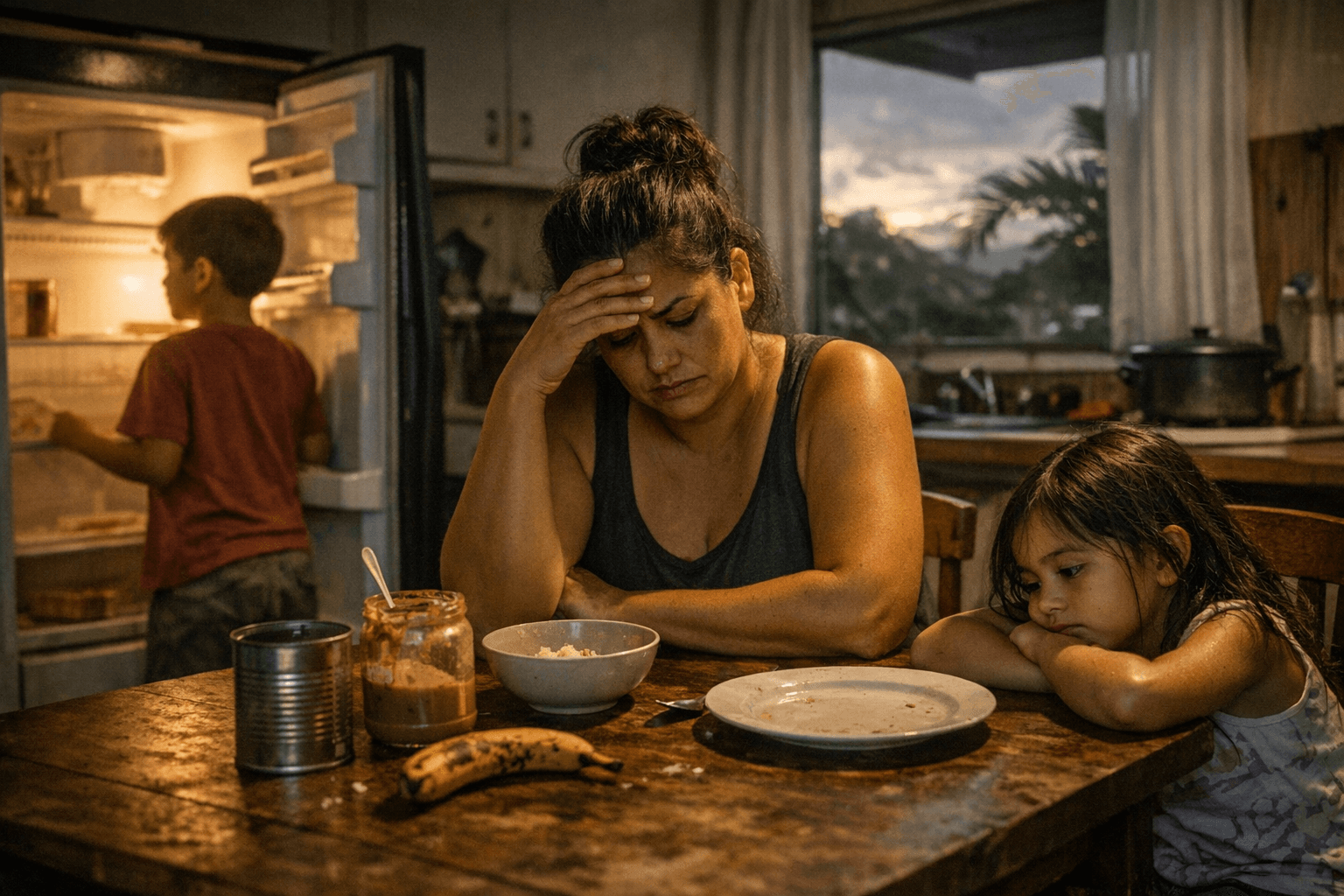
In a place where farmland stretches across Waimea's uplands and small producers dot the island from Kona to Puna, nearly half of all households on Hawaiʻi Island don't have reliable access to enough food. For children, the rate is even more stark: more than six in ten face food insecurity.
Those numbers are at the center of an urgent call from food advocate Kristin Frost Albrecht, who published an opinion essay in West Hawaii Today on Saturday arguing that hunger on the Big Island is not a peripheral problem but a structural condition with consequences that compound across generations. The piece, titled "Farm to Family: A lifeline for Hawaii Island," puts a face to the data through a Waimea grandmother who depends on food-bank support to get by.
"Food insecurity is multi-generational, deeply felt and a struggle no one should have to face in a place of such abundance," Albrecht wrote.
The essay identifies the specific conditions that make the Big Island's food landscape particularly difficult to navigate. High costs of living, the logistical expense of moving goods across a geographically dispersed island, and limited economies of scale for small farms all intensify a problem that state and federal programs are often too broadly designed to address. Rural and remote communities bear the sharpest burden, Albrecht argues, because island-specific realities rarely fit neatly into policy frameworks built for the mainland.
The solutions she outlines are concrete. Albrecht calls for strengthening local supply chains by connecting farmers directly to distribution networks, expanding capacity at food banks and meal programs, and pursuing policy shifts that reduce barriers to healthy food access for low-income families. Farm-to-food-bank coordination, expanded school meal initiatives, and targeted grants for small producers are among the specific mechanisms she names.
The piece is directed squarely at decision-makers: civic leaders, municipal governments, private-sector partners, and funders are all identified as parties who need to move quickly to invest in local processing and aggregation infrastructure while supporting immediate relief efforts.
Albrecht's central argument is that the Big Island already has the agricultural capacity; what it lacks is the infrastructure and coordinated political will to move that food to the families who need it most.
This article was produced by Prism’s automated news system from verified source data, official records, and press releases, then run through automated quality and moderation checks before publishing. The system is built and supervised by the people who set the standards it runs under. Read our full AI policy.
Did this article answer your question?