Hula Hālau Open 63rd Merrie Monarch Festival with Free Easter Sunday Ho'olaule'a
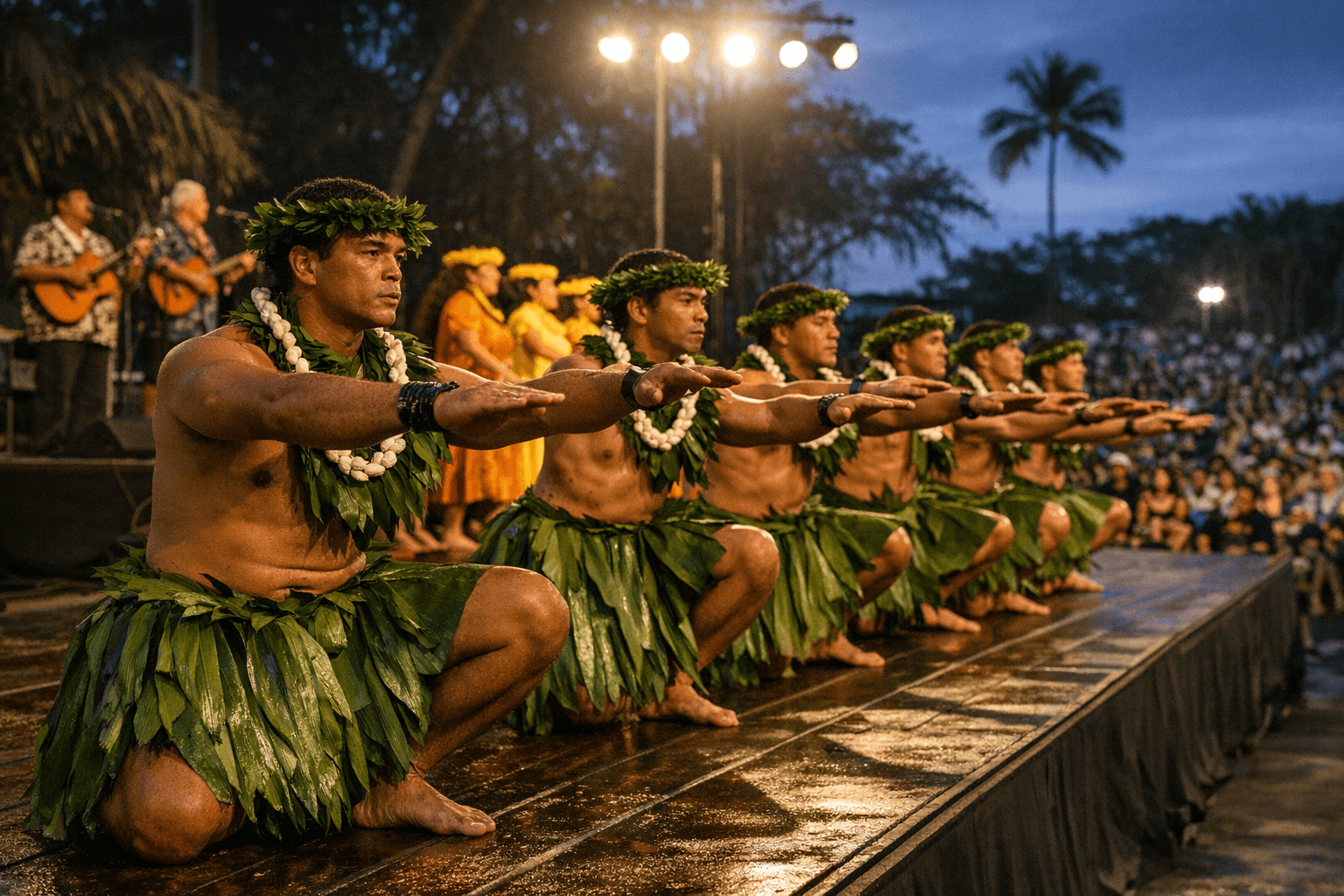
Hundreds of dancers opened the 63rd Merrie Monarch Festival in Hilo on Easter Sunday, marking hula kāne's 50th year on the festival stage.
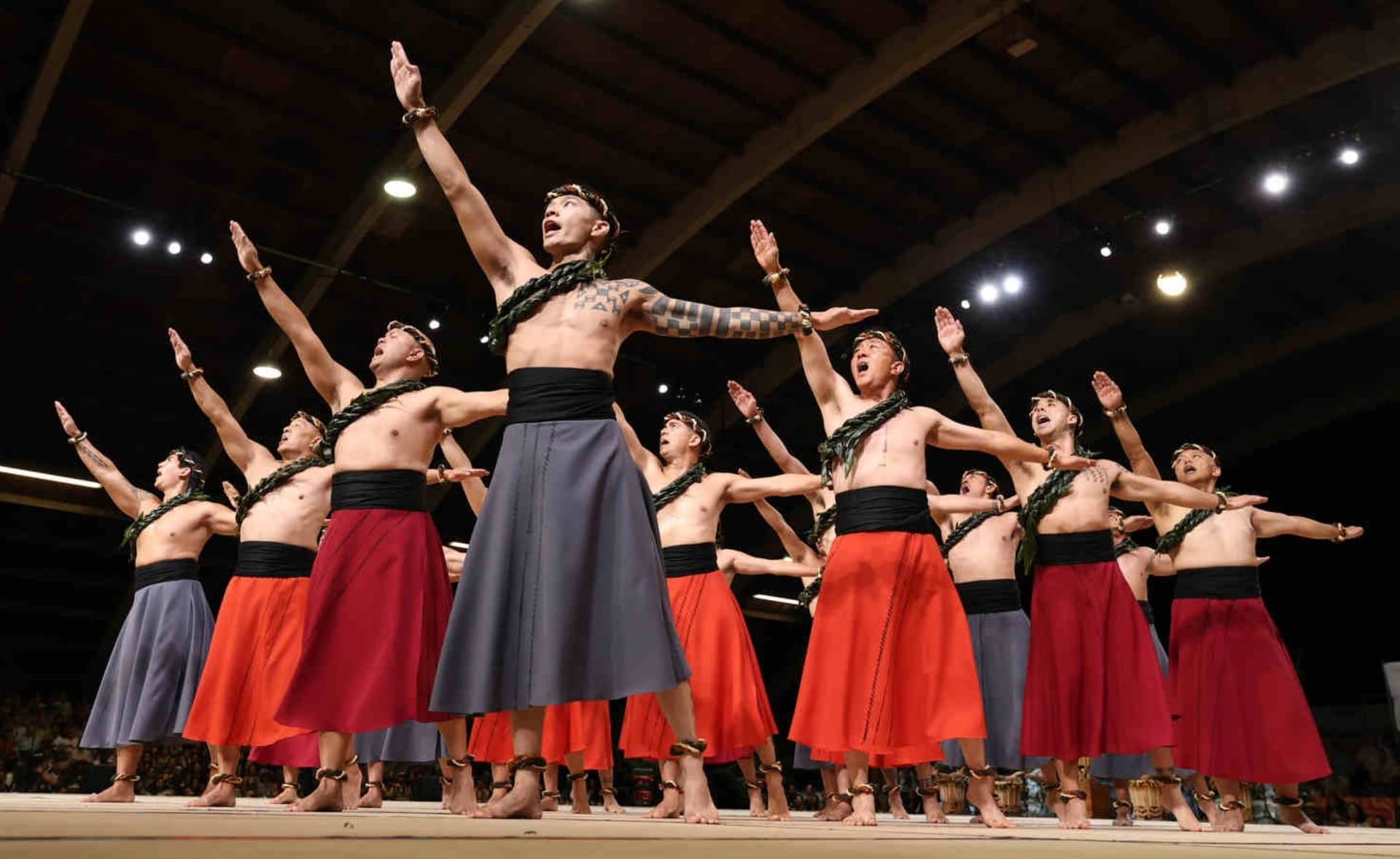
Hundreds of dancers from Big Island hālau filled the Afook-Chinen Civic Auditorium this Easter Sunday morning, opening the 63rd Merrie Monarch Festival with the annual Hoʻolauleʻa, a free public celebration that sets the tone for what is widely considered the Super Bowl of Hula. This year's festival carries added weight: it marks the 50th anniversary of kāne hula on the Merrie Monarch stage.
Kāne and wahine dancers of all ages performed hula, chanted, and presented tiki representing Hawaiian deities before a packed house. Admission was free and performances began at 9 a.m., but Kumu Hula Etua Lopes of Kailua-Kona, one of this year's competition judges, advised attendees to arrive by 5 a.m., warning that parking fills by 7 a.m. "It is a sight to see," Lopes said of the Ho'olaule'a.
The significance of kāne hula's 50th year wasn't planned in advance. Dr. Ikaika Bartolina, choreographer and dancer with Ka Pā Hula Hawaiʻi, noted the milestone only emerged after commitments were made: "What we didn't consider when I sent the request letter to Aunty Luana Kawelu was that it is going to be the 50th anniversary of kāne hula." Male hula was once stigmatized, and the half-century mark on the Merrie Monarch stage represents a significant arc of cultural reclamation.
The festival was founded in 1963 by the Hawaiʻi Island Chamber of Commerce to honor King David Kalākaua, known as the Merrie Monarch for his patronage of the arts and his role in restoring Hawaiian cultural traditions, including hula, during his reign. A private community organization took over operations in 1968, and the event has grown steadily ever since, eventually outgrowing the original Civic Auditorium and relocating to the Edith Kanakaʻole Multi-Purpose Stadium in 1978, where competition is still held today.
The three-day competition runs April 9 through 11 at the stadium on 350 Kalanikoa St. Nineteen hālau will perform kahiko and ʻauana hula, with 13 women vying for the Miss Aloha Hula title. Last year's winner, Jaedyn Janae Puahaulani Pavao of Hālau Ka Lei Mokihana o Leinā'ala on Kauaʻi, will pass on the title during competition week. This year's panel of judges includes Maelia Loebenstein Carter, Vicky Hanakaʻulaniokamāmalu Holt Takamine, Iwalani Kalima, Noenoelani Zuttermeister Lewis, Nani Lim Yap, Lopes, and Wallis Punua.
Festival President Luana Kawelu, whose mother Dottie Thompson served as the first-ever festival president and whose daughter Kathy now works alongside her, has overseen preparations that included hālau flying from California to Hilo early this week to rehearse on the roughly 56-foot-wide by 46-foot-long competition stage. Outer-island groups flew in separately for their own rehearsal sessions before returning home. "I worry the whole time until the last hula performance," Kawelu said.
Before competition begins, Hōʻike Night on Wednesday, April 8, offers another free public event: an exhibition of hula and folk dance featuring international performers from Japan, Alaska, New Zealand, and across the Pacific, beginning at 6 p.m. at the Edith Kanakaʻole Multi-Purpose Stadium. The official Hawaiian Arts and Crafts Fair, with more than 150 artisans and crafters, runs Wednesday through Saturday at the Afook-Chinen Civic Auditorium and the adjacent Butler Building. Throughout the week, hula performances take place daily at noon at the Grand Naniloa Hotel and Hilo Hawaiian Hotel, with pop-up artisan markets rotating through Nani Mau Gardens, Prince Kūhiō Plaza, and Sangha Hall.
This article was produced by Prism’s automated news system from verified source data, official records, and press releases, then run through automated quality and moderation checks before publishing. The system is built and supervised by the people who set the standards it runs under. Read our full AI policy.
Did this article answer your question?